
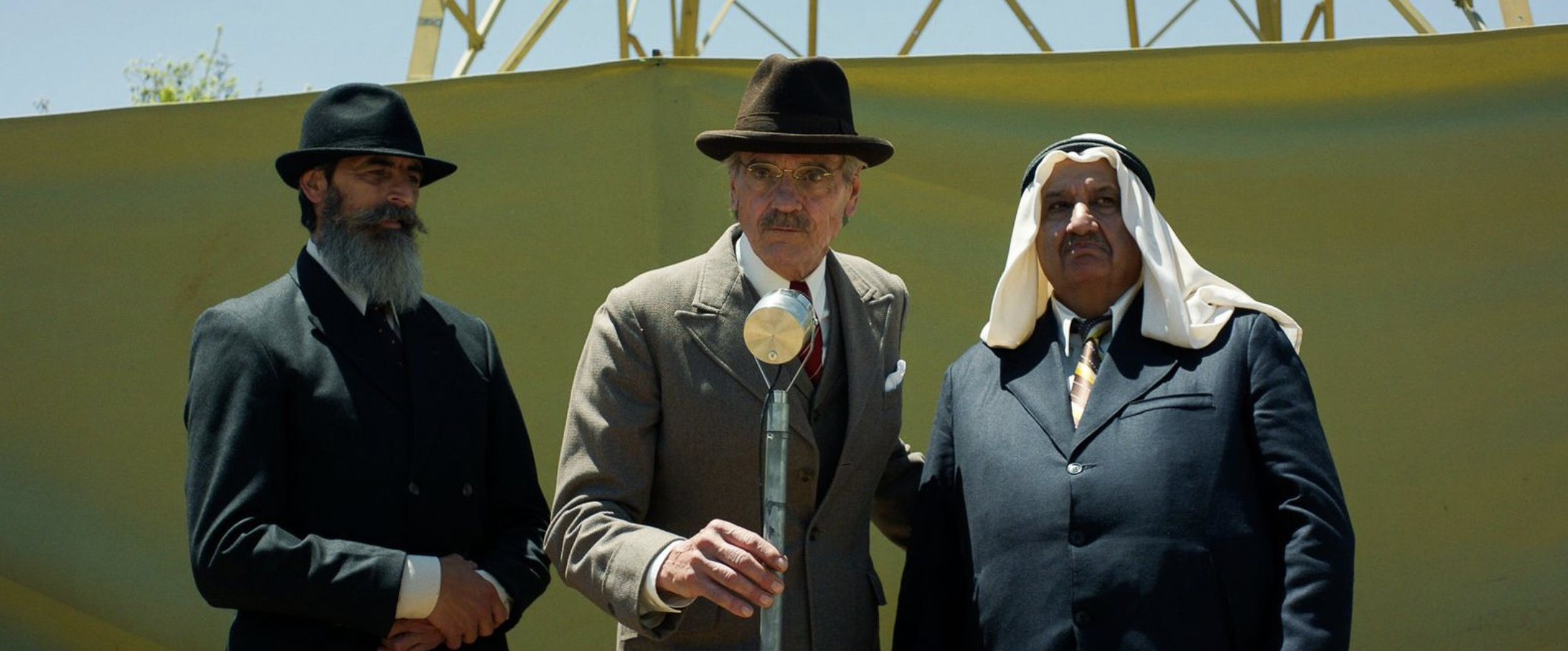
Opening in theaters nationally on April 3, “Palestine 36″ is a historically grounded drama shaped by an intricate visual and collaborative process. Writer and director Annemarie Jacir brings 25 years of filmmaking experience to a project that merges archival footage, reconstructed environments and carefully composed cinematography to create a unified cinematic world.
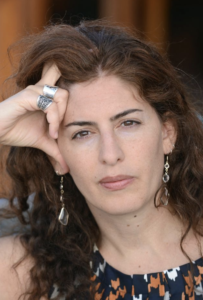
It opened as the Michigan Theater in Ann Arbor on March 22, as part of a limited early release following its New York debut.
Integrating archival footage into a living visual world
A defining feature of the film is its use of archival footage alongside newly shot material. Rather than presenting these elements as separate, Jacir sought to fully integrate them into the film’s visual language. This led to the decision to colorize archival images so they would feel present within the same world as the narrative scenes.
“The idea behind the archival footage was one that was organic and in sync with the story we were telling,” Jacir said. “This is the reason I insisted we colorize the footage. It was important for me that it felt part of the story, that it would be used as part of the look of the film, and most of all to show the world of the characters, the world they inhabit. I did not want the audience to be taken back in time in the way that black and white images would have done. The idea was to be alive, to insist on life, and in a way to reclaim those archival images for ourselves.”
Balancing intimacy and scale through cinematography
The film’s cinematography moves between sweeping landscapes and close character framing, reflecting both the collective and individual dimensions of the story. The land itself functions as a central presence alongside the characters.
RELATED: Spoiler Alert: “Ann Arbor” is a Film that will be About Ann Arbor
“The main characters in the film are the characters whose various stories we follow and the land. It is a film about a people’s revolt,” Jacir said. “The shifts in cinematography from land to the close ups was a way to remain very intimate. Despite the larger political and historical moment happening, it is the very personal and the very intimate that I am drawn to. How each of these characters is confronted with a decision, with private moments, and in that they change – they change forever. Keeping the camera close to the characters was a way of keeping their world intimate, personal, and raw. I also wanted to save the moments and use them very sparingly – the moments where everything opens up… Sometimes it’s in a way that feels very free, hopeful. Other times it is used towards a feeling of control, of a world being manipulated by other powerful forces.”
A collaborative approach to color and tone
Color grading plays a key role in shaping the film’s emotional progression and spatial distinctions. Working with cinematographer Helene Louvart and colorist Jateen Patel, Jacir developed a palette rooted in emotional tone rather than purely aesthetic considerations.
“Helene Louvart and I have worked together and known each other for years now. I shared with her my ideas for the color palette, which generally centered around emotions and feelings,” Jacir said. “As the film builds towards a bleaker political moment, the ‘feeling’ of the color reflects that. We also differentiated between the city and the village – and it was important to carve out these different spaces and how the characters relate to them. Due to the fact that we had to stop and start production so many times, and that Helene wasn’t always able to be on set, this grounding of the color palette became even more important and more challenging. Helene is a master of her craft. When we sit together in the color grading room, I sometimes find myself wishing that every filmmaker could be witness to her incredible eye. I also was very lucky to work with an incredible colorist named Jateen Patel in London. It was an incredible collaboration, and I feel very lucky to have been able to work with both of them.”
Maintaining visual unity across multiple cinematographers
Production challenges required Jacir to work with multiple cinematographers while preserving a cohesive visual identity. Extensive preparation and clear creative direction helped maintain consistency across shifting circumstances.
“I prepped this film for over a year with Helene Louvart who is the main DOP of the project,” Jacir said. “We prepped every single location and shot. Once everything fell apart and we had to reschedule, we brought others on board. In many cases we had to find new locations, and we managed to find places as close to the original ones as possible. The look and the feeling of the scenes remained the same however. It was not easy to prep so many parts of the film with different cinematographers in fact. In many ways the original ideas stayed the same for me, and were even more important to work out and keep consistent due to the fact that the crew was changing, and not only the crew but the locations as well. It was also important that each cinematographer brought in their own contributions and ideas to the project and much time was spent in those kinds of discussions. Each cinematographers mark is there and yet everything is unified. I knew the feeling I wanted for each scene. It’s the story of collaboration. And the fact that Helene also returned to grade the entire film is also why it flows, of course.”
Shooting in real and reconstructed environments
Jacir’s preference for location-based filmmaking shaped both the visual style and the technical execution of the film. Even reconstructed spaces were designed to maintain a sense of realism and adaptability.
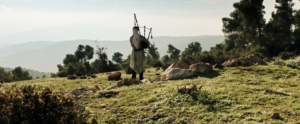
“I’ve never shot a film in a studio. I like shooting in actual places,” Jacir said. “I like the messiness of life. Environment is absolutely critical and influences many of my choices whether it’s lighting or camera. When we rebuilt the village, we also were able to create the flexibility of natural light or places where we wanted to get more light in by keeping a partially destroyed roof bare, or opening an extra window. The village itself was ours to build and create space for our choices alongside the art department. And yet we were in a totally real space with all the reality of fighting a quickly moving sun, or clouds, or other natural issues.”
Experimental camera movement and narrative meaning
The film introduces a recurring camera movement that carries symbolic weight. A slow, gliding approach toward the village appears throughout the narrative, culminating at a pivotal moment.
“One concept was the other worldly movement of the camera moving towards the village, like gliding, always in the same direction,” Jacir said. “We return to this movement several times during the course of the story – a force from a POV we do not know. Until it stops. That moment of stopping, the physical stop of the camera, comes at the moment the village is surrounded. As if everything was always leading up to this moment – destruction.”
Structure inspired by tatreez embroidery
Jacir draws a conceptual connection between the film’s narrative structure and Palestinian tatreez embroidery, where individual threads form a larger, unified design.
“The concept of tatreez, of course, influenced the script structure itself – how the film is written and conceived,” Jacir said. “For shot composition and the cinematography, there are a few moments where that wider look at the entire design comes to play – for me the most clear moments of that are in the end where the archival moments are used. It’s in both what we see but also in how it’s edited. Now we see the protest and its size – the gathering of so many people. Those wide shots for me give us that wider view of the tatreez. And the smaller stories, each of the individual character stories, are each a different color thread pulling us through. Sometimes they intersect with others, and sometimes they pass them by.”
Sound, score and restraint in collaboration
Sound and music were developed with a focus on subtlety and balance, ensuring they support rather than dominate the visual storytelling. Composer Ben Frost and sound mixer Bruno Tarriere played key roles in shaping this approach.
“I worked with music composer and artist Ben Frost at a very early stage,” Jacir said “Our discussions began at the script stage. We planned that he’d come to Palestine to visit the locations, to just hear the place and talk about ideas. When the genocide began, and production was shut down, of course that changed. But the conversation continued. During the editing phase, Ben watched every single cut of the film at every stage. He was deeply involved, and the collaboration was incredible between us.
Bruno Tarriere, the sound mixer, and I worked a lot on the visual pacing. There are moments where it would have been easy for score or sound design to dominate the images but it was important for me that they did not. I don’t like to ‘hear’ score for the most part – and sound is something that we should not be overly aware of. It can take one out of the feeling of a scene. Bruno and I are very much on the same page about this – and he’s a master at his work. We experimented, we tested, and we pulled back a lot of the time – it’s a delicate balance. I don’t like the feeling of emotional manipulation, so working on this ‘pulling back’ was essential.”
Navigating historical realism and contemporary Landscapes
Recreating a 1930s setting required navigating modern developments in the landscape, as well as planning around visual limitations and post-production work.
“When we started to prep the film in Palestine, we spent a lot of time looking at the landscape, especially in the places the revolt was born: in the village and countryside,” Jacir said. “The problem was everywhere we looked was modernity – buildings, illegal settlements, a landscape completely changed. When we were in Jaffa, we saw the big buildings of Tel Aviv to the North that didn’t exist in the 1930s. In the village, on every hill surrounding the village, were illegal settlements across the landscape. So the first challenge was to figure out how to frame things in a way that allowed us to film what we wanted and to avoid those modern elements
Cinemascope, the land, and the theatrical experience
Jacir’s use of widescreen cinematography reflects both narrative intent and thematic emphasis, with the landscape playing a central role in how the story is experienced.
“Certainly, the colorization of the archives has been a source of much discussion. In almost every Q&A, I am asked about the archives. For Palestinians especially, these archives are precious. They show our world, a world that was wiped off the face of the map. Those are our people, our lives, our world – all stolen from us,” Jacir said.
Shooting Cinemascope was a part of the storytelling since writing the script. When I envisioned the scenes, it was always in this format. To make a film about this moment, with an ensemble cast – it was really the land that was the main hero of the film. I think that’s also a part of the attraction to the film – is seeing the land, seeing the actual spaces we inhabit in this way – and it’s also why it is so important that the film is seen in cinemas, the way it was meant to be.”


