
Five women have died in less than three months at the Women’s Huron Valley Correctional Facility, Michigan’s only prison for women. This is intensifying scrutiny of the prison’s medical care, living conditions and oversight while prompting renewed calls for independent investigations and systemic reform.
The facility, located in Pittsfield Township just outside Ann Arbor, has long faced criticism over healthcare access, staffing shortages, and environmental conditions. But the recent series of deaths has elevated those concerns into a statewide controversy involving lawmakers, advocacy organizations, attorneys, families of incarcerated women and a growing grassroots protest movement.
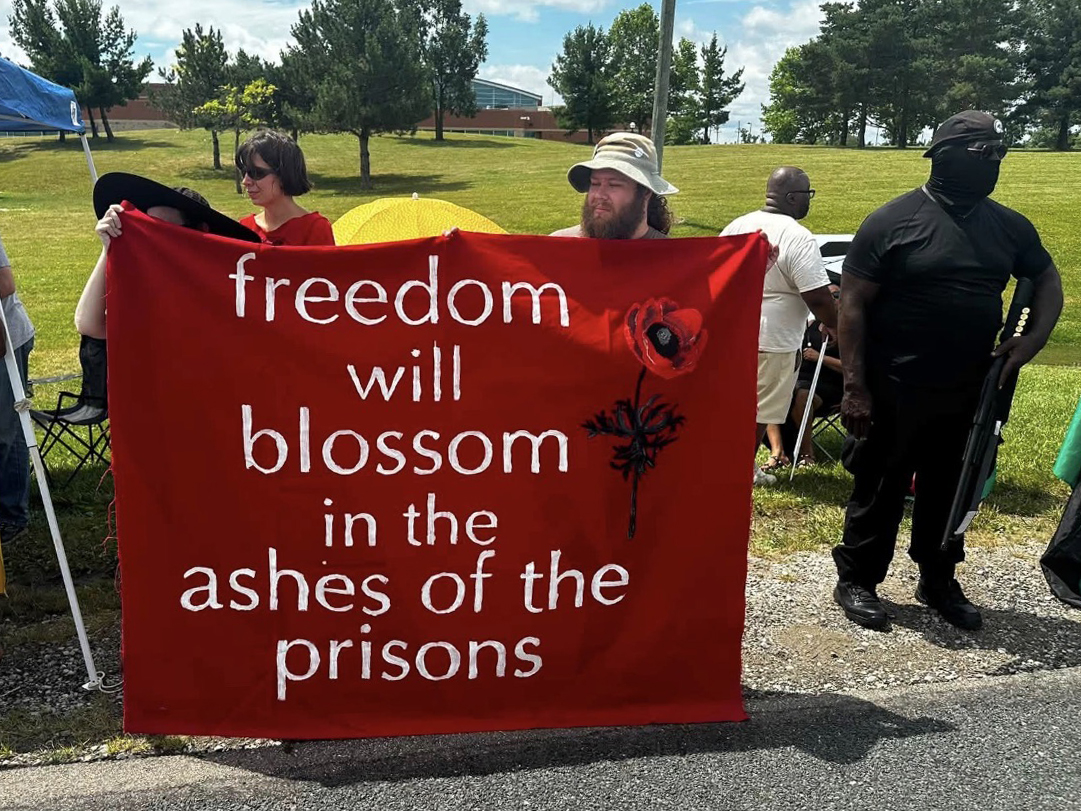
One visible expression of that movement is a series of demonstrations held every Wednesday at 6 p.m., outside of the Women’s Huron Valley Correctional Facility, where advocates, family members, and community organizations gather to call for changes at the prison.
“The Huron Valley protests are an ongoing pressure campaign on our elected officials, demanding action regarding the atrocious conditions within the facility, which include mold infestation and inadequate healthcare,” said Alexander Rodriguez, chairman of Workers Against Oppression (WAO).
The women who died between mid-May and late July have been publicly identified as Khaira Howard, 28; Rebecca Fackler, 57; Ashley Hoath, 36; Dalephenia Jones, 62; and Dasie Forbes, 69. Their deaths have occurred under differing circumstances, with several still under review by the Michigan Department of Corrections (MDOC).
Protest movement gains momentum
Rodriguez said the demonstrations began after the deaths of Howard and Fackler.
“The protests began shortly after the deaths of Khaira Howard and Rebecca Fackler in rapid succession. These women were not women in horrid condition before entering the prison. After some digging, connecting with leaders like Trische Duckworth of Survivors Speak and learning the story of Krystal Clark, we had to get involved,” Rodriguez said.
According to Rodriguez, the coalition has expanded beyond Workers Against Oppression.
“The participation of these protests is formed by a combination of concerned communities, families of those who have passed, and other organizations. We joined Survivors Speak in their ongoing battle against the atrocious conditions within the prison, and since the coalition has grown to include the Party for Socialism and Liberation and the General Defense Committee, who are taking the fight to Lansing,” Rodriguez said.
RELATED: Will Ann Arbor Choose Public Power? November Ballots Will Provide the Answer
Rodriguez said the coalition’s goals extend beyond drawing attention to the recent deaths.”The primary goals of the protests are the medical clemency of Krystal Clark and any woman experiencing problematic health conditions associated with the prisons, the removal of MDOC director Heidi Washington and the eventual closure of the prison,” Rodriguez said.
He said protesters intentionally demonstrate outside the prison itself. “There are many reasons for demonstrating at the prison itself. For starters, we cannot allow the issues this facility is attributed to and the lives lost to it to be allowed to be lost in the sea of issues that we face today; these women deserve justice. Additionally, we are purposefully loud enough for the women within the facility to hear us, as we have heard from the inside that hearing our campaign keeps their spirits up,” Rodriguez said.
Allegations of delayed and inadequate care
Families, formerly incarcerated women, and prisoner advocates contend the deaths reflect broader systemic problems rather than isolated incidents. They allege incarcerated women have experienced delayed emergency responses, difficulty obtaining specialty care, inadequate treatment for chronic illnesses and persistent staffing shortages that can leave serious medical conditions unaddressed.
Michigan Public recently interviewed incarcerated and formerly incarcerated women who described an institutional culture in which medical complaints were frequently dismissed or minimized. One former prisoner observation aide recalled watching Khaira Howard deteriorate while repeatedly pleading for help in the days before her death. An autopsy later determined Howard died from a pulmonary embolism after a blood clot traveled to her lungs.
Rodriguez said one of the movement’s central concerns is the condition of incarcerated woman Krystal Clark.
“Krystal Clark has acted as our informant as to the conditions inside the prison alongside facing some of the most abhorrent conditions we have seen caused by this prison. The mold growing from her body serves as undeniable proof of the conditions created by Women’s Huron Valley. As for what we are asking regarding her, we are demanding her medical clemency so she can receive treatment necessary to save her life,” Rodriguez said.
MDOC disputes allegations
The Michigan Department of Corrections has disputed many of the allegations raised by advocates. The department maintains that incarcerated individuals receive healthcare meeting community standards, that each death undergoes required mortality reviews, and that an independent environmental assessment found no widespread dangerous mold contamination within the facility.
Rodriguez rejected those conclusions. “We do not believe the claims Michigan Department of Corrections has made disputing ours. Cases such as Khaira Howard’s and Krystal Clark’s have made it more than apparent that response to health issues is problematic. Additionally, State Rep. Morgan Foreman has stated that she had an allergic reaction to the mold during an oversight tour. These are not results that can be attributed to a functional facility,” Rodriguez said.
Autopsies reveal different causes
Autopsy findings indicate the five deaths involved different medical circumstances.
Howard’s death was ruled natural and attributed to a pulmonary embolism. Rebecca Fackler also died from complications related to a pulmonary embolism. Ashley Hoath’s death was ruled a suicide caused by acute aspirin poisoning. Dalephenia Jones died following what officials described as a cardiac event, while Dasie Forbes died after receiving palliative care for multiple chronic illnesses.
Although the causes differ, advocates continue to question whether earlier intervention, improved monitoring, or faster access to treatment could have altered some outcomes.
Families continue to demand accountability
On July 31, family members and advocates gathered outside MDOC headquarters in Lansing to demand greater transparency and reform, joining the ongoing campaign centered on Women’s Huron Valley Correctional Facility.
Rodriguez believes the movement has already influenced public discussion. “The protests absolutely have made progress. We have made multiple statewide news stories, and our community has continuously grown in strength of support for our cause. Officials such as Debbie Dingell have sent out letters to the governor demanding better, and Chris Swanson is looking to have a discussion regarding the facility. The Department of Corrections is still yet to engage with us in a meaningful way,” Rodriguez said.
Despite the attention, organizers say they intend to continue demonstrating.
“Going forward, the protests are intended to continue indefinitely with organizations alternating leadership roles in the rallies. Though we are escalating, GDC is taking the fight to the state capital this Friday with our demands. Our movement will continue until conditions drastically improve or the prison is shut down,” Rodriguez said.
Rodriguez said the issue aligns with Workers Against Oppression’s broader mission.
“Our mission at WAO is fighting injustice wherever it may be. People too often forget that some of the greatest injustice we face in our society is bred from our ‘justice system,’ and this prison’s conditions are proof of that. Our role within it is coalition building, getting other organizations involved in this fight while aiding in the mobilization process,” Rodriguez said.
A prison under increasing scrutiny
Women’s Huron Valley Correctional Facility has faced repeated criticism over the past decade involving overcrowding, staffing shortages, healthcare access, and facility conditions. The recent deaths have renewed bipartisan calls for greater legislative oversight, increased transparency, and an independent review of healthcare practices within Michigan’s correctional system.
As investigations continue, the central question extends beyond the circumstances of any single death: whether the recent tragedies expose broader shortcomings in how healthcare is delivered to the approximately 1,800 women incarcerated at Michigan’s only women’s prison.
For Washtenaw County, where the prison sits just outside Ann Arbor, the controversy has become one of the region’s most significant developing public policy stories—raising broader questions about accountability, correctional healthcare, and the state’s responsibility for the well-being of those in its custody.

Donna Marie Iadipaolo is a writer, journalist, and State of Michigan certified teacher, since 1990. She has written for national publications like The Village Voice, Ear Magazine of New Music, Insurance & Technology, and TheStreet.
She is now writing locally for many publications, including Current Magazine, Ann Arbor Family, and the Ann Arbor Independent. Her undergraduate degree is from the University of Michigan, Ann Arbor, where she graduated with an honors bachelor’s degree and three teacher certificate majors: mathematics, social sciences, English. She also earned three graduate degrees in Master of Science, Master of Arts, and Education Specialist Degree.

