
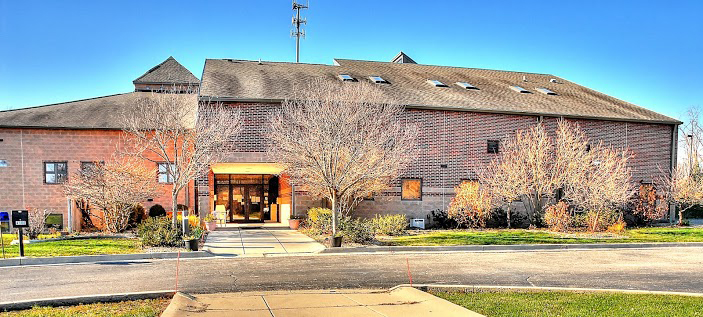
Fifty years after opening, SafeHouse Center continues to make a lasting impact on the local community.
Christine Watson, the executive director of SafeHouse Center, explained the early vision: “When SafeHouse Center was first formed, our founders had one clear goal: to provide safety for survivors of intimate partner violence here in Washtenaw County,” Watson said. “At that time, resources were almost nonexistent. Simply creating a safe, confidential place to escape abuse was revolutionary. In 1978, our first shelter opened, turning that vision into a community-wide commitment.”
From those beginnings, SafeHouse expanded from a shelter to a comprehensive network of advocacy and support.
“From one safe space in the 1970s to serving over 4,000 survivors each year, our growth reflects both the resilience of survivors and the strength of the community that has stood with us for five decades,” Watson said.
Defining milestones
SafeHouse’s journey is marked by achievements that not only changed the organization but also transformed the county’s approach to survivor support. One of the first significant steps was the launch of the Helpline in the 1970s, which gave survivors a lifeline at any hour.
Watson reflected on the turning points: “One of our first major achievements was launching the Helpline in the 1970s,” Watson said. “For the first time, survivors in Washtenaw County had a place they could call 24 hours a day for safety planning, information and support. Soon after, we opened Michigan’s very first shelter for survivors of intimate partner violence and their children in 1978; a turning point that gave survivors a safe, confidential place to go.”
In 1995, a countywide millage allowed SafeHouse to open its permanent facility on Clark Road, uniting its services under one roof. The scope expanded further in 2003 when services were broadened to include sexual assault survivors. Watson emphasized that the people have always been at the heart of every milestone:
“Finally, one of the greatest achievements over these 50 years has been the incredible community of staff, volunteers, and interns who have walked alongside survivors,” Watson said. “Their dedication, compassion and advocacy have made it possible for us to serve thousands of survivors every year, always free of charge and always centered in dignity and respect.”
Changing perceptions
The past five decades have seen dramatic changes in how society views domestic violence and sexual assault.
“When SafeHouse first began, domestic violence and sexual assault were often treated as private family matters, not as crimes or public health issues,” Watson said. “Survivors had very few resources and often faced disbelief, stigma and isolation when they spoke out. Over the past 50 years, community understanding has grown tremendously. Today, there is far greater awareness that abuse is about power and control, not about relationships gone wrong.”
Yet, even with new laws, education in schools and workplaces and broader awareness, barriers remain. Survivors still face victim-blaming and inequities, and resources like housing and financial security remain scarce for many.
“At SafeHouse Center, we see progress and challenges side by side every day. What gives us hope is that our community continues to stand with survivors, growing more committed to building a culture where violence is never tolerated,” Watson said.
The Early Days
The organization’s roots were humble and personal. Before SafeHouse even had a shelter, community members opened their own homes to provide support to survivors in need.
“In the very beginning, before we even had a shelter, community members literally opened their own homes to provide safety for survivors,” Watson said. “That kind of courage and compassion built the foundation for what SafeHouse would become. What’s remarkable is that I still meet people every week who were part of those early days; answering the helpline, volunteering in the shelter, and many of them are still actively supporting us today. Their continued commitment shows that SafeHouse has always been, and continues to be, a community effort.”
Expanding services for today’s needs
SafeHouse has evolved into a comprehensive network of support services that would have been unimaginable in its early years. Survivors now have access to crisis response teams, legal advocates, housing programs and education initiatives.
“Now, SafeHouse provides a full network of support that simply didn’t exist 50 years ago. Survivors can still count on the 24-hour helpline and emergency shelter, but today we also have a legal advocacy program that helps people navigate the court system, including an advocate based in the courthouse offering assistance with PPO (Personal Protection Order) applications. We have a 24/7 hospital and law enforcement response team that meets survivors at the very first moment of crisis. We offer support groups and individual crisis support sessions, giving survivors both immediate and ongoing places to heal.”
A countywide reach
Even though the SafeHouse building is in Pittsfield Township, the services span Washtenaw County. Accessibility has become a cornerstone of the mission.
“SafeHouse Center is committed to being as accessible and barrier-free as possible for all survivors in Washtenaw County. Even though our building is located in Pittsfield Township, our reach is truly countywide. We run three 24-hour programs: the helpline, the emergency shelter and our crisis response team. This means survivors can connect with us at any time, day or night.”
With translation services available 24/7 and the flexibility to meet survivors virtually, by phone, or in person at hospitals, police stations, or courthouses, SafeHouse ensures that help is available in the way survivors need it most.
RELATED: Fisher House Ann Arbor, an Ann Arbor Nonprofit
Community support
Community engagement has been central to SafeHouse’s existence and growth. From funding and volunteering to partnerships with hospitals, schools, and law enforcement, these connections strengthen the safety net.
“Community support is absolutely critical to SafeHouse Center. For fifty years, we have relied on the generosity of individuals, organizations, and partners to keep our doors open and our services free for survivors,” Watson said. Donations help fund core programs like our 24-hour helpline, shelter, and crisis response team, ensuring survivors always have someone to turn to.”
The partnership between SafeHouse and the community reflects mutual investment in creating a culture of safety and dignity.
Facing challenges
Despite decades of growth, challenges persist. Funding is one of the most pressing, particularly with cuts to federal VOCA (Victims of Crime Act) dollars.
“One of the biggest challenges we face today is funding, Watson said, We are experiencing stagnation and uncertainty, and in some cases outright cuts to the resources that sustain our work. At the same time, the demand for services has not gone away. Survivors still need safe shelter, legal advocacy, crisis response and ongoing support, and we are committed to ensuring those services remain available.”
SafeHouse is working with the Michigan Coalition to End Domestic and Sexual Violence to advocate for $75 million in state appropriations to sustain critical services statewide.
“Without this appropriation, programs across Michigan, including here at SafeHouse Center are at risk of being cut or greatly reduced, meaning that survivors will lose access to critical support,” Watson said.
Looking ahead to the next 50 years
When asked what the future holds, Watson’s response was both hopeful and pragmatic.
“In an ideal world, 50 years from now SafeHouse Center would no longer need to exist because domestic violence and sexual assault would be things of the past. That is the vision we hold close, that every person could live in safety, free from abuse. But if the need is still there, I hope SafeHouse will be fully resourced and equipped to continue meeting survivors exactly where they are at.”
A message of gratitude and commitment
At the heart of this 50th anniversary is deep appreciation for the community that has sustained SafeHouse since its founding.
Watson shared her message: “First, it would be thank you. For five decades, SafeHouse Center has only been able to exist because of the extraordinary support of this community. From the volunteers who answered the very first helpline, to the donors who helped us open our first shelter, to the supporters who helped push through the millage that gave us our second and forever home, to the partners who stand with us every day; your time, resources and compassion have made this work possible.”
Watson continued,” Second, it would be that we are here for you. SafeHouse Center exists to break the isolation so that no survivor has to feel alone. We see you, we support you and we are always here for you.”
50 years of SafeHouse Center
From its beginnings in the 1970s as a revolutionary idea—a safe space for survivors—to a robust countywide network of services, SafeHouse Center has become a beacon of safety and hope in Washtenaw County. Its 50-year journey is a testament to survivor resilience and community compassion.
And while challenges remain, SafeHouse’s commitment endures: to empower survivors, build a culture free from violence, and ensure that no one faces abuse alone.

Donna Marie Iadipaolo is a writer, journalist, and State of Michigan certified teacher, since 1990. She has written for national publications like The Village Voice, Ear Magazine of New Music, Insurance & Technology, and TheStreet.
She is now writing locally for many publications, including Current Magazine, Ann Arbor Family, and the Ann Arbor Independent. Her undergraduate degree is from the University of Michigan, Ann Arbor, where she graduated with an honors bachelor’s degree and three teacher certificate majors: mathematics, social sciences, English. She also earned three graduate degrees in Master of Science, Master of Arts, and Education Specialist Degree.

