
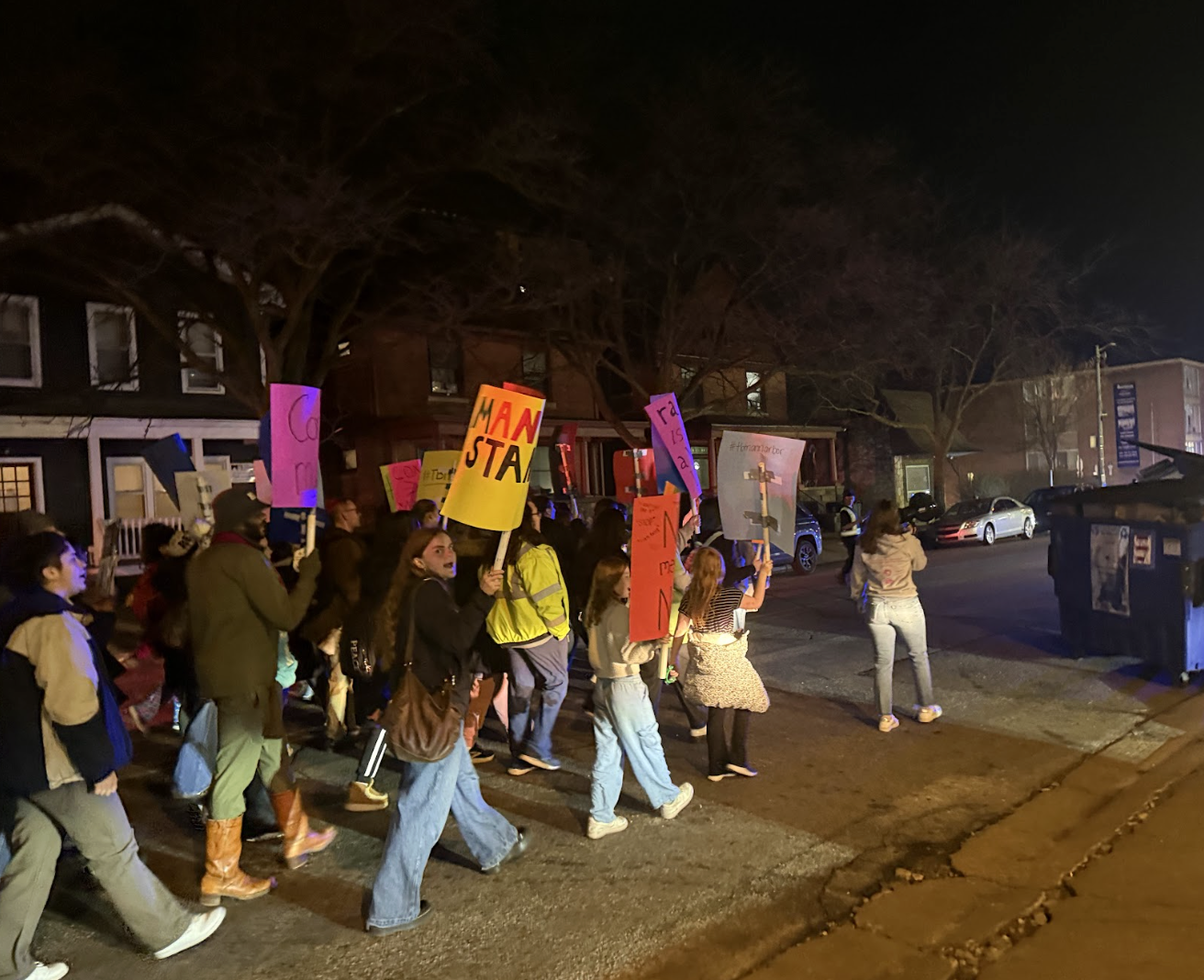
Hundreds of students and community members attended the 48th annual “Take Back the Night” event on April 2. The evening began in the Michigan Union Ballroom with compelling speakers and performances, then moved into the streets for a march and candlelight vigil.
The complexity of healing
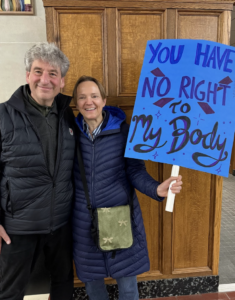
The headline speaker, Jena-Lisa Jones, spoke candidly about the complexity of healing to support survivors and their allies. A survivor of sexual abuse by Jeffrey Epstein at age 14, Jones emphasized that recovery is not about perfection, but about honoring a full range of emotions and learning to be true to oneself.
The theme of the evening was “Your Story Matters,” inspired by Jones and all survivors who choose to share their stories in different ways and through different emotions—or who choose not to share.
“Do I get a reward or something? Because, honestly, some days just getting out of bed feels like enough work, and sometimes it is enough,” Jones said. “Healing isn’t this straight, inspiring path people talk about—it’s messy, it’s inconsistent. Some days you feel strong, and other days you feel like you’re right back where you started—you’re not. Even on your worst days, you are not the same person you were before: You learned things. You survived things. That counts.”
They announced that there are over 1,000 Epstein Survivors, yet there have only been two people who have faced charges. Many people believe that the Epstein saga may be one of the largest cover-ups in American history, where the network of sex trafficking includes politicians, financiers, businesses, academics, the entertainment industry—and even has international ties, as well as other arenas.
Jones, now a life coach at The Survivors Inc., also underscored that healing from trauma can take many forms. It means setting boundaries even when it feels uncomfortable or saying no without offering an explanation. Most importantly, she said, it involves recognizing that what happened was never the survivor’s fault—even when the mind tries to suggest otherwise.
“You don’t have to have it all figured out,” Jones said. “You don’t have to be strong in some perfect way. You just have to keep going however you can, because that matters. Every small step matters. Every time you choose to keep going, even when it’s hard, that matters. So when we say your story matters, we need all of it—the pain, the progress, the setbacks, the growth, the moment you think you’d never make it through, but did, and most of all, you matter now.”
RELATED: Inside Ann Arbor’s Michigan Anti-Trafficking Project (MAP-A2)
Some survivors, like Jones, chose to wear teal green bracelets and/or face paint to demonstrate their survivor solidarity.
Speakers also discussed sexual violence that is prominent in women’s prisons and even more egregious during wartime. They also discussed the long-term medically documented mental and physical harm that can come from the trauma of sexual abuse.
Leaders share personal stories and messages of support
Other prominent voices in the ballroom included U.S. Rep. Debbie Dingell, Ann Arbor Mayor Christopher Taylor and Michigan Gov. Gretchen Whitmer, who delivered a video message. Both Dingell and Whitmer shared that they, too, are survivors, adding a deeply personal dimension to the evening.
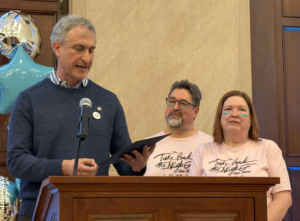
Interwoven throughout the program were performances—dance, music and poetry—that aimed to comfort, inspire, and honor survivors’ courage and resilience.
Dingell told the audience that she has survivor stories she will never tell, while also voicing strong support for those who choose to share theirs and for those who choose not to.
Taylor emphasized the role of the broader community, including men, in confronting sexual violence and supporting survivors.
“Male violence in all of its forms may be our deepest and most pervasive pathology, but it, too, can be tamed and confronted and ultimately defeated,” he said. “That’s what this evening is about. We do it through recognizing it, we do it through condemning it, but crucially, we do it for the support and uplift and love that we give to the survivors.”
During the event, Taylor also presented Stand Tough Against Rape Society (STARS) Executive Director Pam Swider and her husband, Tom, with a city proclamation declaring April as Sexual Assault Awareness Month in Ann Arbor.
Performers in the ballroom included Sophia VonStardust, Ber-Henda Williams, Audra Kubat, and Ballet Folklórico de Metztli.
Community resources and advocacy efforts highlighted
Information tables were also set up to connect attendees with organizations addressing sexual violence, including the University of Michigan Police Department Special Victims Unit, Wolverine Support Network, SafeHouse Center, ReSet, the Sexual Assault Awareness and Prevention Center, Central Student Government, the Krystal Clark Freedom Movement, Planned Parenthood, University Students Against Rape (USAR), Stand Tough Against Rape Society (STARS), and the Washtenaw County Prosecutor’s Office.
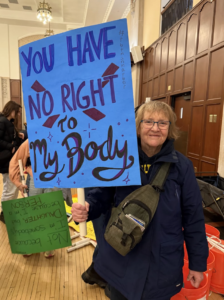
Speakers shared statistics highlighting the prevalence of sexual violence. About 1 in 3 women and nearly 1 in 6 men experience some form of sexual violence in their lifetime, with higher rates among more vulnerable communities, including LGBTQ+ individuals, people of color and those with disabilities.
Speakers also addressed the importance of consent, emphasizing that it cannot be given by minors (those under 18) or by individuals under the influence and must be clearly and explicitly communicated.
Advocates emphasize community responsibility and hope
Stacy Kearney, director of victim services at the Washtenaw County Prosecutor’s Office, attended the event as both a longtime advocate and a representative of an office working to expand support for survivors. With nearly 23 years of experience, she emphasized the responsibility her team carries when working with victims.
“My office has been diligently working to establish a larger special victims’ unit to ensure some of our most vulnerable victims receive trauma-informed advocacy throughout the criminal justice process, which is not always victim-sensitive. We know that we are entering the lives of victims during one of the worst times of their lives and we take that position seriously.”
Kearney said attending the event is a meaningful way to show survivors they are not alone and to connect with the broader community. “Attending TBTN is our opportunity to continue showing support to survivors and letting them know they are not alone. It is also an amazing opportunity to explain to the community what we do and how we work to support their neighbors, family members and friends.”
Although she has attended in the past, this year marked the first time her office participated by hosting an information table—something she hopes will continue as part of ongoing efforts to combat stigma and increase visibility.
Reflecting on the event’s impact, Kearney highlighted the importance of community in addressing sexual violence.
“It is only because of events like TBTN that we can renew our sense of hope that there are people willing to stand up for those that may not be able to stand up for themselves… Fighting injustice is the responsibility of our entire community.”
She also pointed to the power of the event’s programming, noting that “the poems, music and fellowship” helped create a space for healing and connection. Ultimately, Kearney described Take Back the Night as both a celebration of resilience and a call to action, emphasizing that ongoing dialogue and community support are essential to protecting survivors.
A survivor’s motivation to attend
For longtime community volunteer Maureen Hamilton, attending Take Back the Night was both deeply personal and rooted in a desire to connect more intentionally within Ann Arbor. A survivor of sexual and intimate partner violence, she described how those experiences continue to shape her life decades later, even after seeking multiple forms of healing.
“I am a Survivor of Sexual Violence and Intimate Partner Violence,” Hamilton said. “Regardless of the fact I sought treatments through therapeutic counseling, bodywork and neuro-desensitization programs for events that occurred some forty to fifty years ago…it does not matter. The triggers are still there. Perhaps, in some ways, this is beneficial—they serve as a ‘protective measure’ that I did not have before. And because this type of abuse is all-encompassing—it thwarts your soul—and that cannot be easily dismissed.”
Finding Strength in the March
Hamilton said the event itself created a powerful sense of empowerment and collective strength, particularly during the march through downtown Ann Arbor. The act of physically moving together and raising voices in unison offered something beyond symbolic participation.
“The rally itself was so empowering—the physical act of marching and our vocal chants gave substance to our participation,” Hamilton said. “I heard a deep strength and resilience in my voice I’d not experienced before. Having the dedicated Ann Arbor police for protection and witnessing children and youth participating gave hope. It was significant that it was at night—when this type of abuse frequently occurs—it provided a new framework, a reset of empowerment.”
Moments of connection at the candlelight vigil
One of the most meaningful moments for Hamilton came during the candlelight vigil, where spontaneous human connection underscored the night’s purpose. In a quiet exchange with another participant, she shared her story and was met with immediate affirmation.
“I too am a Survivor,” Hamilton said. “She stopped in her tracks, even though the candlelight was about to start, took my hands, looked me in the eyes and said, ‘I see you, I hear you, I affirm you and your story.’ I told her this was so many years ago, and she responded, ‘All the better you are here—it matters, because it’s about you.’”
Healing through community and expression
She emphasized that events like Take Back the Night serve multiple roles for survivors and the broader community, from education to healing. The presence of diverse speakers and artistic performances, she noted, allows people to process trauma in different ways and at their own pace.
For Hamilton, the evening ultimately demonstrated the profound impact of simply showing up—for oneself and for others.
Local hotlines
Sexual Assault Prevention and Awareness Center: apac.umich.edu. 734-939-3333
Safehouse Center: safehousecenter.org. 734-995-5444.
National hotlines
National Sexual Assault Hotline: 800-656-4673
National Suicide Prevention Lifeline: 800-273-8255
Now: 988
TrevorLine—LGBTQ+: 866-488-7386

Donna Marie Iadipaolo is a writer, journalist, and State of Michigan certified teacher, since 1990. She has written for national publications like The Village Voice, Ear Magazine of New Music, Insurance & Technology, and TheStreet.
She is now writing locally for many publications, including Current Magazine, Ann Arbor Family, and the Ann Arbor Independent. Her undergraduate degree is from the University of Michigan, Ann Arbor, where she graduated with an honors bachelor’s degree and three teacher certificate majors: mathematics, social sciences, English. She also earned three graduate degrees in Master of Science, Master of Arts, and Education Specialist Degree.

