
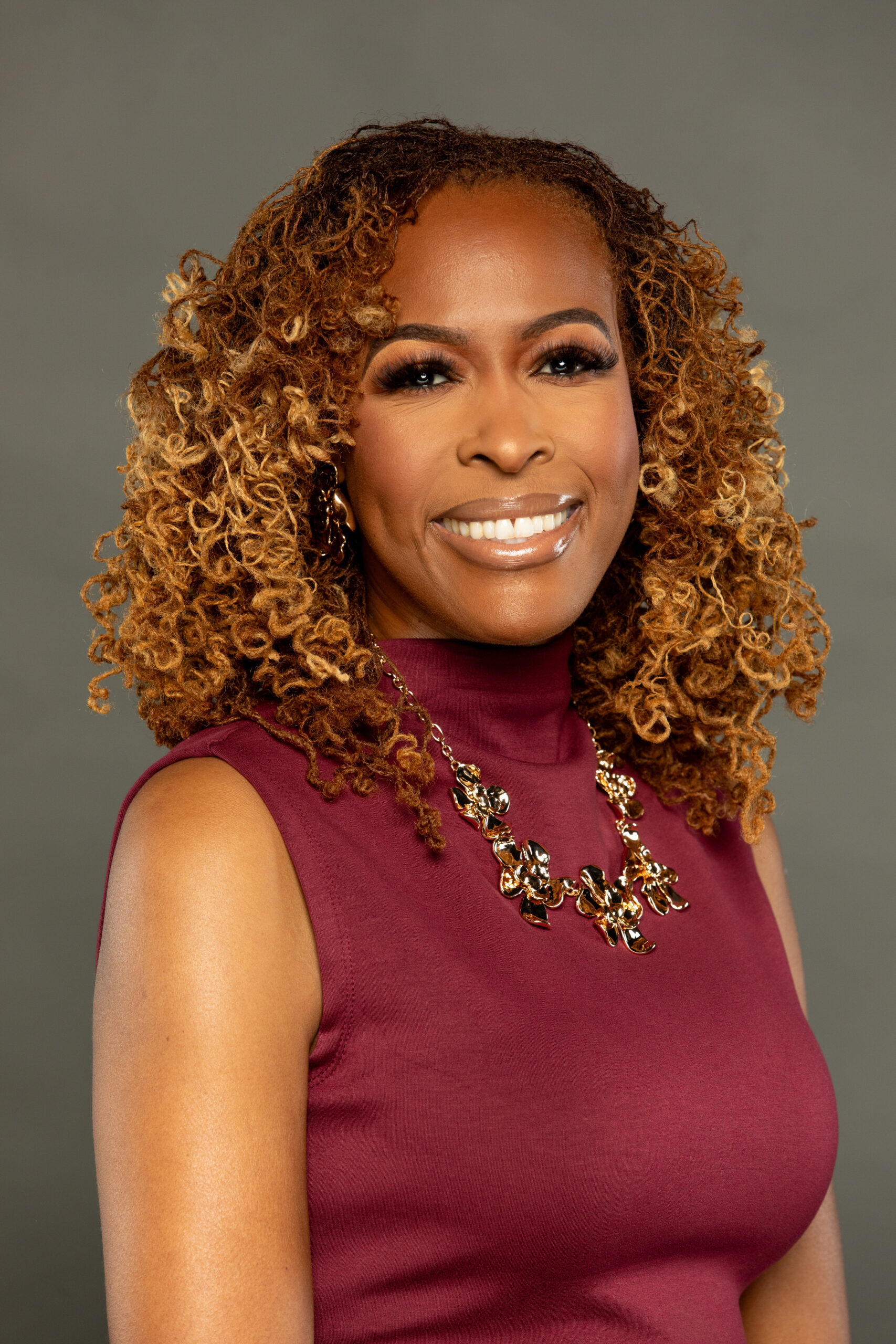
When Dr. Diana Martha Louis began studying the intersections of race, gender and mental illness in the 19th century, she didn’t set out to write a book that would redefine how we understand the history of psychiatry. But in “Colored Insane: Slavery, Asylums, and the Politics of Mental Health in the 19th Century,” the University of Michigan scholar and assistant professor in the Departments of Women’s and Gender Studies unearths buried stories of Black women and Black thinkers whose experiences challenge dominant narratives of medicine, freedom and care.
Louis’s journey into this topic began in a classroom. “I was drawn to this subject in a course with renowned Civil Rights activist Mab Segrest, who was a visiting fellow at Emory University and was working on a book about the Central State Hospital in Milledgeville, GA,” she said. “As an Africana Studies scholar, I was very much interested in first finding and then centering the stories of Black women. As a Black feminist scholar, I was driven to make sense of the way race and gender changed their experiences of mental disability.”
Behind the title
The title, “Colored Insane,” came directly from the language Louis encountered in the archives.
“When I began doing research on Black people with mental disabilities during the period, what I found was ubiquitous references to Black people with mental disabilities as the ‘colored insane,’” she said. “Being labeled as the ‘colored insane’ also came with severe repercussions; for some, it meant being subjected to state-sanctioned disciplinary practices involving the police and judges. It also could mean being confined in asylums which were notorious for harsh treatments, racial hostility, segregated and dilapidated living quarters, taxing labor assignments, exposure to disease, and overall low recovery rates.”
Louis also explores how this labeling worked as a process of distortion and control. “As a verb ‘colored insane’ highlights a process of labeling, imbuing, distorting, or misrepresenting African Americans as mentally ill, deranged, or prone to insanity,” she said. She points to the example of physician Samuel Cartwright’s infamous diagnoses like “drapetomania,” or the so-called “runaway slave disorder.” His ideas, Louis observes, were rooted in the belief “that slavery offered the most protective environment for Black mental health.”
Key research
What she found most surprising in her research was how deeply psychiatric science was entangled with racist ideology.
“One of the things that I found most surprising was the way in which they desperately tried to hold on to the ideas emerging from the ‘medical science’ of psychiatry and at the same time uphold broader social views about Black people,” Louis said. “While they believed whites inherited mental illness as individuals, they thought Blacks inherited supposed tendencies and proclivities towards insanity as a group.”
Yet amid these systems of confinement and distortion, Louis uncovered traditions of resistance within Black healing practices. “In opposition to the psychiatric and medical establishment, many Black people believed that mental health symptoms were the result of a disturbance in the spiritual realm, including the possibility that someone had been conjured,” she said.
RELATED: Dirk Manning Resurrects Lost Silent Film “London After Midnight” as a Graphic Novel
Many Black people sought out conjure doctors to treat mental illness. “The very sources of healing people used for survival, sustainment and resistance were pathologized by the medical and psychiatric establishment.”
Central to “Colored Insane” are the stories of five Black women who lived through the Georgia Lunatic Asylum. “It was vital to bring their lives to the fore because it adds to a fuller story about mental health in America,” Louis said. “Black women had distinct experiences. Even before entering the asylum, they had to contend with cultural narratives and stereotypes about Black women as inherently more violent and aggressive than white women and therefore more likely to be read as insane.”
Louis also traces how figures like Harriet Tubman, Harriet Jacobs, and James McCune Smith confronted medical racism on their own terms. “When we look to them as sites of knowledge about mental health, we get a new and more accurate story,” she said. “Harriet Tubman did not accept claims that her vibrant spirituality, dreams and visions were a marker of insanity. Instead, she turned what was seen as insanity into her superpower.”
“The biggest challenge in doing archival research about Black mental health in the 19th century is the lack of actual source material,” Louis said. “Black people were profoundly silenced. My challenge was trying to bring their lives into focus, having very little material from which I could do it.”
Louis also draws connections between the past and the present, arguing that the racialized logics of the asylum still echo in modern psychiatry. “The mental health system has to actually see Black people,” she said. “Our treatment modalities also have to recognize Black people’s own visions of healing and health. Mainstream medical solutions have to also include strategies Black people have used all along, like building community and family bonds and drawing on spiritual practices.”
Ultimately, “Colored Insane” calls for a reimagining of mental health that acknowledges history, honors Black knowledge systems, and reclaims lost voices. “Black people might not talk about mental disability in the same terms as our mainstream medical establishment, but they do talk about it,” Louis said. “My book demonstrates that Black people have always thought deeply about mental disability. They used their medical training, lived experiences, and artistic abilities to publicly discuss Black mental disability in ways that can no longer be ignored.”

Donna Marie Iadipaolo is a writer, journalist, and State of Michigan certified teacher, since 1990. She has written for national publications like The Village Voice, Ear Magazine of New Music, Insurance & Technology, and TheStreet.
She is now writing locally for many publications, including Current Magazine, Ann Arbor Family, and the Ann Arbor Independent. Her undergraduate degree is from the University of Michigan, Ann Arbor, where she graduated with an honors bachelor’s degree and three teacher certificate majors: mathematics, social sciences, English. She also earned three graduate degrees in Master of Science, Master of Arts, and Education Specialist Degree.

