
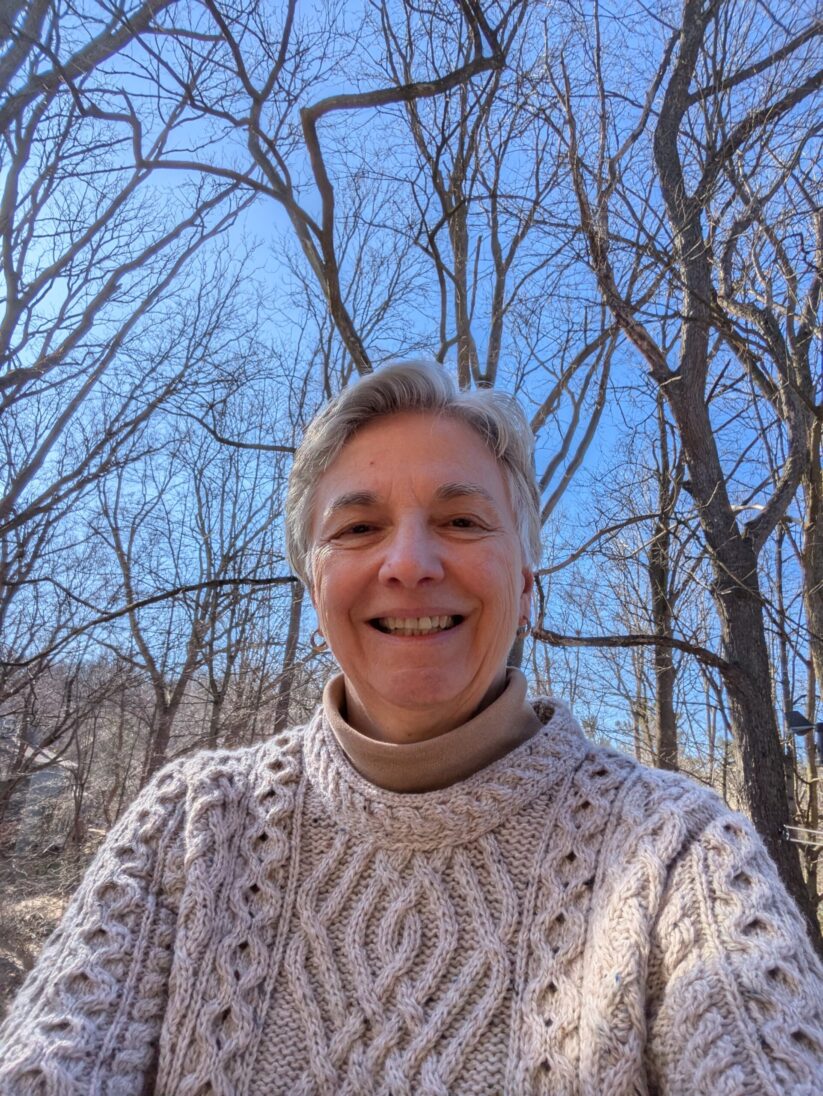
As the toxic 1,4-dioxane plume from the former Gelman Sciences site continues migrating under the city of Ann Arbor, a leading public health voice is calling for urgent, science-driven intervention.
Dr. Rita Loch-Caruso, Professor Emerita of Environmental Health Sciences at the University of Michigan School of Public Health, has spent years researching the health risks and chemical behavior of toxicants, and has worked closely as a volunteer with citizen groups on the Gelman Sciences 1,4-dioxane contamination.
Dr. Loch-Caruso outlined the most pressing dangers, described troubling anecdotal health patterns and argued for immediate federal Superfund designation to halt the spread.
“The most important health effect of concern is cancer,” said Loch-Caruso. “The USEPA, U.S. Department of Health and Human Services, and International Agency for Research on Cancer classify 1,4-dioxane as ‘likely,’ ‘reasonably anticipated to be,’ and ‘possibly’ carcinogenic to humans, respectively.”
Top health concerns
Based on rodent studies showing increased tumor rates in the nasal cavity, liver, kidney, mammary glands and peritoneum, Loch-Caruso recommends prioritizing cancer screenings in “liver and kidney, but also the breast and peritoneum.”
Non-cancer effects are also serious: “The most prominent noncarcinogenic effects observed in laboratory animal experiments are liver and kidney toxicity, principally necrosis and glomerulonephritis,” she explained. Recent rodent research from Yale University has further illuminated how 1,4-dioxane damages liver tissue.
Despite the known toxicity, Loch-Caruso noted a critical research gap: “It is important to note that there is currently no published epidemiological study of potential human health impacts from drinking water contaminated with 1,4-dioxane.”
Anecdotal health concerns in affected neighborhoods
Although formal studies are lacking, Loch-Caruso has encountered anecdotal evidence over the years—especially from residents of the Westover neighborhood, east of the Gelman site.
“From 1977 to 1986, a state permit allowed spray irrigation of up to 44,000 gallons per day of wastewater onto the Gelman Sciences property lawn,” she said. “When the wind blew from the west, which is common, downwind neighbors experienced fine mist even on cloudless days.”
While this mist exposure was never evaluated in official risk assessments, Loch-Caruso has heard troubling accounts from former residents, including reports of:
- Autoimmune diseases, including latent autoimmune diabetes in adults (LADA)
- Kidney diseases with possible autoimmune links
- Immune system cancers, such as leukemia and lymphoma
- Liver disease, including cancer
These patterns raise red flags about potential unexamined exposure routes and unmonitored health outcomes.
Vulnerable populations face greater risk
Loch-Caruso emphasized the danger to high-risk groups:
“I am always concerned about pollutant exposures for vulnerable individuals, especially the unborn, children, pregnant persons, the elderly and people with chronic diseases.”
Disruptions during development can have lasting consequences:
“Fetal and childhood development entails critical changes… and any disturbance to the developmental program may have lifetime consequences.”
Chemical properties that make cleanup so difficult
One reason 1,4-dioxane has proved so persistent is due to its unique chemical behavior.
It mixes completely in water, does not appreciably bind to soil, and resists natural breakdown.
“1,4-dioxane is highly miscible in water and does not easily ‘off-gas’ from water like some solvents,” Loch-Caruso said. “It is resistant to microbial degradation and breakdown by reacting with water.”
She explained that the half-life of 1,4-dioxane in surface water is around 330 days, while in groundwater it can persist for much longer, decades or even centuries, depending on local conditions.
“These chemical characteristics also make it difficult to remove 1,4-dioxane with conventional drinking water treatment and wastewater treatment approaches.”
New pathway of exposure
Loch-Caruso co-authored a 2022 paper with Dr. Robert Bailey revealing a novel route of residential exposure: vapor release from 1,4-dioxane-contaminated water in wet or flooded basements.
“Because of a relatively high water table in the area, a significant number of Ann Arbor residences and businesses experience damp/wet basements in the path of the eastern migrating 1,4-dioxane plume,” she said.
According to their analysis, basement contact with groundwater contaminated at 115 µg/L could pose a 1 in 1 million increased cancer risk, a threshold often used by regulators. Flooded basements present even higher risk.
“Our analysis estimates that damp basement contact with groundwater that is contaminated with 115 µg/L increases cancer risk to 1 in 1 million. In flooded basements… 39 µg/L increases cancer risk to 1 in 100,000.”
This exposure pathway, she stressed, differs from classical vapor intrusion models, and has not been adequately addressed by current regulatory risk assessment models.
Oversight failures and legal obstacles
One of Loch-Caruso’s strongest critiques is of the 1992 state-level consent judgment, which places legal authority in the hands of a judge—rather than scientists.
“The presiding judge makes critical decisions about the 1,4-dioxane contamination yet lacks expertise in environmental pollution remediation and public health protection,” she said.
She also criticized the Prohibition Zone, which limits groundwater use in affected areas but permits the plume’s continued migration beneath the city of Ann Arbor.
A hopeful next step
Loch-Caruso is a vocal advocate for federal Superfund designation, arguing that “the EPA offers the best hope for intervention to halt further spread of the contamination, protect drinking water sources and protect residents in our community.”
“It is more than 40 years after the discovery of Gelman’s 1,4-dioxane groundwater contamination, yet the contamination continues to spread. Clearly, Michigan laws and court oversight by consent judgment are insufficient.”
RELATED: How Sustainability is Helping Bløm Mead + Cider Navigate Tariffs
She supports more aggressive cleanup efforts, new strategically placed monitoring wells, and greater containment of the plume.
“The EPA offers the best hope for intervention to halt further spread of the contamination, protect drinking water sources and protect residents in our community.”
University of Michigan’s Role
“Ideally, the University of Michigan should take a lead role in research related to this contamination,” Loch-Caruso said. “Research is badly needed for new cost-effective technologies that will remove 1,4-dioxane from water more efficiently.”
She also sees value in the university documenting historical and current health impacts through research and oral histories.
What should residents do?
Loch-Caruso recommends that concerned residents contact the Washtenaw County Health Department and attend monthly Coalition for Action on Remediation of Dioxane (CARD) meetings.
“CARD meetings are held online on the first Tuesday of the month,” she said, adding that the group is a “partnership of citizens and government representatives to coordinate information and responses.”
She also encourages the public to explore resources from:
- EPA Gelman Sciences website
- EGLE (Michigan Department of Environment, Great Lakes, and Energy)
- Washtenaw County 1,4-dioxane site
- City of Ann Arbor
- Scio Residents for Safe Water
A registry for health monitoring
To better understand health impacts, Loch-Caruso recommends starting with a registry of potentially exposed individuals, modeled after efforts following the Michigan PBB contamination and the Deepwater Horizon oil spill.
“There are no human studies of 1,4-dioxane exposure via drinking water,” she said. “This population offers an important comparison group for understanding the potential health effects of 1,4-dioxane.”
An initial case history project could also provide vital insight before a full epidemiological study is launched.
Further reading
Loch-Caruso encourages readers to explore two peer-reviewed studies, freely available via PubMed Central:
Michigan’s Gelman Site 1,4-Dioxane Groundwater Contamination: Still Spreading Decades after Detection
https://doi.org/10.1016/j.coesh.2022.100405
Atmosphere of Wet Basements as a Novel Route for Potential Residential Exposure to 1,4-Dioxane Vapor
https://doi.org/10.1016/j.coesh.2022.100406
As the plume continues its advance beneath homes, schools and businesses, Professor Loch-Caruso’s warnings carry increasing urgency. After decades of inaction, she believes it is time for science—not courtrooms—to lead the path forward.
According to Roger Rayle, longtime local environmental volunteer, more than two dozen homeowner wells had recent detections of 1,4-dioxane from 0.12 to 2 ppb. One well is within 1,000 feet of the Huron River. Roger Rayle is also the co-founder of the Coalition for Action on Remediation of Dioxane (CARD) and a longtime environmental leader.
Different states have established varying acceptable levels of 1,4-dioxane in drinking water. In Michigan, the Department of Environment, Great Lakes, and Energy (EGLE) requires cleanup when concentrations exceed 7.2 parts per billion (ppb), as set by the Environmental Contamination Response Activity. By comparison, Massachusetts has set a much lower threshold at 0.3 ppb, New Hampshire at 0.32 ppb, and New York at 1 ppb. The EPA considers a safe level of 1,4-dioxane in drinking water to be 0.35 parts per billion (ppb), which is equivalent to 0.35 micrograms per liter (µg/L).

Donna Marie Iadipaolo is a writer, journalist, and State of Michigan certified teacher, since 1990. She has written for national publications like The Village Voice, Ear Magazine of New Music, Insurance & Technology, and TheStreet.
She is now writing locally for many publications, including Current Magazine, Ann Arbor Family, and the Ann Arbor Independent. Her undergraduate degree is from the University of Michigan, Ann Arbor, where she graduated with an honors bachelor’s degree and three teacher certificate majors: mathematics, social sciences, English. She also earned three graduate degrees in Master of Science, Master of Arts, and Education Specialist Degree.

