
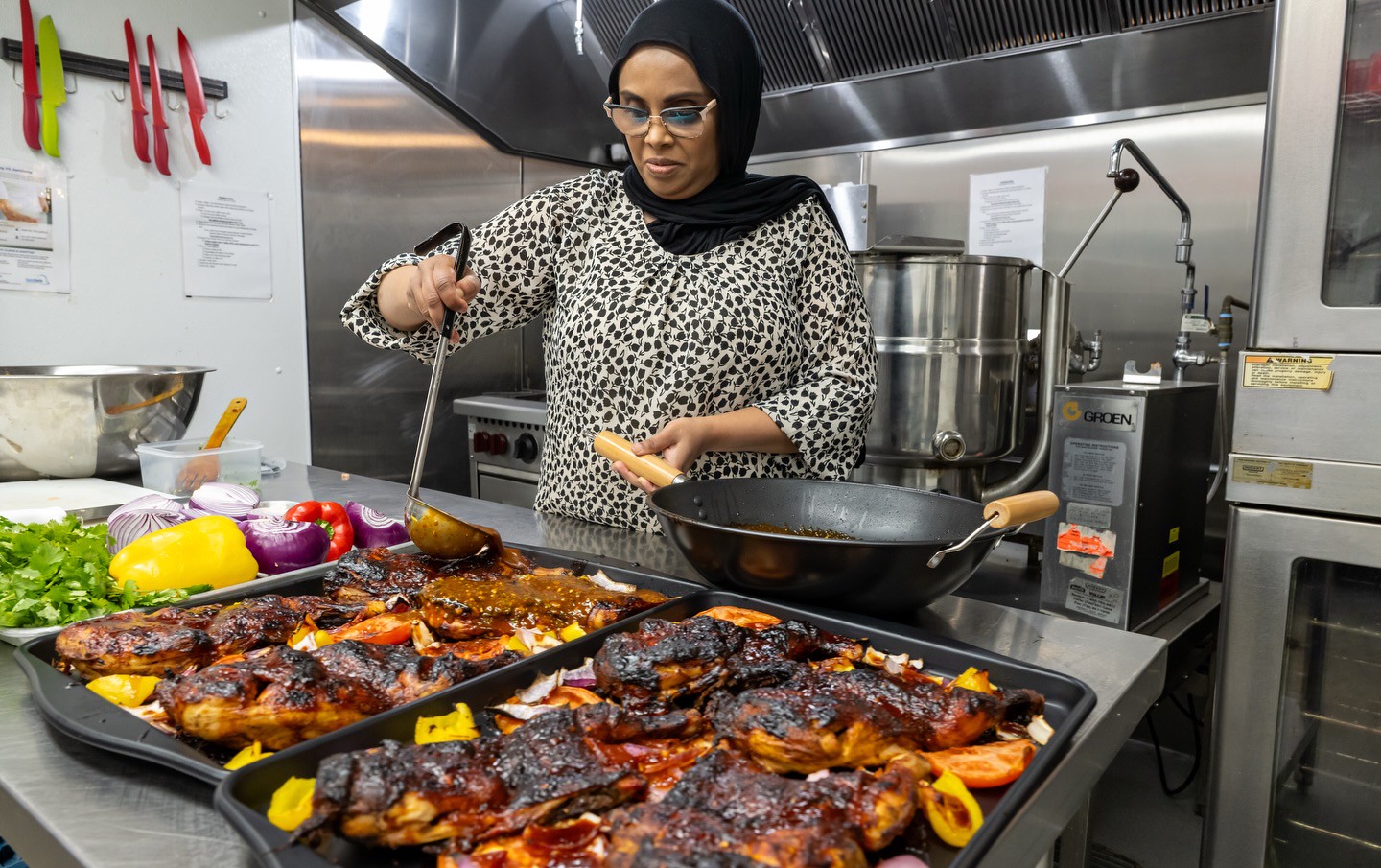
As the only licensed incubator kitchen in Washtenaw County, Growing Hope is taking on an even larger role in supporting local food entrepreneurs.
The Ypsilanti nonprofit recently announced plans to expand its incubator kitchen operations through a Shared Kitchen Network that connects entrepreneurs with licensed commercial kitchens throughout the county. The initiative comes after the closure of Rosie’s Community Kitchen in 2024, leaving Growing Hope as the county’s sole licensed incubator kitchen.
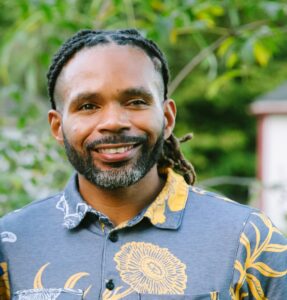
For Executive Director Julius Buzzard, the expansion is about much more than providing kitchen space.
Building businesses, not just providing kitchens
Buzzard says one of his greatest sources of pride is seeing entrepreneurs continue to succeed long after they leave the incubator.
“I’m most proud of the businesses that are still open,” Buzzard said. “Food entrepreneurship is hard, the margins are thin, and the barriers are real and disproportionately steep for the entrepreneurs we serve. When I see a Growing Hope graduate running a thriving café or landing a wholesale account, I know that represents years of persistence on their part and real, sustained investment on ours. What I’ve learned is that space alone is never enough.”
He says successful entrepreneurs also need guidance, mentorship, and a strong support network.
“Entrepreneurs need licensing guidance, pricing support, and someone who answers the phone and listens,” Buzzard said. “They need peers; other food business owners who understand the particular loneliness of building something from scratch. Our job isn’t just to hand someone kitchen keys. It’s to help them build the relationships and knowledge that make the business survivable.”
Meeting growing demand
The closure of Rosie’s Community Kitchen highlighted a significant gap in Washtenaw County’s food infrastructure.
“When Rosie’s closed in 2024, we immediately felt the weight of it; entrepreneurs who had been relying on that space came to us, and we had to be honest about our own capacity limits,” Buzzard said. “That moment made clear that Washtenaw County has a structural gap in food infrastructure. It pushed us to accelerate our systemic thinking around how we support and build our local food ecosystem. The Shared Kitchen Network model came directly out of that reckoning.”
Buzzard says the expansion is also driven by years of increasing demand from entrepreneurs who have outgrown traditional incubator services.
RELATED: The Ann Arbor Local Food Festival will Celebrate Sustainably Grown Local Food
“Demand has been outpacing capacity for years. The waitlist doesn’t lie,” Buzzard said. “But beyond the numbers, we kept seeing the same pattern: entrepreneurs who had proven their concept, built a customer base, and were ready to scale, but had nowhere to go.”
He explains that the new model is intended to bridge that gap.
“The incubator is designed for early-stage development,” Buzzard said. “The accelerator fills the next chapter. Together, they form a real pipeline. The entrepreneurs we most want to reach are those the traditional business development ecosystem tends to overlook: people without access to startup capital or credit.”
A countywide kitchen network
Rather than constructing new commercial kitchens, Growing Hope plans to maximize existing resources by partnering with licensed facilities across the county.
“The Kitchen Network connects food entrepreneurs with underutilized licensed kitchen space across Washtenaw County, kitchens that already exist, already have equipment, but aren’t running near capacity,” Buzzard said. “We vet those sites, bring them into our network, and match entrepreneurs with the space that fits their needs and location. It’s an asset-based model: instead of building from scratch everywhere, we activate what’s already here.”
Bridge Community Café will serve as the pilot location for the initiative.
“Bridge Community Café is a natural fit because of its mission, its capacity as a space, and its proximity as a pilot for this type of partnership,” Buzzard said.
Supporting entrepreneurs every step of the way
Growing Hope’s services extend well beyond commercial kitchen access.
“We meet people where they are. We help them figure out what’s actually required: licensing, food safety certification and the right production setup for their product, without making that process feel like a wall. There’s coaching, peer connection, market access through the Ypsilanti Farmers Market, and honest conversations about pricing and business model before they’ve sunk money they don’t have into something that won’t pencil out,” Buzzard said.
Buzzard points to entrepreneur Eric Kinsler-Holloway of EK’s Cheesecakes as an example of the program’s impact.
“Eric came to us with a family recipe, a real product, and the drive to do it right. What he found in our kitchen wasn’t just equipment, it was a community of fellow entrepreneurs, mentorship, help navigating certification and insurance and eventually a path to his own certified production space. He now shares that space with other food entrepreneurs he met through Growing Hope,” Buzzard said.
Creating a stronger local food economy
Buzzard believes that helping food entrepreneurs succeed is central to building a more equitable food system.
“Food sovereignty means communities having real power over their food: what’s grown, how it’s processed, who profits, and who eats well,” Buzzard said. “Supporting food entrepreneurs is food sovereignty in economic form. Our makers are simultaneously creating income, preserving culture, feeding their neighbors well, and keeping food dollars in the community.”
Looking ahead, he sees locally owned food businesses playing a key role in Ypsilanti’s future growth.
“Food businesses are community infrastructure,” Buzzard said. “They represent a gathering point, a cultural anchor and a reason people stay in a neighborhood and feel invested in it. Downtown Ypsilanti is at an inflection point right now. There’s real investment happening. The question is whether that investment creates opportunity for the people already here, or displaces them.”
Five years from now, Buzzard hopes the investment will have created a thriving network of local businesses throughout the county.
“Success looks like a dozen food businesses that came through our incubator and accelerator operating sustainably in Washtenaw County; in storefronts, at markets, in wholesale accounts, employing their neighbors,” Buzzard said. “It looks like the Kitchen Network has four or five satellite sites across the county, so that geography and transportation aren’t barriers to entry. It looks like the Ypsilanti Farmers MarketPlace functioning as a genuine year-round food hub where residents can complete their grocery shopping while supporting local producers.”
Growing Hope has opened the doors of the Growing Hope Accelerator Kitchen, a fully licensed, shared commercial kitchen and retail space at the Ypsilanti Farmers MarketPlace that transforms years of food entrepreneurship programming into permanent, community-owned infrastructure.
Designed for small food businesses ready to scale without taking on unsustainable debt, the facility offers expanded cold storage, commercial prep space, and shared equipment, along with a collaborative retail storefront where multiple makers sell prepared and packaged foods to Ypsilanti families year-round.
From groundbreaking to grand opening in a single year, the Accelerator Kitchen is a place where entrepreneurs have the infrastructure, relationships and market access to build lasting economic power.

Donna Marie Iadipaolo is a writer, journalist, and State of Michigan certified teacher, since 1990. She has written for national publications like The Village Voice, Ear Magazine of New Music, Insurance & Technology, and TheStreet.
She is now writing locally for many publications, including Current Magazine, Ann Arbor Family, and the Ann Arbor Independent. Her undergraduate degree is from the University of Michigan, Ann Arbor, where she graduated with an honors bachelor’s degree and three teacher certificate majors: mathematics, social sciences, English. She also earned three graduate degrees in Master of Science, Master of Arts, and Education Specialist Degree.

