
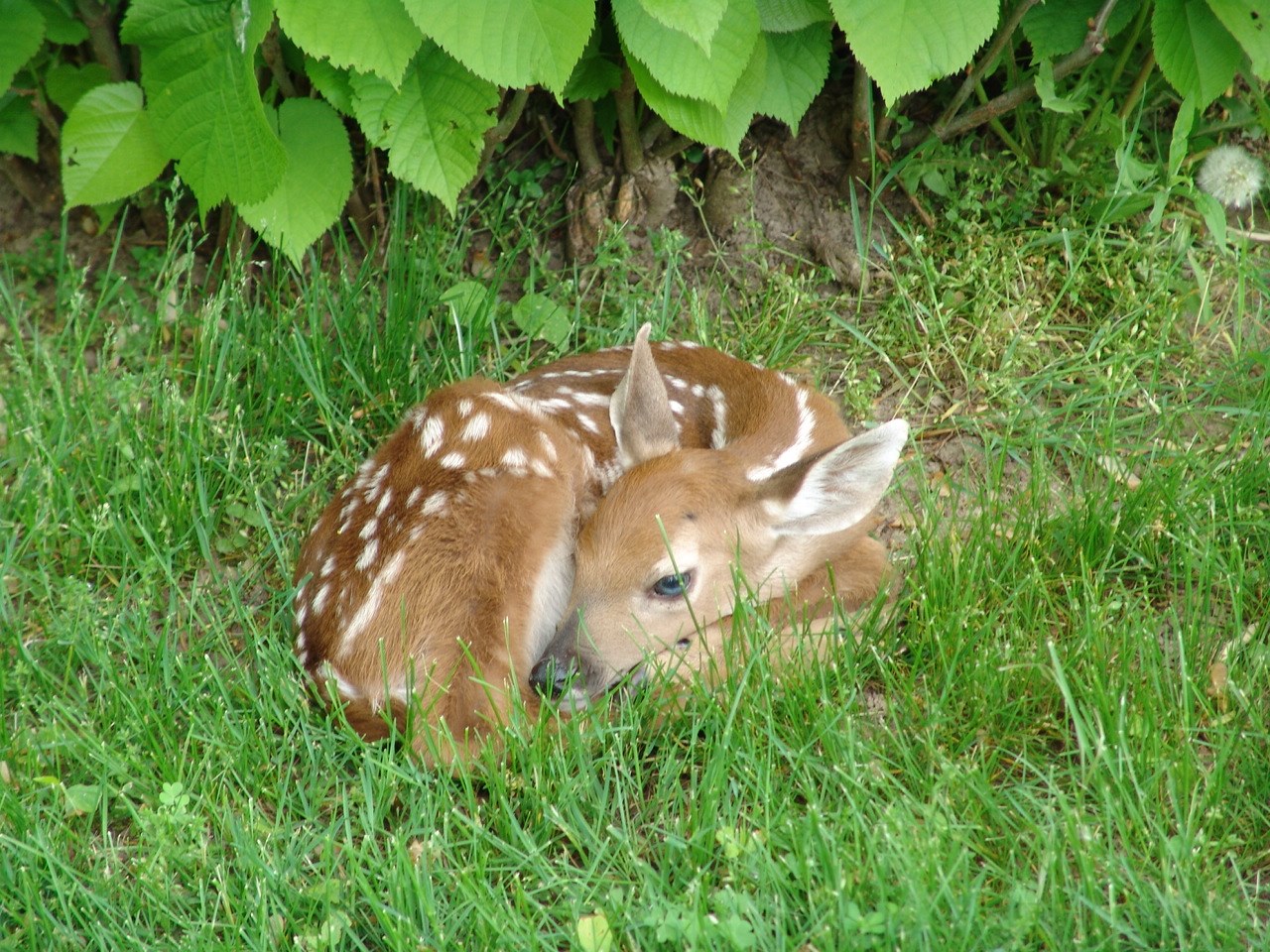
As Ann Arbor continues its debate over how to address conflicts involving the city’s deer population, the Humane Society of Huron Valley (HSHV) is urging city leaders and residents to reconsider the use of lethal methods.

Tanya Hilgendorf, president and CEO of HSHV, said the organization’s position remains firmly opposed to a shooting cull and instead advocates for addressing specific human-wildlife conflicts through prevention, education and coexistence.
“Our position is simple,” Hilgendorf said. “We don’t believe wildlife need human managers, and we don’t believe killing is an acceptable solution to conflicts with wildlife.”
According to Hilgendorf, HSHV believes there is not scientific justification for a cull and argues that the city’s deer concerns reflect a conflict created largely by human development patterns rather than a biological crisis among deer.
“There is no demonstrated biological overpopulation or public health emergency that justifies bringing sharpshooters into our neighborhoods and parks,” she said. “Last time, the City chose killing before seriously exploring humane alternatives. We opposed it then, and we oppose it now.”
A debate over what ‘overpopulation’ means
Supporters of deer reduction efforts have raised concerns about vehicle collisions, damage to gardens and landscaping, impacts on native plants and possible ecological consequences of deer browsing. Some argue that reducing the deer population could help restore forests and protect biodiversity.
Hilgendorf, however, questions whether the term “overpopulation” accurately describes Ann Arbor’s situation.
“The burden of proof belongs to those claiming overpopulation,” she said. “But the DNR has already stated we don’t have a biological overpopulation but simply more deer than some people want.”
RELATED: Walk Your Way to Health and Happiness Together
She added that defining a population as “too large” requires a clear scientific standard.
“The term ‘overpopulation’ gets thrown around without much understanding of what it actually means,” Hilgendorf said. “How many deer are too many? According to whom? Based on what scientific standard?”
HSHV’s argument is that the issue is not necessarily the number of deer, but rather the way humans and wildlife now share increasingly limited spaces.
“We’ve built roads through wildlife corridors and surrounded natural areas with housing development,” Hilgendorf said. “We shouldn’t be surprised when animals cross our roads or eat our gardens.”
Concerns about lethal methods
Hilgendorf said HSHV opposes culling not only because of concerns about individual animals, but also because the organization believes killing does not provide a long-term answer.
“We don’t believe in killing to control wildlife populations,” she said. “Animals are individuals, not simply numbers to be managed.”
She also questioned whether a cull can permanently resolve conflicts involving deer.
“And killing is not a lasting solution,” Hilgendorf said. “Deer populations rebound as resources increase, creating a cycle of killing year after year.”
Hilgendorf compared repeated culling efforts to a maintenance cycle rather than a permanent solution.
“A cull isn’t a one and done, magic bullet kind of solution,” she said. “Some say it has to be treated like ‘mowing the lawn’ — showing the endless cycle of killing, but also the disregard for life.”
Beyond animal welfare concerns, Hilgendorf said previous culling efforts affected the broader community.
“The last cull brought sharpshooters near homes, schools, and public parks, restricted access to cherished natural spaces, divided our community, and consumed valuable public resources,” she said. “All without resolving the underlying conflicts.”
She believes communities should look for alternatives to violence.
“We as a community and a society need to reject violence as a means to solve problems,” Hilgendorf said. “It never works.”
The ecological role of deer
One of the central arguments from some supporters of a cull is that too many deer can harm native vegetation and forest ecosystems. Hilgendorf argues that this perspective overlooks the ecological role deer play.
“We recognize that conflicts happen, and we should take reasonable steps to prevent them,” she said. “But killing some animals doesn’t eliminate those conflicts or the need for prevention.”
Hilgendorf said deer are part of Michigan’s natural ecosystem and contribute in ways that extend beyond plant consumption.
“As for ecological damage, deer are native animals with an important ecological role,” she said. “They disperse seeds, cycle nutrients, sequester carbon, and thin the forest so sunlight can get through.”
She added that judging ecosystem health by one species’ impact can provide an incomplete picture.
“We can’t judge the health of an entire ecosystem by counting how many plants deer eat,” Hilgendorf said.
Hilgendorf also pointed to the work of Yale ecologist Dr. Oswald Schmitz, who has written about how animals influence ecosystems and biodiversity.
“Their ecological roles can’t be understood by looking at one species or one patch of vegetation in isolation,” she said.
She believes human activity must also be considered when discussing ecological damage.
“And, if we look only for damage, that’s what we’ll find,” Hilgendorf said. “All life has ecological benefits and impacts, including us. And no species has damaged our ecosystems more profoundly than humans.”
Seeking solutions without killing
Instead of focusing on population reduction, HSHV advocates for what Hilgendorf calls site-specific conflict management.
“We’ve never promoted ‘deer management’ of any type,” she said. “We promote site-specific human-wildlife conflict management.”
That approach focuses on addressing specific problems rather than attempting to control the number of animals living in an area.
“Rather than trying to control the number of animals who live here, which is extremely difficult, we should identify specific conflicts and address their actual causes,” Hilgendorf said.
Possible strategies include deer-resistant landscaping, fencing, repellents, tree wrapping, driver education, road safety improvements and public awareness.
“A great example happening in other areas is wildlife crossings—such as overpasses, underpasses, and fencing—that help animals cross roads safely, drastically reduce vehicle collisions, and protect both wildlife and motorists,” she said.
Hilgendorf acknowledged that no single approach will solve every conflict but believes a combination of preventative strategies can help communities live alongside wildlife.
“No single method solves every problem,” she said. “But with better understanding, we can approach these challenges with more respect and patience.”
“We can learn to live alongside wildlife instead of killing them,” she added.
The challenge of coexistence
For residents frustrated by deer eating gardens or concerns about safety, Hilgendorf said she understands the challenges but believes coexistence requires compromise.
“I would remind them that we need to learn to share better, and that this is the deer’s home, too,” she said. “In fact, it was their home first.”
She said communities must accept that humans cannot completely control the natural world.
“Living alongside wildlife requires some patience, compromise, and accepting that we don’t get to control everything around us,” Hilgendorf said.
While acknowledging that residents value their gardens and landscaping, she believes convenience should not determine whether animals live or die.
“I understand and appreciate that people value their gardens and landscaping, and that prevention takes some effort,” she said. “But convenience shouldn’t outweigh another living being’s right to exist.”
Hilgendorf also questioned where lethal wildlife management would end.
“And where does the killing end?” she asked. “Should we have rabbit and squirrel culls, too?”
Questions about Lyme disease and vehicle collisions
Some arguments for deer population reduction involve concerns about Lyme disease and vehicle collisions. Hilgendorf said those issues are more complicated than simply reducing deer numbers.
“There is no scientific consensus that urban deer culls reduce human Lyme disease risk,” she said. “The relationship between deer, ticks, other animal hosts, and disease transmission is far more complicated than often portrayed.”
She also pointed to research examining long-term connections between deer abundance and Lyme disease risk.
Hilgendorf said vehicle collisions should also be addressed through strategies beyond deer reduction.
“Also, reducing deer numbers doesn’t automatically mean fewer vehicle collisions,” she said. “Our collisions have increased with increased traffic.”
She believes transportation patterns and human growth are important parts of the discussion.
“We talk about deer ‘overpopulation’ but rarely mention Ann Arbor’s dramatic human population growth, including the student population, over the last few decades,” Hilgendorf said.
A different vision for Ann Arbor’s future
Hilgendorf said HSHV hopes Ann Arbor will pursue a different model—one focused on compassion, science, and coexistence.
“Again, we don’t believe wildlife need managers,” she said. “A successful approach would look a lot like what Ann Arbor had for most of its history: leave the deer alone.”
She believes the city should consider the broader values that define the community.
“We’re a community that prides itself on compassion, science, innovation, nonviolence, and respect for nature,” Hilgendorf said.
“Surely, we can find better ways to live alongside our wild neighbors than paying people to shoot them,” she added.
For Hilgendorf, reconsidering lethal approaches could open the door to new ideas.
“When you take killing off the table, new solutions emerge,” she said.
Donna Marie Iadipaolo is a writer, journalist, and State of Michigan certified teacher, since 1990. She has written for national publications like The Village Voice, Ear Magazine of New Music, Insurance & Technology, and TheStreet.
She is now writing locally for many publications, including Current Magazine, Ann Arbor Family, and the Ann Arbor Independent. Her undergraduate degree is from the University of Michigan, Ann Arbor, where she graduated with an honors bachelor’s degree and three teacher certificate majors: mathematics, social sciences, English. She also earned three graduate degrees in Master of Science, Master of Arts, and Education Specialist Degree.

