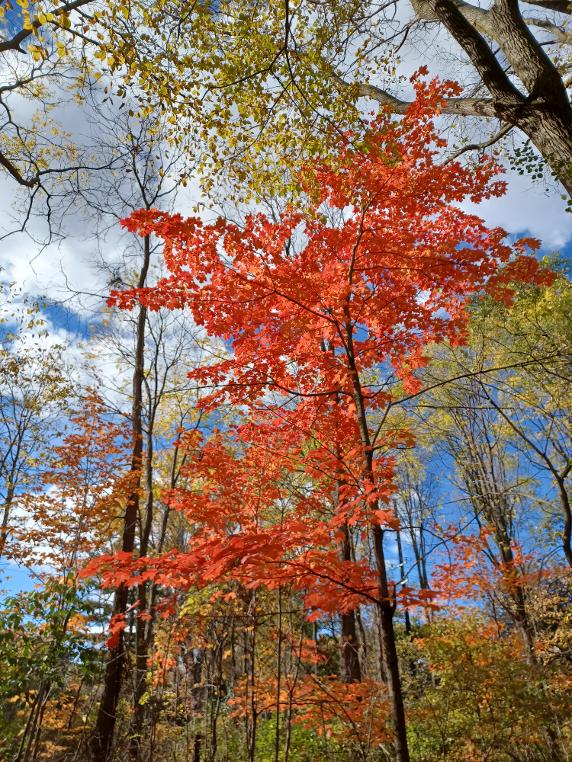
Walking improves your body. Walking with a partner improves your mind. Spending time outside, walking with a loved one, helps build happiness. The daylight and fresh air, combined with a meaningful conversation, uplifts your mood. Getting away from the daily grind, even just for a few minutes, can make stressful topics less bothersome. It helps our minds shift from what can’t be done to what can be done. Walk with a neighbor, a friend, a sibling, your parents, your children, your spouse, or anyone else you enjoy spending time with!
Bothered no more
We are entering the time of year when there is the least amount of daylight. This can lead to vitamin D deficiency, illness and depression. Walking outdoors helps to alleviate these concerns! Life is busy enough when all goes well. Why bother yourself with illness or depression caused by vitamin D deficiency?
We have been walking together about five days per week for the last three years. It does wonders for our physical and mental health, and our relationship. We are less bothered when we walk, and not bothered at all when we walk together! We build strength together, with nature’s help.
Theologian and philosopher Soren Kierkegaard wrote of the benefits of walking in a letter to his niece, Henriette Lund, in 1847. “Above all, do not lose your desire to walk. Every day, I walk myself into a state of well-being and walk away from every illness. I have walked myself into my best thoughts, and I know of no thought so burdensome that one cannot walk away from it.”
Forest bathing
Walking on an unpaved path among trees yields greater benefits than walking on concrete among buildings. Both have benefits, but the benefits are amplified when walking in a forest or a forest-like environment. The healing elements of forests include scenery, oxygen, sunlight and sound. The sounds of the wind through the trees, of leaves or snow crunching beneath your feet, of water running in a nearby stream, and of birdsong all combine to soothe your mind while you move your body.
Japanese immunologist, Dr. Qing Li, spent 20 years researching to prove that trees release chemicals into the air that decrease stress hormones and amplify your immune system. He found that spending time among trees increased the activity of natural killer cells that help the body fight virus-infected and cancerous cells. When we are outside, we breathe in the natural components released by trees into the air. They produce these components to protect themselves, but they protect us as well.
Li also found that forest walks were associated with lower cortisol levels, blood pressure, and heart rates when compared to urban environments. Forested areas are abundant sanctuaries of life. Certain insects, fungi, bacteria, and plants produce monoterpenes which help our immune systems. These positive traits are similar to those found in essential oils.
Earthing and grounding
In warmer weather conditions, in areas without debris, it can be beneficial to walk barefoot outside on grass or soil. The skin is our largest organ, and the soles of our feet can absorb helpful nutrients and positive electrical energy through the ground. We are bioelectric. Medical equipment like EKGs and EEGs measure the electrical activity in our brain and heart. We need this electrical activity in our bodies to sustain life. The electrical fields in our body naturally attempt to function at a specific frequency. When this alignment is damaged due to stress it can result in illness. Tuning our bodies to the right frequency in nature produces the desired outcome – health – just like tuning our radios to a specific signal gives us the desired outcome – music.
When walking in nature, we also get benefits from breathing clean air. We get away from the volatile organic compounds (VOCs) released into the air from furniture, carpets, and cleaning products which can cause headaches, dizziness, and nausea. VOC concentrations are up to ten times higher indoors than outdoors. Plants, which are abundant outdoors compared to indoors, naturally reduce the amount of harmful chemicals in the air.
Another benefit of forest bathing versus stationary walking on a treadmill is how forward walking engages the parasympathetic nervous system. Rhythmic forward walking signals the brain that you are moving away from danger, and it decreases any anxiety or stress (fight or flight) as well as increasing parasympathetic activation (rest and digest). Walking decreases cortisol and increases endorphins as well as feel-good neurotransmitters. Forward motion calms an overwhelmed brain and clears mental fog and rumination.
Wonders of water
If you are blessed enough to have natural bodies of water nearby while you are walking, you may also experience the healing energies of water. Imagine the waves of a lakeshore or the murmuring of a brook flowing over uneven ground, rocks and pebbles. The sounds alone can promote relaxation. These sounds relax us as the negative ions from falling water increase our serotonin and increase our sense of well-being. Calm and slow-moving water creates tranquility and peace.
We are reminded of the words once said by poet Rainer Maria Rilke (‘reel-kuh’) in a 1903 letter to his wife, Clara Rilke, promoting the benefits of seeking out bodies of water when feeling stressed. “When anxious, uneasy, and bad thoughts come, I go to the sea. And the sea drowns them out with its great wide sounds. It cleanses me with its noise and imposes a rhythm upon everything within me that is bewildered and confused.”
How to get started
Set aside some time, perhaps 20 minutes twice per week during your busier days, to walk near where you live. Then allow maybe 40 minutes, plus a short drive, to a nearby park or nature preserve for a more profound experience on your days off. There are several walking-friendly nature areas throughout Ann Arbor and the surrounding area, like Scio Woods Preserve, Barton Nature Area or Bird Hills Nature Area.

Building connection
Just as walking outside connects us with the healing benefits of nature, walking together connects us to the healing benefits of companionship. We have our best conversations when we are walking together, outside, within or near a forest or near a body of water. We move alongside each other physically and toward each other emotionally. The depth of our relationship expands as we express genuine concern for the well-being of each other and sincere devotion to our better future.

Dale is a freelance writer based in Southeast Michigan. His articles have appeared in 9 countries, on 6 continents, in 5 languages over the last 30 years.

Kim is a freelance writer based in Southeast Michigan. Her background includes extensive teaching experience in managing chronic conditions and balance. She has expertise in Qi Gong and Senior Fitness, and has degrees in Health and Wellness Coaching and Psychology. She is a Certified Personal Trainer and a 3rd degree black belt.