
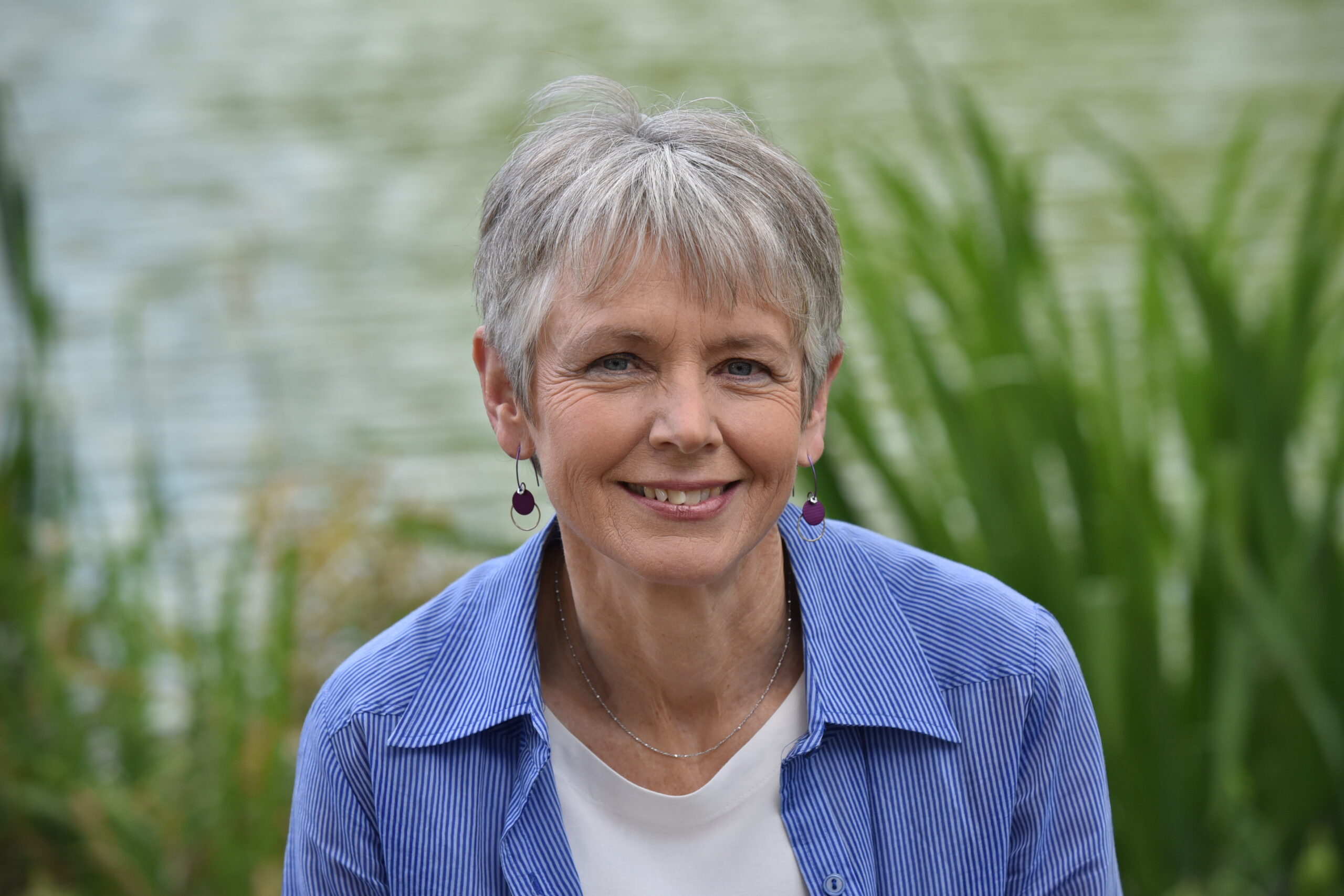
From “Moon River” to beloved Disney melodies, pianist, composer, and educator Ellen Rowe is inviting audiences to hear familiar movie music in an entirely new way. On Sunday, Nov. 15, at 2 p.m., Rowe and her trio will present “The Trio Goes to the Movies” at Kerrytown Concert House, 415 N. Fourth Ave. in Ann Arbor. The latest installment of her popular “All About the Trio” series blends classic film themes with jazz improvisation, offering listeners both an engaging performance and an inside look at how jazz musicians transform well-known melodies into spontaneous musical conversations.
The concert continues a long-running tradition at Kerrytown Concert House, where Rowe and her trio have spent years making jazz approachable for audiences of every background.
Now retired after three decades at the University of Michigan, Rowe remains one of Ann Arbor’s most respected jazz musicians and educators. She served for 30 years in the University’s Department of Jazz & Contemporary Improvisation as Arthur F. Thurnau Professor Emerita and Earl V. Moore Collegiate Professor Emerita of Music. Before coming to Michigan, she directed Jazz Studies at the University of Connecticut for 12 years. A professional jazz pianist, composer, arranger and educator, Rowe earned both her bachelor’s degree in music education and master’s degree in jazz composition and arranging from the Eastman School of Music.
Turning movie magic into jazz
Film music naturally lends itself to jazz because memorable movie themes are written to evoke emotion, making them ideal foundations for improvisation.
“Movie scores are intended to be evocative, which often makes the scores very memorable,” Rowe said. “Composers like Henry Mancini and Johnny Mandel composed gorgeous melodies like ‘Moon River’ and ‘Too Close for Love’ that jazz singers loved to sing (and that people still recognize today) and other composers, such as Cole Porter or Richard Rodgers wrote the kinds of chord changes that lent themselves well to improvisation.”
Rather than simply recreating familiar soundtracks, the trio reshapes them while preserving the melodies audiences know and love.
“Sometimes we will alter up the chord progression a bit to make it more interesting or fun to improvise over and we may also change up the groove or rhythmic feeling to create a slightly different mood or to provide a different kind of inspiration for improvisation,” Rowe said. “We generally stay pretty true to the original melody as we will go ahead and improvise using it as a basis.”
The result is a concert that allows audiences to rediscover songs they already know while hearing them transformed through spontaneous musical conversation.
Familiar favorites—and a few surprises
Movie lovers can expect an afternoon filled with recognizable themes, although Rowe admits narrowing down the program was no easy task.
RELATED: Arthouse/Revival Favorites at Michigan Theater in November
“There are so many film composers that we could devote an entire show to that it has been hard for us to narrow it down!” she said. “We’ll be including songs from Henry Mancini’s score for “Breakfast at Tiffany’s,” some Johnny Mandel (we’ll keep those a surprise), some Richard Rodgers and perhaps visiting some beloved Disney films! We have a slightly more contemporary closer that we think everyone will love but that’s also a surprise.”
The carefully chosen repertoire spans generations, offering something for longtime jazz aficionados, film buffs and newcomers alike.
More than a concert
Since launching the “All About the Trio” series, Rowe has intentionally designed each performance to be equal parts concert and conversation. Audiences hear exceptional musicianship while also learning how jazz works.
“When I set out to create this series, I knew that I needed some of the best jazz musicians I could find to play with, but, as importantly, people who were dedicated educators and able to talk about what they were doing and why,” Rowe said. “Paul Keller and Pete Siers have been ideal colleagues to work with and I think we have found a good way to combine the music with the educational aspect without putting people to sleep. No tweed jackets or pipes on stage! We have a good time up there and I think the people see it and enjoy it because of that.”
That educational mission has become one of the hallmarks of the series.
“Many people say that they don’t like Jazz, but I have found that they often don’t like it because they don’t understand what is going on,” Rowe said. “It has been one of my life’s missions to try and find ways to explain how Jazz works in a way that non-musicians can understand and to try and bring them into the fold.”
She says the formula has resonated with audiences. “We combine musical examples with our verbal explanations, and it seems to be working pretty well” she said. Now that most of our audiences have been coming back year after year, we need to keep finding new things to talk about. I always try and go back to a ‘Back to the Basics’ concert every other year or so to try and bring in some new audience members.”
The chemistry behind the trio
Percussionist and vibraphonist Cary Kocher will join the trio for the Dec. 13 concert. Rowe says the friendships among the musicians are an essential part of the series’ appeal.
“Paul, Pete, and Cary are extraordinary musicians, but they are also very charismatic performers, which is not always the case with gifted artists,” she said. “The fact that they are all committed and experienced educators makes them the perfect guys to be working with. We all learn from each other on-stage and get to hear wonderful stories that we may not have known before. The fact that we are all really good friends is the icing on the cake.”
That camaraderie creates an atmosphere where storytelling, humor, and improvisation naturally intertwine.
Jazz as storytelling
For Rowe, jazz performances unfold much like great films, taking listeners on an emotional journey with a beginning, middle and end.
“A memorable jazz performance should take you on a journey—we present the tune, trying to create a certain mood with our treatment of it,” she said. “After we have established the mood, we then try and develop it, perhaps visiting different emotional territory as we improvise our solos.”
She believes jazz solos are structured much like compelling stories. “I think many of us try and structure our solos so that there is an arc to it, much like an author or filmmaker does, with a clear beginning, middle and end,” Rowe said. “We have control of our tone, volume the number of notes we play and how slow or fast we play them, as well as how consonant or dissonant we want to be. Those all contribute to the overall mood as we try and draw the audience into our personal musings.”
Still discovering new music every day
Even after decades of performing, composing, and teaching, Rowe says jazz continues to inspire her because no two performances are ever alike.
“Jazz is the ‘never the same way twice’ music, so my goal is to find new ways through the chord changes when I improvise, new harmonies to superimpose or new treatments and arrangements that will spur new ideas,” she said.
She credits both legendary musicians and her own students for keeping her curiosity alive.
“I have so many musical heroes that it is easy to put on any number of recordings and just be mesmerized by what players like Bill Evans, Barry Harris, Keith Jarrett or more contemporary players like Myra Melford are playing,” Rowe said. “My students supply inspiration as well—I hear their new compositions and arrangements and find fresh and interesting ideas that also encourage me to explore new pathways. And I think all of us get affected by current events, which can also affect our compositions and our improvisations.”
Why Ann Arbor is such a special jazz community
After spending three decades teaching and performing in Ann Arbor, Rowe says the city’s remarkable musical culture continues to impress her.
“There are so many musically literate people in this town—I am always amazed by the number of double majors at UM, for example, who are majoring in political science and Tuba, or maybe French Literature and Performing Arts Technology,” she said. “The community at large is like that as well—so many doctors, accountants, veterinarians, book store owners, etc. who are also amateur or even professional musicians. That level of knowledge and appreciation in our audiences makes it a joy to perform here.”
She especially enjoys interacting with audiences eager to learn more. “You know people are listening intently because they often ask such wonderful questions during our shows or afterwards,” Rowe said. “The school systems here are fabulous and have remarkable music and arts programs, which create fine young performers who contribute so much to our musical community. And we have such a wealth of wonderful venues and presenters—Kerrytown Concert House, of course, The Blue LLama, The Ark, UMS, all of the hundreds of free UM School of Music concerts—the list goes on and on! And as if that weren’t enough, we also have terrific Jazz radio stations here, such as WEMU and WRCJ.”
An invitation to everyone
Whether someone is a lifelong jazz fan or has never attended a jazz performance, Rowe hopes they will feel comfortable walking through the doors at Kerrytown Concert House.
“First, you will be welcomed with open arms!” she said. “Second, there is no such thing as a stupid question and we encourage everyone to ask questions during the performance (between tunes, that is!)”
Ultimately, she wants audiences to experience jazz as something inviting rather than intimidating.
“We love to talk about what we do,” Rowe said, “but as I said before, it is not a stuffy lecture, but rather hopefully an entertaining combination of music and talk.”
The “All About the Trio” season continues with performances at 2 p.m. Sundays at Kerrytown Concert House, 415 N. Fourth Ave., on Nov. 15, Dec. 13, March 14, April 11, and a special Mother’s Day concert on May 9.
The Nov. 15 concert, The Trio Goes to the Movies, features Rowe with bassist Paul Keller and drummer Pete Siers as they reinterpret memorable film music through the lens of jazz while sharing stories, demonstrations, and musical insights with the audience.
The Dec. 13 concert will be a concert of holiday music reimagined through a Jazz lens. On March 14 the show will be devoted to Cole Porter’s revered Jazz standard, “All of You” with guest vocalist Sunny Wilkinson, trumpeter Kris Johnson and vibist Cary Kocher joining the trio to recreate versions of the tune as performed by Miles Davis, Sarah Vaughan and the Modern Jazz Quartet, as well as trio versions by Ahmad Jamal, Bill Evans and Keith Jarrett.
On April 11 the trio will celebrate Oscar Peterson’s famous “We Get Requests” album, talking about the arrangements and analyzing how that great trio interacted with each other.
On May 9 Ellen will be joined by Marion Hayden on bass, Annie Hayes on drums, Ingrid Racine on trumpet, and Sunny Wilkinson in a performance of compositions by female jazz composers and arrangements of pieces by Joni Mitchell and Carole King.
Browse upcoming performances and buy tickets directly on the Kerrytown Concert House Events Calendar.
Donna Marie Iadipaolo is a writer, journalist, and State of Michigan certified teacher, since 1990. She has written for national publications like The Village Voice, Ear Magazine of New Music, Insurance & Technology, and TheStreet.
She is now writing locally for many publications, including Current Magazine, Ann Arbor Family, and the Ann Arbor Independent. Her undergraduate degree is from the University of Michigan, Ann Arbor, where she graduated with an honors bachelor’s degree and three teacher certificate majors: mathematics, social sciences, English. She also earned three graduate degrees in Master of Science, Master of Arts, and Education Specialist Degree.

