
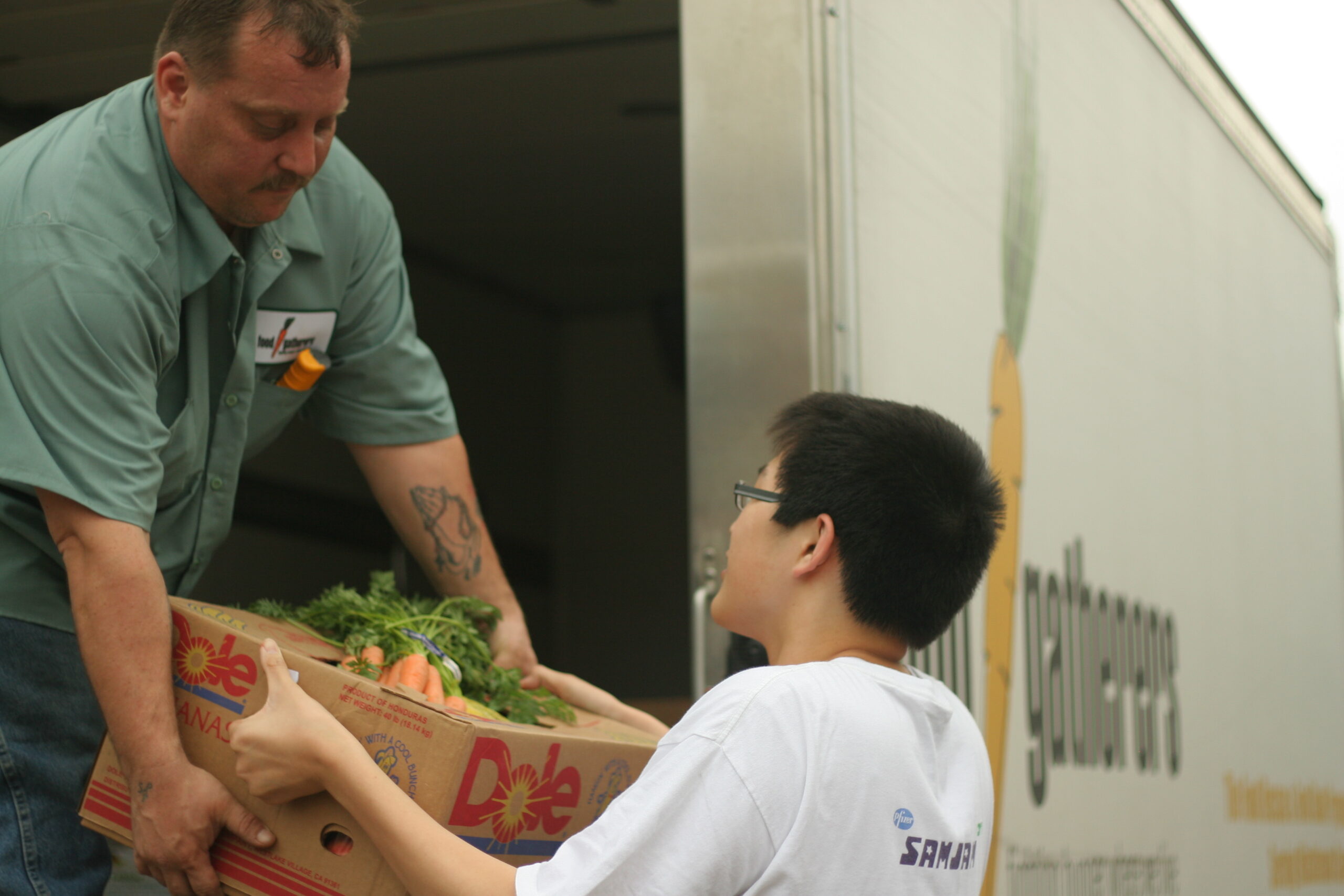
For many families in Washtenaw County, the challenge of putting nutritious food on the table has become increasingly difficult as the cost of everyday essentials continues to rise. At the same time, the organizations working to address hunger are facing their own financial pressures, including higher food and transportation costs and reductions in federal food assistance.
Food Gatherers, Washtenaw County’s food bank and food rescue program, is preparing for what it describes as “a new era of elevated and sustained need.” The organization supports 140 food pantries and meal programs throughout the county and serves nearly 60,000 community members annually who do not have reliable access to the nutritious food they need.
According to Food Gatherers President and CEO Eileen Spring, the increased need is already visible through more frequent visits to food pantries and meal programs.
“Since the onset of the pandemic, visits to pantries and meal sites have steadily increased,” Spring said. “Due to changes in access to SNAP, Medicaid, et cetera, and the high cost of basic essentials, we anticipate this trend will continue. In September 2026, we served 18% more household visits than in June 2025.”
During the past fiscal year, Food Gatherers and its network reached a significant milestone, serving 1,125,595, counting every individual in each household each time they received assistance.
A growing need across the community
Food insecurity affects people from many different backgrounds, including families with children, seniors, individuals with disabilities and people facing unexpected financial challenges.
While food assistance has always been important for vulnerable residents, Food Gatherers reports that current economic pressures are bringing more people into the hunger-relief system. Rising costs for groceries, housing, transportation, utilities and health care are forcing many households to make difficult choices.
“Because low-income households already spend a disproportionately large share of their income on necessities, price increases for groceries, housing, utilities and healthcare quickly erode their purchasing power,” Spring said. “When fixed expenses like rent, gas and electricity rise faster than wages, food is often the first budget item families cut. Households must make difficult choices between paying rent, buying medication, keeping the utilities on and buying groceries.”
Spring emphasized that food insecurity is not only about having enough calories. It is also about having consistent access to nutritious food that supports health and well-being.
RELATED: Meet Food Gatherers Executive Director: Eileen Spring
When household budgets become stretched, families may be forced to purchase cheaper, less nutritious foods because fresh produce, dairy products, and lean proteins can be more difficult to afford. Over time, a lack of nutrient-rich foods can contribute to increased health risks, particularly for children.
Federal food reductions create new challenges
One of Food Gatherers’ biggest challenges is the dramatic decrease in food available through federal programs, particularly The Emergency Food Assistance Program (TEFAP), which provides USDA food to food banks.
The organization received 3.9 million pounds of TEFAP food in fiscal year 2021. By fiscal year 2026, that number had fallen to 1.6 million pounds.
The loss is significant not only because of the overall reduction in pounds but also because some of the most valuable nutritional resources have declined sharply. Compared with two years ago, Food Gatherers reports that TEFAP pounds of meat, fish, and poultry have dropped by 85%, while dairy volume has declined by 70%.
“It’s not just the pounds; it’s the huge loss of the most nutritious and economically valuable food.”
“The generous ongoing support from local individuals and local organizations will hopefully enable Food Gatherers to continue to purchase food to replace the loss of federal resources,” Spring said.
Rising costs impact the food bank too
The same economic challenges affecting families are also affecting Food Gatherers’ operations.
The organization reports spending 30% more on food purchasing compared with the previous year because of unexpected reductions in federal food resources. Diesel (gas) expenses have also increased by 53%.
As the county’s only food bank, Food Gatherers absorbs much of the cost of purchasing and transporting food so that its nonprofit partners can focus their limited resources on other services.
Food Gatherers’ network includes organizations that provide shelter, affordable housing, medical care, substance abuse treatment, and other programs addressing the root causes of poverty and food insecurity.
“By providing the majority of services to our nonprofit partners at no cost to them, they are able to focus their limited resources on root cause work—providing shelter, affordable housing, substance abuse treatment, medical care, etc.,” Spring said.
The impact of reduced SNAP benefits
Another concern is the decline in access to federal nutrition assistance programs.
Food Gatherers reports that 17% fewer Washtenaw County households received Supplemental Nutrition Assistance Program (SNAP) benefits in September 2026 compared with June 2025. During that same period, SNAP benefits decreased by 19%.
As fewer residents receive assistance through federal programs, more people are turning to local food pantries and meal programs.
“They are relying on our network to put food on the table,” Spring said.
Food Gatherers anticipates that changes to federal programs, including changes affecting Medicaid and housing assistance, will continue to increase demand for food assistance over a prolonged period.
Local stories show the importance of food access
Food Gatherers’ partner organizations see the impact of these challenges every day.
A representative from Berea Cares Food Pantry shared the story of a parent who visits the pantry regularly and described how rising grocery costs affected their ability to afford both food and other necessities.
“A parent who regularly visits our pantry shared that with rising grocery costs, they often had to choose between buying enough food and paying essential bills,” the representative said. “Thanks to the fresh produce, pantry staples, and TEFAP items we receive through Food Gatherers, they were able to prepare balanced meals for their children without that constant stress. They especially appreciated being able to pick up fresh fruits and vegetables, something they often had to skip at the store. Having reliable access to these items not only eased their financial burden but also gave them a sense of stability and dignity during a difficult time.”
Carpenter Place, which provides low-cost HUD housing for seniors and people with disabilities, also described the importance of Food Gatherers’ support.
“Our facility is low-cost HUD housing for seniors and people with disabilities, and I know for a fact that many of our residents would have food shortfalls due to insufficient SNAP benefits if Food Gatherers wasn’t there to make up the difference,” the representative said. “Thanks to Food Gatherers, even when money is tight our residents can still be sure of having access to fresh produce, frozen meats, and plenty of non-perishable and shelf-stable goods.”
How the community can help
As Food Gatherers works to respond to increased demand, Spring said community involvement is more important than ever.
While donations of food, volunteer time and advocacy all help, monetary contributions are especially valuable because they allow Food Gatherers to purchase the specific foods needed at the right time.
“We appreciate all forms of support, but monetary donations are most helpful now because our purchasing power is much stronger than an individual’s,” Spring said. “Monetary donations help us purchase what is needed when it is needed. Our goal is to ensure that 60% of all food distributed is produce and protein, the most nutritionally and economically valuable food for our neighbors.”
Food Gatherers is also encouraging community members to advocate for policies that strengthen food assistance programs, including support for SNAP and TEFAP.
Despite the challenges ahead, Spring believes Washtenaw County has the compassion and commitment needed to help neighbors facing hunger.
“We need to rely on local resources to maintain our service levels,” Spring said. “Food Gatherers and our network are counting on a deeply engaged and generous community to support our Washtenaw County safety net.”
Food Gatherers’ mission is to alleviate hunger and eliminate its causes in Washtenaw County. As the organization enters what it calls a new era of sustained need, community support will remain essential in ensuring that local residents have access to nutritious food.
People in need of food assistance should visit: foodgatherers.org/findfood. People wishing to donate or volunteer should visit: Food Gatherers

Donna Marie Iadipaolo is a writer, journalist, and State of Michigan certified teacher, since 1990. She has written for national publications like The Village Voice, Ear Magazine of New Music, Insurance & Technology, and TheStreet.
She is now writing locally for many publications, including Current Magazine, Ann Arbor Family, and the Ann Arbor Independent. Her undergraduate degree is from the University of Michigan, Ann Arbor, where she graduated with an honors bachelor’s degree and three teacher certificate majors: mathematics, social sciences, English. She also earned three graduate degrees in Master of Science, Master of Arts, and Education Specialist Degree.

