
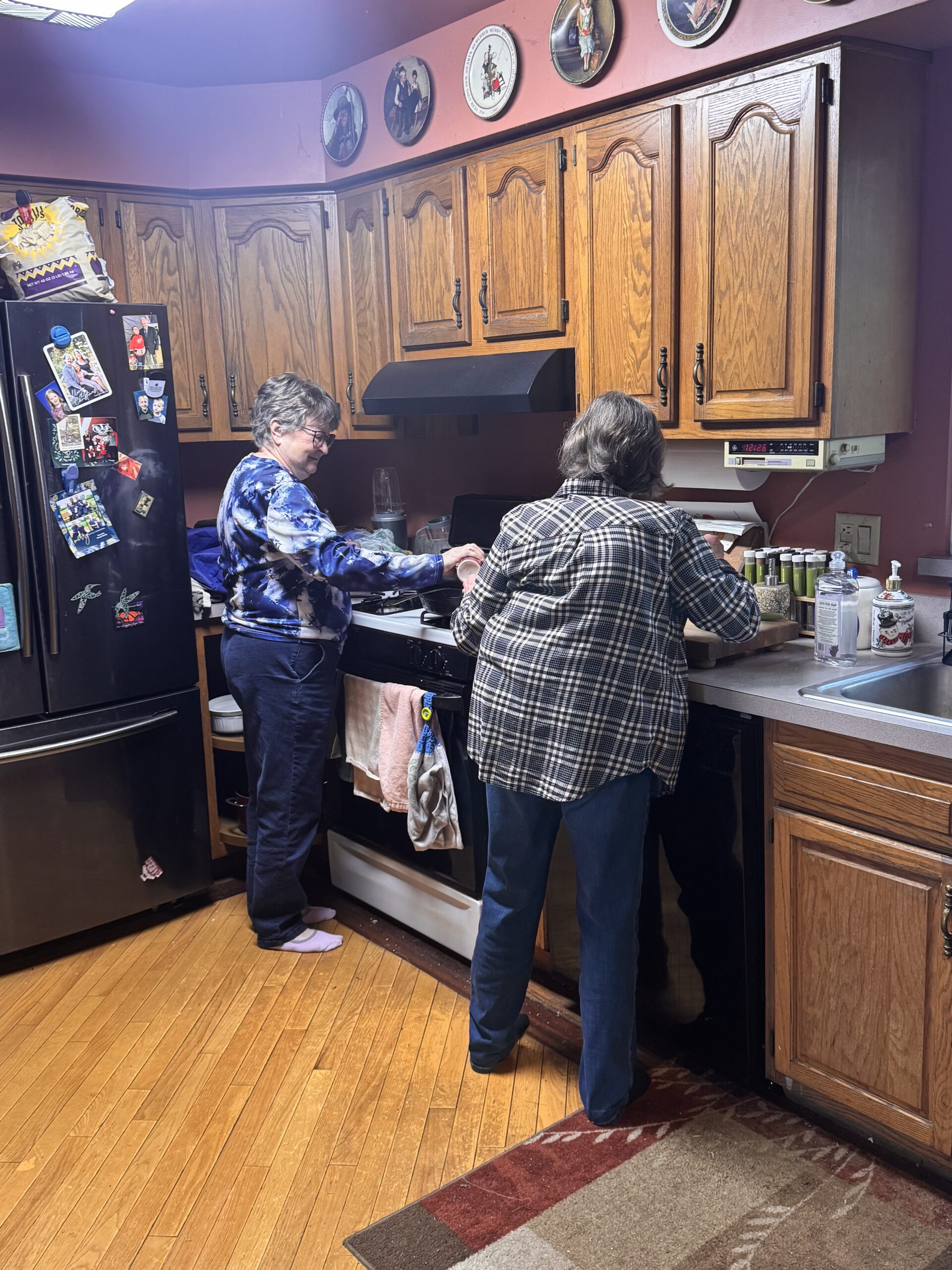
Shared housing—a model that matches home providers with home seekers in mutually beneficial living arrangements—is receiving national attention. The concept was recently featured on NBC’s TODAY show through the National Shared Housing Resource Center, highlighting how communities across the country are using existing housing stock to address affordability while fostering meaningful human connections.
Closer to home, the Washtenaw Housing Alliance (WHA) has revived a local shared housing program that builds upon decades of success in the county while helping shape similar efforts across Michigan and beyond.
Danielle Bryant, Shared Housing Program Coordinator for the Washtenaw Housing Alliance and a member of the National Shared Housing Resource Center’s Board of Directors, says the national attention reflects challenges many communities are now facing.
“The WHA is very pleased that shared housing is getting national attention and, honestly, I was so proud. The National Shared Housing Resource Center is the organization featured, and since I’m on the board, it meant a lot to see this work get that kind of attention. I think it’s resonating because housing and utility costs keep rising, people are living longer, and a lot of older adults are living alone in homes with empty bedrooms. People are already doing this on their own. Our job is to get more people in these types of living arrangements safely and intentionally,” said Bryant.
Reviving a proven local model
Although the Washtenaw Housing Alliance officially launched its current program last year, shared housing has a much longer history in the county. Bryant notes that the Housing Bureau for Seniors previously operated a successful shared housing program for nearly four decades before it ended during the COVID-19 pandemic.
Today, the Alliance is rebuilding that foundation while also helping other Michigan communities establish similar programs.
RELATED: Avalon Housing Opens New Ypsilanti Housing Complex To Combat Homelessness
“The WHA has brought this model back to Washtenaw County and we are working to help partners replicate it in other Michigan communities. What I contribute to the board is my experience helping to build a program from the ground up: building trust, finding funding, and figuring things out as we go. And it goes both ways. Being on the board means I get to share the learnings from other communities and providers from across the country back to our program and community,” Bryant said.
More than just finding a roommate
Unlike traditional roommate arrangements, the Alliance’s program focuses on thoughtful, carefully facilitated matches that emphasize compatibility, safety and long-term success.
The coalition’s housing and homelessness work with 25 member agencies has shaped the program into one that helps people remain stably housed while expanding affordable housing opportunities. Based on its initial grant funding, at least one participant in each match must be age 55 or older.
“We take our time with every match. Introductory meetings happen in a neutral space, and both people decide together if they want to move forward. Other communities have reached out to learn from us, and Grand Traverse County has used parts of our model and was able to get their own funding to develop a program, which is exciting,” Bryant said.
Addressing affordability while creating community
Bryant believes shared housing offers a practical response to Washtenaw County’s housing affordability challenges by making better use of homes that already exist.
Rather than requiring new construction, the program connects people who have extra space with those seeking affordable housing.
“Shared housing better uses existing homes in the community. There are so many spare bedrooms in this county and filling them doesn’t require building anything new. Home seekers usually pay somewhere between $500 and $850 a month, which is a lot less than most rentals around here. Home providers get extra income that can help with things like taxes, utilities and home repairs,” Bryant said.
While affordability is important, Bryant says participants often value something even more.
“The rent matters, but what people talk about most is the connection and companionship in a Shared Housing match. Living alone can be isolating, especially as we get older. Just having someone else in the house to share a cup of coffee with or check in with at the end of the day makes a real difference. It also helps older adults stay in their homes and neighborhoods instead of feeling like they must move before they’re ready,” Bryant said.
Unexpected connections
Bryant recalls one current match that illustrates how shared housing often becomes about much more than sharing expenses.
“One match we’re working on right now is a good example. During the matching process, the home provider shared that going to doctor’s appointments alone has been hard, and the home seeker offered to come along as a second set of ears. That wasn’t something we ask for, and neither of them came in expecting it. It’s not just a room. It’s two people looking out for each other,” Bryant said.
Building trust through careful matching
Safety remains the most common concern among prospective participants, Bryant said, which is why the program emphasizes careful screening and relationship-building from the very beginning.
“The biggest concern is usually safety, and that makes sense. You’re talking about sharing your home with someone you don’t know yet. Everyone goes through an application and screening process, and I meet with people one on one to understand what they’re looking for in a match. Introductory meetings are facilitated and held in a neutral space, and nobody is pressured to move forward,” Bryant said.
Each successful match also includes a shared housing agreement outlining expectations, with matches intended to last at least 12 months.
Changing attitudes
Bryant believes public perceptions are shifting as housing costs rise and conversations about loneliness become more common.
“I’m hearing from people who probably wouldn’t have considered this a few years ago. Some of it is cost, but I also think people are more open about loneliness now and more willing to try something new. It’s starting to feel less unusual and more like a practical option,” Bryant said.
Interest has continued to grow throughout the year through community meetings, Home Provider Cafés, and drop-in sessions, with other communities reaching out to learn how they can launch similar initiatives.
Looking ahead
Bryant hopes that within five years, shared housing will become a familiar housing option throughout Washtenaw County—including rural communities—and inspire more programs across Michigan.
“I’d love for shared housing to be something people across the whole county know about, including in rural areas and townships that are harder to reach right now. Success to me looks like more long-term matches, more partners referring people to us, and good outcomes data showing how shared housing helps people stay housed and connected. I’d also love to see more Michigan communities start programs of their own,” Bryant said.
For homeowners who have an extra bedroom but have never considered participating, Bryant encourages them to begin with reflection rather than commitment.
“Start by thinking about what you’d want in a housemate and what you’re not willing to bend on. You don’t have to decide anything right away. Reach out, ask questions, and take it one step at a time,” Bryant said.
For Bryant personally, the program’s greatest reward is simple.
“Watching two people who started out as strangers become part of each other’s everyday lives,” she said.
And if she could change one misconception about shared housing, it would be this:
“That it’s only for people in a housing crisis. It’s for anyone who has space to share or needs a place to live, and a lot of people choose it because they want the company,” Bryant said.
Donna Marie Iadipaolo is a writer, journalist, and State of Michigan certified teacher, since 1990. She has written for national publications like The Village Voice, Ear Magazine of New Music, Insurance & Technology, and TheStreet.
She is now writing locally for many publications, including Current Magazine, Ann Arbor Family, and the Ann Arbor Independent. Her undergraduate degree is from the University of Michigan, Ann Arbor, where she graduated with an honors bachelor’s degree and three teacher certificate majors: mathematics, social sciences, English. She also earned three graduate degrees in Master of Science, Master of Arts, and Education Specialist Degree.

