
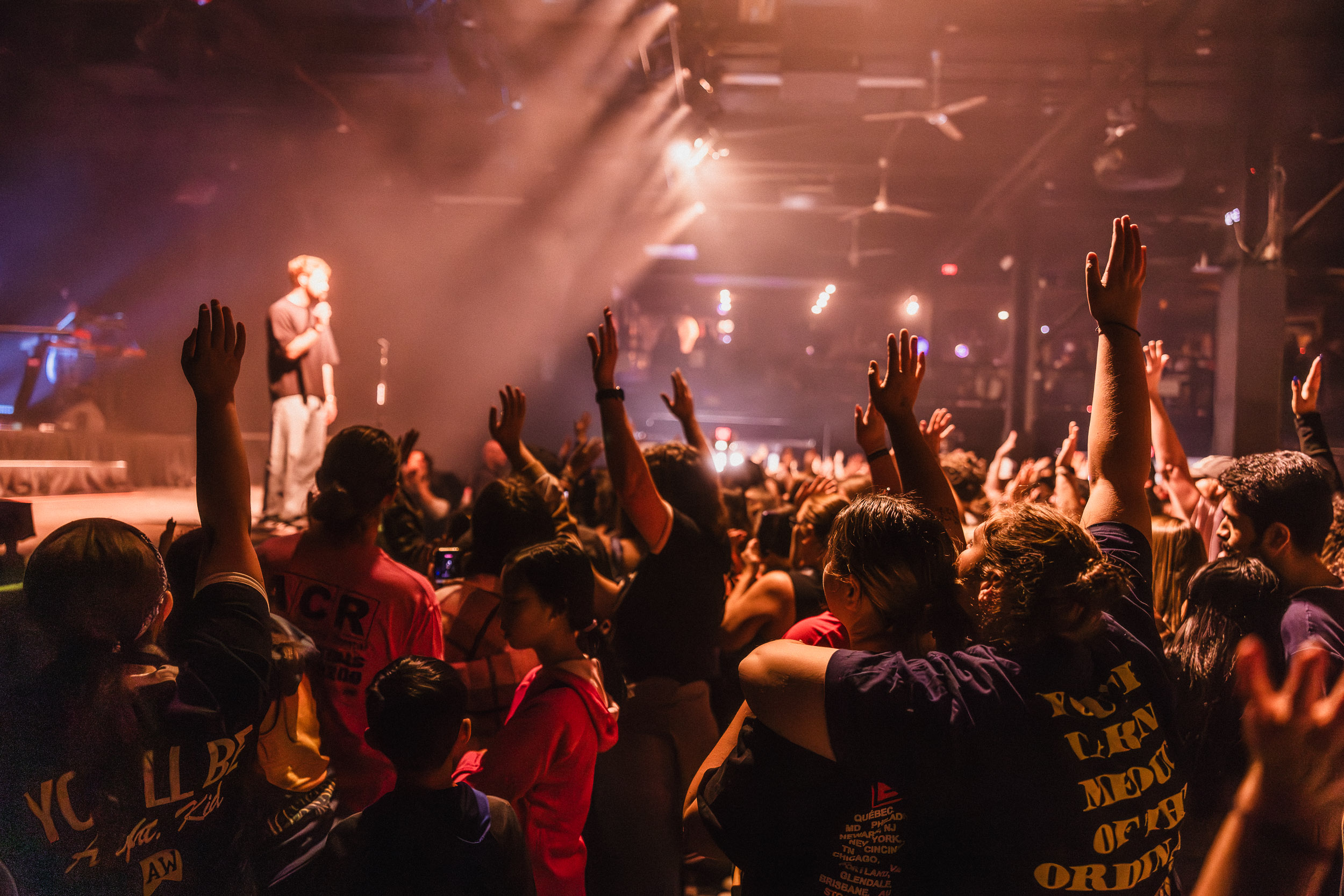
For decades, college campuses have been celebrated as hubs of intellectual discovery, lifelong friendships and youthful ambition. Yet beneath the surface of academic rigor and vibrant social calendars lies a quieter, more pervasive crisis: unprecedented levels of student loneliness and mental health struggles.
Enter Harris Schwartzberg, the founder of Two Bridge and co-founder of the national college campus series Future Friends. Drawing on a 30-year career scaling healthcare and real estate companies—and driven by the deeply personal loss of his brother Steven to a lifelong battle with bipolar disorder—Schwartzberg is applying hard-earned business operating discipline to the mental health landscape.
The Future Friends Campus Series is coming to the University of Michigan Oct. 5–6, featuring special guest Dasha as part of a two-day program centered on in-person connection and student mental wellness.
Bringing the mission home to Ann Arbor
When deciding where to launch the next wave of the Future Friends Campus Series, Schwartzberg and his team looked no further than his alma mater. Having previously launched the concept at Michigan in 2018 with artist Logic and actress Glenn Close, the organizers saw a unique opportunity to re-engage with a student body navigating leadership transitions and academic pressures.
“We chose Ann Arbor because Future Friends founders are Michigan graduates with a long history of working with the University, both in music and mental health,” Schwartzberg said. “Former President Santa Ono and his predecessor, President Schlissel, were true mental health warriors and were largely responsible for bringing our work to Michigan. While the University says they are focused on student mental health, especially with the new policy towards grades for freshmen, the changes in leadership, including the President, Athletic Director, and others who are leaving, have created a void. We’re coming because the students want it and have asked for it and this program will be run by students for students with little or no help from the University.”
Designed by students, for students
Rather than imposing an administrative or top-down framework onto the campus, Future Friends relies on a decentralized, peer-driven model. Student organizations ranging from Sack the Stigma and the Michigan Sports Business Club to the Wolverine Support Network, Hillel, and various Greek life chapters have taken the reins to shape messaging, activations and outreach.
“We are working directly with the students with little support from the University,” Schwartzberg noted. “The students have helped craft the messaging, create the activations, and promote the events. Every school is only as strong as the student body and the students are embracing our message and goals.”
The two-day event features a high-profile lineup designed to spark genuine, face-to-face interactions rather than passive entertainment.
From the premiere of the docuseries Common Denominator—featuring global sensation Noah Kahan—to candid mental health conversations pairing ESPN’s Jay Williams with Detroit Pistons player Duncan Robinson the programming addresses the unique pressures facing modern undergraduates.
Amplifying existing resources without the corporate noise
While the University of Michigan offers an array of mental health services through channels like the Eisenberg Depression Center, organizers note that students frequently remain unaware of these lifelines until they reach a breaking point. Future Friends aims to bridge that gap by partnering with organizations like the National Alliance on Mental Illness (NAMI) to amplify campus resources while strictly avoiding commercial sponsorships.
This October return marks a full-circle evolution for the initiative, building directly upon the foundational groundwork laid by the 2017 and 2018 stigma-reduction programs that first brought artists like Logic and Glenn Close to Ann Arbor. Today, the nationwide tour by Two Bridge continues to combat staggering youth loneliness statistics by harnessing music, culture and face-to-face interaction as a proactive bridge before students ever reach a crisis point.
“Future Friends is working closely with NAMI and the University to promote existing resources,” Schwartzberg stated. “Michigan offers great resources, but students usually don’t learn about them until they are in crisis. Our goal is to use this platform to amplify campus resources. We have said ‘no’ to many sponsors who want to sell commercial resources to students, but our goal is to create community and connection while promoting the staff and resources that already exist. Our goal is to show students that connection and community are the first step to a health mental wellness.”
Shifting the focus from therapy to everyday empathy
Ultimately, Schwartzberg emphasizes that the campaign is not a substitute for clinical therapy, but rather a call to action for everyday empathy. By welcoming resilience speakers like Kevin Hines to share their stories, the program encourages students to look out for one another and master the simple art of checking in.
“We live by a simple motto: ‘You save one life, you save the world,'” Schwartzberg shared. “We would love overflowing attendance, but we are focused on creating community and empathy. Having students walk away realizing that they don’t need to be a trained psychologist to help their friends—they just have to learn how to be good friends. How to listen. How to empathize. They also need to learn that people are struggling, especially today on college campuses, and they don’t realize how much a phone call, or a compliment can change someone’s day and outlook.”

Donna Marie Iadipaolo is a writer, journalist, and State of Michigan certified teacher, since 1990. She has written for national publications like The Village Voice, Ear Magazine of New Music, Insurance & Technology, and TheStreet.
She is now writing locally for many publications, including Current Magazine, Ann Arbor Family, and the Ann Arbor Independent. Her undergraduate degree is from the University of Michigan, Ann Arbor, where she graduated with an honors bachelor’s degree and three teacher certificate majors: mathematics, social sciences, English. She also earned three graduate degrees in Master of Science, Master of Arts, and Education Specialist Degree.

