
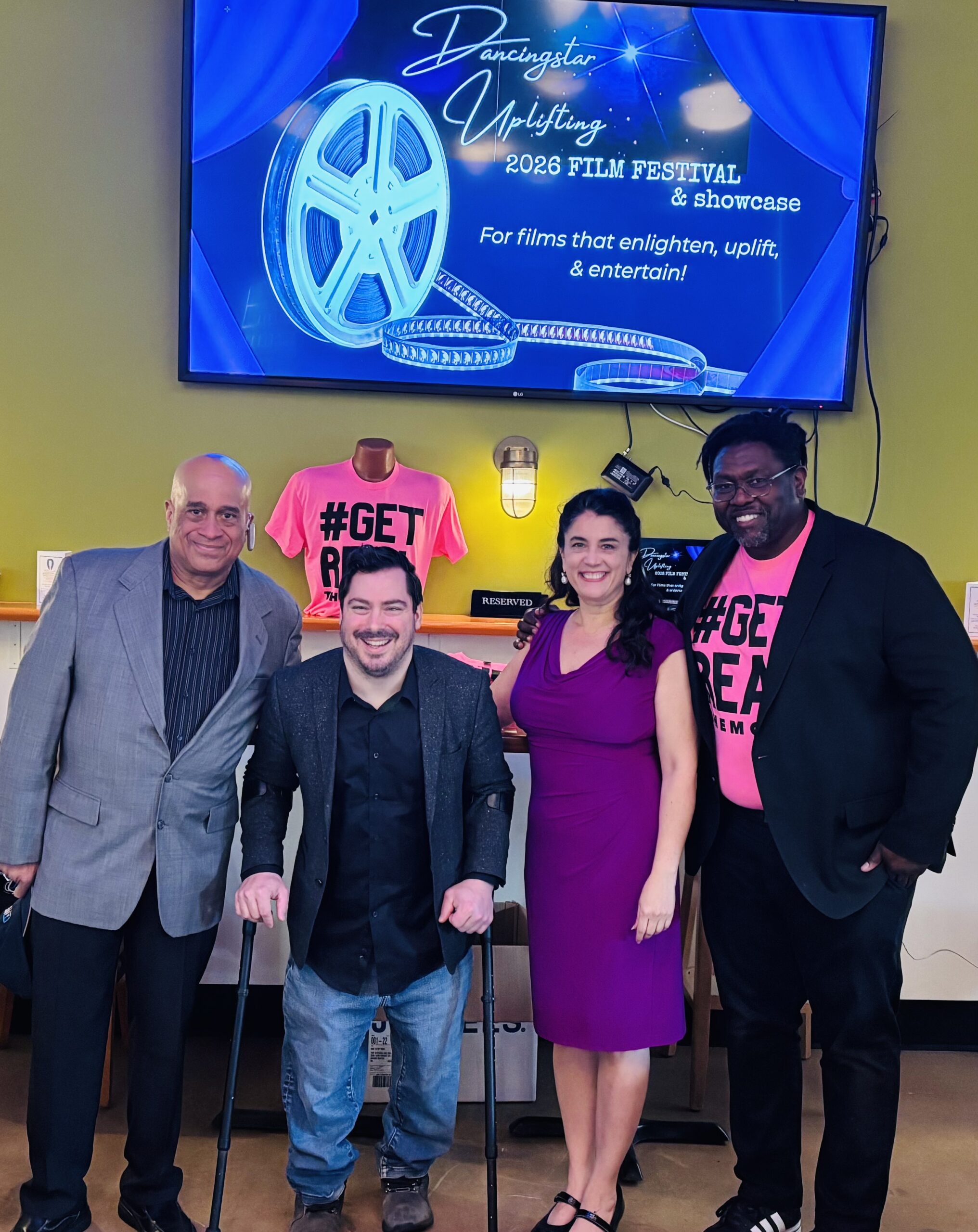
When filmmaker Christina Morales Hemenway launched Dancingstar Productions more than three decades ago, she envisioned creating stories that left audiences feeling hopeful. Today, that same philosophy is shaping both the Dancingstar Uplifting Film Festival and her latest documentary, “Street Stories – Inspiration for RecoverING.”
Hemenway, writer, director, producer, and CEO of Dancingstar Productions, has spent 34 years producing films in Los Angeles and Ann Arbor. Now, she is bringing her passion for positive storytelling to the local community through a film festival dedicated to uplifting films and a documentary designed to inspire action around addiction recovery.
Afestival born from the pandemic
The idea for the Dancingstar Uplifting Film Festival began during the COVID-19 pandemic.
“I was inspired during COVID to create the festival,” Hemenway said. “I thought people may be so bored, they may want to do something creative, but due to the pandemic we didn’t get much traction.”
After restrictions eased, a conversation with Ann Arbor Black Film Festival founder Chris Anderson helped breathe new life into the idea.
“Once people were going out again, my friend Chris Anderson… suggested we revitalize it and because I live in Ann Arbor, we thought this would be the best place to launch it.”
The festival, scheduled for April 25, 2027 at the Michigan Theater’s State Theatre, will showcase short films from around the world that reflect the company’s mission of hope and inspiration.
Defining an “Uplifting” film
Unlike many festivals that emphasize genre or subject matter, Dancingstar’s focus is emotional impact.
“To me, an uplifting story is anyone that makes you feel better than you did when you walked into the theater,” Hemenway said. “As an audience member, I don’t want to invest my money on something that makes me feel worse—I can turn on the news for that.”
She believes even difficult topics can leave audiences inspired. “I think any story can be inspiring with the right perspective. This world is made of dualities, and we get to choose what we want to focus on.”
Hemenway hopes filmmakers from around the world will submit stories offering perspectives audiences in southeast Michigan may never have experienced. “A truly memorable film shifts the way you experience life,” she said.
Storytelling that humanizes recovery
That philosophy also guided the creation of “Street Stories – Inspiration for RecoverING,” a documentary examining addiction, homelessness and recovery through personal stories.
One discovery during filming surprised Hemenway.
“My biggest ‘ah ha’ moment was when many people were sharing about the same gap in the system,” she said. “It seems like the biggest gap is for people with alcohol use disorder who have to get medical detox from the hospital and then have no place to stay until they can get a bed in rehab.”
Rather than simply highlighting the problem, the documentary aims to bring community members together to discuss solutions. Following a free screening on Sept. 12 at the Pittsfield Branch of the Ann Arbor District Library, organizers will host a community brainstorming session focused on addressing that gap.
“There are so many organizations in Ann Arbor doing great things, that if they could collaborate more with one another, this would seem to fill this gap and make the whole system work better,” she said.
RELATED: Tiny Film Festival Winners Announced: Big Stories in Just 60 Seconds
Recovery as an ongoing journey
Even the documentary’s title emphasizes that healing is a process.
“One of the reasons we call the movie ‘Street Stories – Inspiration for RecoverING’ is because the term Recovery makes it sound like a destination you land in, and it’s just smooth sailing from there on out,” Hemenway said. “But no, it’s a lifelong process of healing—thus the RecoverING.”
The documentary is closely connected to Healthy Habits Healing, a program Hemenway created for people working to replace unhealthy habits with healthier ones.
Inspired by the needs revealed during filming, the organization now hopes to establish a post-rehabilitation transitional home where residents can receive support while rebuilding their lives.
“We thought we could help by creating a post-rehab transitional home where people could get support and learn about healthy habits while transitioning back out into society,” she said. “We hope organizations will become community referral partners and people in the community who want to teach about healthy habits will volunteer.”
Building Understanding Through Film
Hemenway hopes both the documentary and the festival will strengthen connections between Ann Arbor’s arts community and its healthcare and behavioral health organizations.
“Through film and personal storytelling, we can humanize recovery and create opportunities for people with lived experience to be seen not simply as patients or people in crisis, but as whole people with creativity, resilience, insight and stories worth hearing,” she said.
Ultimately, she hopes audiences leave both events inspired to take action.
“I hope on the way home from the screening people are discussing what role they can play in helping get unhoused people into long-term recovery,” she said. “As a society, we can’t make people want to get into recovery, but I feel we have a moral obligation to make sure there is a bridge for them if they want to use it.”
She also hopes festivalgoers develop “a healthy habit” of seeking out films that encourage hope and growth.
“The thing I would like people to know the most is that addiction is not a moral issue but a medical issue and should be treated as such.”
Looking five years into the future, Hemenway’s vision is ambitious but simple.
“I’d like to see the festival as thriving with no homeless people on the streets—that Healthy Habits Healing Home is helping to get people in their own homes—warm and safe and watching uplifting movies!”

Donna Marie Iadipaolo is a writer, journalist, and State of Michigan certified teacher, since 1990. She has written for national publications like The Village Voice, Ear Magazine of New Music, Insurance & Technology, and TheStreet.
She is now writing locally for many publications, including Current Magazine, Ann Arbor Family, and the Ann Arbor Independent. Her undergraduate degree is from the University of Michigan, Ann Arbor, where she graduated with an honors bachelor’s degree and three teacher certificate majors: mathematics, social sciences, English. She also earned three graduate degrees in Master of Science, Master of Arts, and Education Specialist Degree.

