
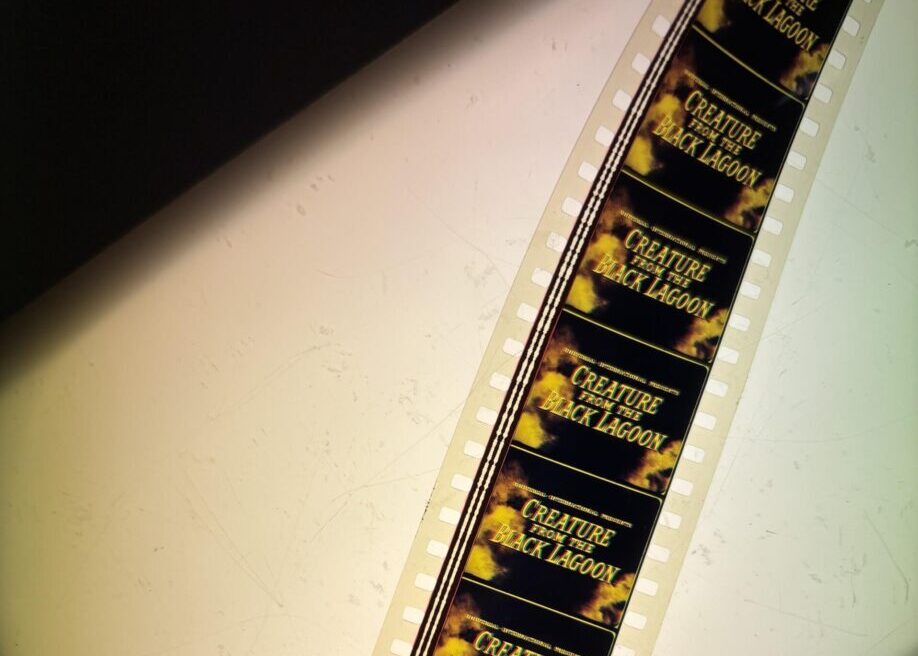
In an era dominated by digital streaming and hard-drive projection, watching a movie on 35mm film offers a distinctly different experience. At the Michigan Theater in downtown Ann Arbor, preserving that experience requires more than nostalgia—it takes specialized equipment, skilled projectionists and a community willing to invest in keeping a cinematic tradition alive.
As Marquee Arts launches a fundraising campaign to sustain 35mm projection, two members of the Michigan Theater team—Tara Calligan, director of marketing and creative, and cinema program director Nick Alderink—explain why film continues to captivate audiences and why preserving it matters.
Preserving a living tradition
For Tara Calligan, the fundraising campaign is about ensuring that 35mm remains part of the theater’s future, not just its past.
“35mm is an important part of the Michigan Theater’s history and its future,” Calligan said. “As more audiences rediscover the beauty and character of seeing movies on film, we want to make sure we can continue offering that experience in Ann Arbor. This campaign is about preserving the equipment, expertise and craftsmanship required to keep film projection alive.”
Keeping those projectors running is increasingly challenging. Many replacement parts are no longer manufactured, and every screening requires specialized equipment, ongoing maintenance, trained projectionists and careful handling of fragile film prints.
“Community support helps us care for the equipment we have, invest in necessary repairs and parts, and continue bringing 35mm prints to our screens,” she said.
RELATED: Tiny Film Festival Winners Announced: Big Stories in Just 60 Seconds
Because the Michigan Theater is a nonprofit, Calligan sees the campaign as a continuation of the community’s long history of preserving the landmark.
“The Michigan Theater itself exists today because this community believed it was worth saving,” she said. “Asking our community to help preserve 35mm feels like a continuation of that legacy. It gives people an opportunity to directly support an art form and theatrical experience that could otherwise disappear.”
The public response has reinforced that connection.
“The response has reinforced how deeply people care about the Michigan Theater and the experience of seeing movies here,” Calligan said. “There is something special about watching a film projected from an actual print in a historic movie palace. Their enthusiasm shows that preservation is not simply about nostalgia. People genuinely value having these experiences available in their community.”
Successful fundraising, she says, will allow 35mm screenings to continue in both the historic Main Auditorium and the Screening Room, making it possible to present archival prints, repertory films, and special presentations “the way filmmakers originally intended audiences to experience them.”
Ultimately, she believes the effort is about far more than preserving machinery.
“Preserving 35mm is about more than maintaining a projector,” Calligan said. “It is about preserving a craft, a format and a communal moviegoing experience. As a nonprofit theater, we are fortunate to have a community that understands the value of keeping those experiences alive, and every contribution helps ensure that the sound of film running through a projector continues to be part of the Michigan Theater for years to come.”
Why film looks different
For Alderink, the appeal of 35mm begins with the way film captures light itself.
“With film, the camera captures light and burns it directly onto a strip of film. When light shines through that strip and hits the screen, you’re seeing the image recreated from the moment it was photographed. … Digital is replicating the photograph from stored data.”
That process creates a visual quality he believes is difficult to reproduce digitally.
“35mm presents films in a way that is more natural. Color, in particular, is often more vibrant on film and has a greater sense of depth.”
A snapshot of cinema history
Working 35mm projectors also allow the Michigan Theater to screen rare archival prints that cannot be replicated through streaming.
“In this era of streaming, almost everything that was shot on film has been converted to view in some digital format,” Alderink said. “But by viewing a 35mm print, you’re catching something frozen in time.”
One of his favorite examples came in 2017, when the theater screened a rare print of the 1977 Italian horror classic “Suspiria” that included footage missing from the version most audiences know. “The print was discovered in the storage room of a closed Italian cinema and hadn’t been touched in decades, so it went on tour, with the Michigan Theater serving as one of its stops.”
Film prints also preserve different moments in a movie’s history. “Today, everything has a ‘definitive edition’ for the masses to consume,” he said. “But film prints show you what the movie was at that particular moment in time. ‘Star Wars’ being another good example of a film that exists with many different versions, and two prints of the film can be noticeably different from each other.”
More than nostalgia
Older films are especially rewarding on 35mm, Alderink said, particularly movies from the Technicolor era. “Anything pre-1990s is particularly exciting to show… because the Technicolor process of the 1950s and ’60s, in particular, pops in a very distinct way.”
A recent screening of “Raiders of the Lost Ark” demonstrated how the format itself can enhance a film. “Seeing that subtle flicker and crackle on the screen felt like the most appropriate way to experience it.”
Those subtle imperfections are part of the appeal. “The flicker of the shutter and the slight imperfections that show up on screen create nostalgia. Like why some prefer listening to a record instead of streaming music. There is a warmth in the crackle of a record player, just as there is a warmth in watching a film projected on 35mm.”
He has also noticed that audiences respond differently.
“There is a lot more intention behind going to the cinema when a movie is shown on film, and I’ve found the experience to be a lot more energetic. Especially true for older titles, when everyone is usually familiar with the movie, so they’re interacting, laughing, and cheering at all the right moments.”
Looking ahead
Despite digital projection becoming the industry standard, Alderink believes appreciation for film has only grown.
“When digital entered the scene in the early/mid-2000s, theaters shelled out a lot of money to replace their projectors, and it looked like 35mm might disappear entirely. Instead, we’ve reached a point where so much of our media is digital that there’s been a renewed appreciation for the tangible nature of film.”
He expects that trend to continue. “Interest in 35mm and 70mm screenings has grown steadily over the past decade, even though digital remains the dominant format. Now with A.I. on the horizon, I wouldn’t be surprised if physical formats continue to enjoy a resurgence similar to vinyl records.”
For both Calligan and Alderink, preserving 35mm is ultimately about protecting something that cannot be downloaded or streamed: the shared experience of watching light pass through film in a historic theater. Through community support, the Michigan Theater hopes that future generations will continue to experience the unique magic of seeing movies on film.

Donna Marie Iadipaolo is a writer, journalist, and State of Michigan certified teacher, since 1990. She has written for national publications like The Village Voice, Ear Magazine of New Music, Insurance & Technology, and TheStreet.
She is now writing locally for many publications, including Current Magazine, Ann Arbor Family, and the Ann Arbor Independent. Her undergraduate degree is from the University of Michigan, Ann Arbor, where she graduated with an honors bachelor’s degree and three teacher certificate majors: mathematics, social sciences, English. She also earned three graduate degrees in Master of Science, Master of Arts, and Education Specialist Degree.

