
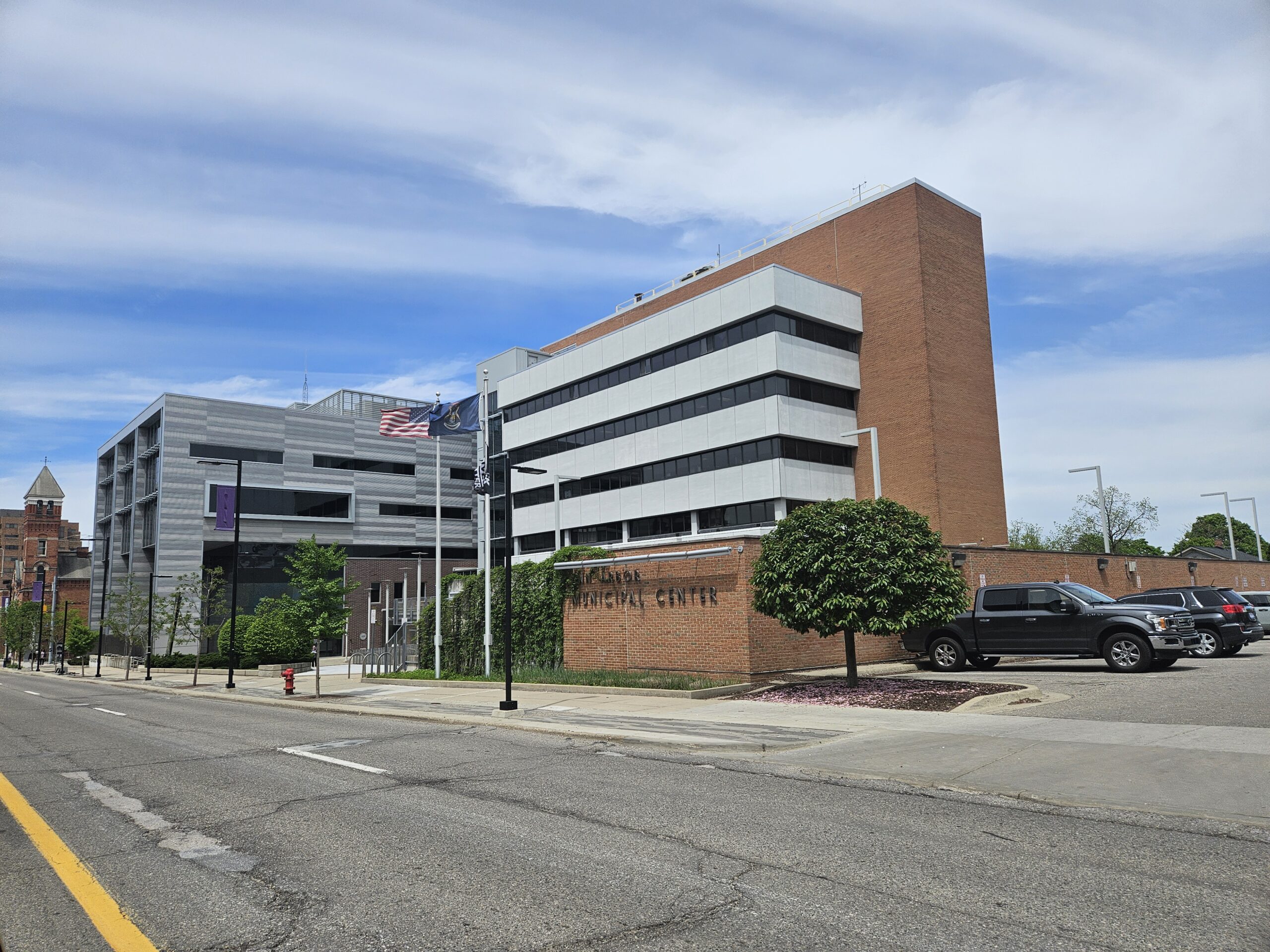
Ann Arbor voters can expect to vote on whether or not they want to cut ties with DTE Energy this November. At least for now.
This is because the Ann Arbor Responsible Energy Coalition lost its initial lawsuit hearing to stop the ballot question from going forward on August 24. Their legal action relies on their claim that the pro-municipalization group Ann Arbor for Public Power didn’t collect enough valid signatures and that the Ann Arbor City Clerk Jacqueline Beaudry failed to properly vet the signatures.
“We are disappointed in today’s ruling. Michigan law sets strict, clear rules for how ballot petitions must be gathered and filed, and we continue to believe those rules were not followed here. The stakes… demand a petition process that meets the letter of the law,” A2REC spokesperson Rudy Harper emailed on Monday evening. “We are reviewing the decision and expect to appeal.”
Ann Arbor for Public Power is a grassroots organization that wants to see the city formally end its relationship with DTE Energy, the for profit, regional, semi-monopoly electric utility that currently powers Ann Arbor on the grounds of reliability, democratic control and accountability, and because they feel that they are not decarbonizing quickly enough. As longtime readers of this magazine may remember, they initially tried to get this done by appealing to the City Council; but after the Council deadlocked on whether or not to fund a feasibility study, they decided to accomplish their goal via ballot initiative instead.
The AAREC is their opponent. But publicly available state records clearly show that they have received $1.8 million from DTE Energy itself. Their website also cites a study from Charles River Associates for their claims about how much municipalization would cost Ann Arbor taxpayers, but that study was funded entirely by DTE Energy.

Both the AAREC and DTE Energy have maintained that they are separate entities, though DTE Energy does strongly support their movement. But neither DTE Energy nor the AAREC have ever even attempted to answer a simple question: if that is true, then why was the AAREC originally registered with the state of Michigan using the same address as DTE Energy’s headquarters?
“I think that what we’re learning is that DTE [Energy] is absolutely willing to lie to the people about matters of the courts, matters of democracy, and we’ve seen that they’re also willing to lie about matters of electricity and the grid. I think we’ve also seen that DTE [Energy] can lose in court, which is very important for the people of Ann Arbor, and I feel confirmed in our original assessment that this is really just an attempt by DTE [Energy] to weaponize the courts against voters and hopefully they’ve lost their attempt to strong arm the City, and I think they would like to skip a step of democratic accountability and just keep their monopoly with no competition,” Brian Geiringer told Current in a phone interview, Tuesday. When asked about the purpose of the AAREC lawsuit, Geiringer said “I think the results yesterday show that this was not a case that had much substance behind it. Certainly, it is more a weaponization of the courts. It’s an attempt to sidestep democracy, not strengthen it.”
A DTE Energy spokesman declined to comment for this breaking news story. Attorneys listed in court records to be representing the AAREC did not immediately respond to a list of questions, nor did Harper. Beaudry is out of the office at the moment, according to an auto-reply email that Current Magazine received when questions were sent to her office.
“We are pleased that the Court correctly recognized the Clerk’s canvass was compliant with the Home Rule City Act. We will evaluate AAREC’s appeal and respond accordingly,” City Attorney Atleen Kaur told Current.
Whether an appeal is ultimately followed, and on what grounds, is yet to be seen. Harper did not respond to a question regarding how much the AAREC has in the bank to continue the legal fight, and Geiringer declined to answer the same question. When asked about where they would get more funding to keep themselves in the legal fight, Geiringer pointed out that A2P2 has always relied on the public.
Geiringer did say: “I am confident that the people will get behind public power, and that public power will be successful.”

Drew Saunders is a freelance business and environmental journalist who grew up just outside of Ann Arbor. He covers local business developments, embraces his foodie side with reviews restaurants, obsesses over Michigan's environmental state, loves movies, and feels spoiled by the music he gets to review for Ann Arbor!

