
Full disclosure: Current Magazine is a sponsor of this festival.
Imagine being in a place where you have lost so many things and are in such a desperate situation that just having a personal coffee mug is one of your most important possessions. And then it gets taken away from you.
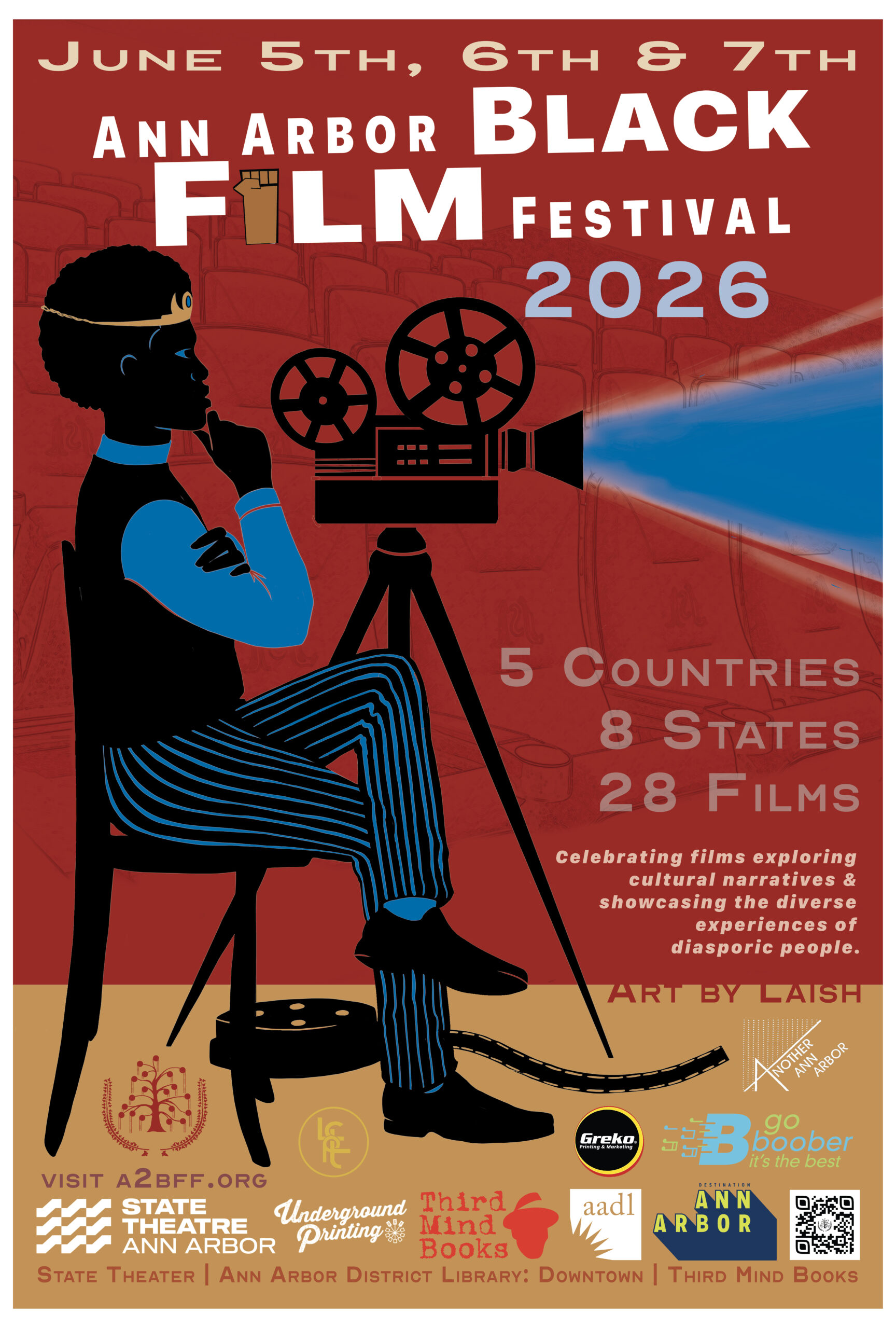
That is the subject of “Where’s My Coffee Cup?”, one the 27 short films at this year’s Ann Arbor Black Film Festival, along with 4 feature films—”TCB: The Toni Cade Bambra School of Organizing,” “Nothing To See Here: Watts,” “The Book of Ahmad,” and “Bittersweet: Black College Life at a Predominantly White Institution.” It will go from June 5 to 7 at the Michigan Theater, the downtown branch of the Ann Arbor District Library and Third Mind Books.
“What I feel is unique about Chris (Anderson) and Ann Arbor film festivals is all of those different connections between communities, activists and film makers,” Yehuda Sharim, who created the documentary film “Where’s My Coffee Cup?” said. “Film makers are not just people who hold the camera. They’re talking about a space where we cultivate visions – whether its about healing, change and transformation. We are in a particular historic moment, where we’re all hijacked through our Tik Toks, Instagram and whatnot. And here in Ann Arbor, we’re trying to create a space where we can actually share space, share visions—not without disagreements—but create a space for dialogue. I feel that is what is so unique with working with Chris, and all of the other communities that have vowed to attend and be part of this.”
Chris Anderson, one of Ann Arbor’s most prolific film makers, who organizes the AABFF said that selecting this year’s roster was especially hard as the number of films that will be screened compared to last year has doubled.
“We had a lot of ridiculously good talent this year,” Anderson said.
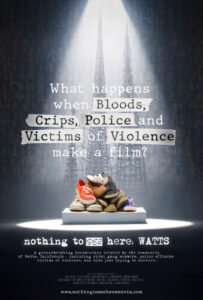
Experimental movies like “Nothing To See Here: Watts” will be shown, which is a collaborative footage documentary. Michigan native Soenen said, “is the craziest film accident that I think has ever happened” providing a unique look at the contemporary culture of gang violence in the Watts neighborhood of Los Angeles. Gang violence is not nearly as bad as the 1990s peak, but it still a perpetual problem in a neighborhood like Watts.
“I am not a film maker, never wanted to be,” Soenen said. A venture capitalist by day, he did an LAPD ride along through the neighborhood, where he claims to have seen three shootings in as many hours. “None of it was on the news.” He went on “I asked a gang member afterwards, ‘Why’d you join the gang?’ and he said his mother put him in the gang because they offered free daycare while she worked. And I thought oh my god I don’t understand both the severity, but I also don’t understand the root reasons why.”
So he didn’t try to make a film, at least not in a traditional documentarian way. What Soenen did was purchase 200 iPhones and give them to people around the neighborhood, asking for them to film their lives themselves. Twenty people accepted. Everyone thought that he would never see any of them again and he had wasted his money. Instead, they produced enough footage to make a documentary, with Soren even giving them the power to approve of the final cut of the film.
The film makers were often from opposing gangs. Footage was also contributed by children, police officers and victims—who suddenly found themselves collaborating.
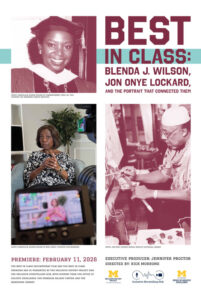 The University of Michigan’s history will also be honored with “Best In Class: Blenda J. Wilson, Jon Onye Lockard, and the Portrait the Connected Them.” This documentary explains the history of Blenda Wilson, who was the Chancellor of the University of Michigan – Dearborn in the late 1980s and early 1990s and a pioneer of Black higher education achievement in the University of Michigan. She got an oil painting like most academic higher ups, but hers was visibly very different. It was recently discovered in a forgotten section of one of the U of M’s buildings and has recently been brought back into the limelight. Her white and male colleagues of a similar level of achievement rarely get their paintings forgotten about.
“I’ve learned a lot. I was doing some of the editing along with my co-interns, I also took some of the shorts and we all just sort of worked collaboratively,” Marcos Carrillo, a student who worked on the project, said. “The story was the thing that we were the most passionate about and excited to include. The documentary ended up being 30 minutes and we started it with a goal of 10, 13 minutes, then it’s 30. That’s not even all that we have. …. It’s gone to the point where I’ve been learning these skills with the Inclusive Storytelling Hub internship and adapting those into the classes that I was taking at the same time almost immediately. I’ve actually supported some of my professors when we were doing workshops on how to use a camera, how to do lighting… I felt very prepared, very hands on, and the biggest thing that was exciting to me was actually working inside of an environment that includes other creatives. It was a very unique experience.”
Director of Research of the Inclusive History Project Camron Amin said, “I think it is worth asking why the University has given some space to examine what it has done well and what its done poorly. I think giving some space within the institution, not without some pain, not all of it’s uplifting. Some of it is difficult,” Amin explained. “But I think it’s important that the university is doing this in this moment. We’re in kind of a weird moment internationally, nationally, and I think that at an institutional level, thinking about ways to do things better – Who are we forgetting? Who are we leaving out? Who do we need to pay more attention to? – those are important questions. And I’m glad that we had a way to explore them, in a small way, without film.
The opening night will start at 5 p.m. at the AADL on June 5 according to the official schedule. There will be a Men’s Health 5K from 7-10am on Saturday at Gallup Park and a Bridging 23 Unity Walk from 10am-3pm at the United Way for Southeast Michigan on Platt Road, also on Saturday. There will also be an Underground Railroad Tour on June 4. As for the films, they will kick off at noon on Saturday:
June 5:
- Opening Night – 12-2pm – Opening night will have three films – “Cogito, Ergo Sum,” “The United States of WTF,” and “TCB: The Toni Cade Bambara School of Organizing.
- Overcoming – 12-2pm at the State Theater – “Beyond Unstoppable,” “A Pretty Pass,” “The Missing Piece,” Saltwater Psalms, and “Best in Class: Blenda J. Wilson, Jon Oyne Lockard, and the Portrait that Connected Them,”
- The Struggle for Belonging – 12-4pm at Third Mind Books. This will only have one 1 hour and 35 minute film – “Bittersweet.”
- Alternate Paths – 2:20-4:10pm at the State Theater. Both of the two films here will be over an hour long – “Shot By Shot” and “Nothing To See Here: Watts.”
- Local History & Generational Poetry – 4:15 p.m. to 6:30 p.m. at Third Mind Books. The four films shown free here will be “The Sea,” “Sending Up The Timber,” “A Ripple In Ann Arbor,” and “The French Dukes: Rhythm, Roots, and Legacy.”
June 6:
- Self-Reflection – 4:40 p.m. to 6:40 p.m. – This three film State Theater offering will include Version 24, Nuisance, and The Book of Ahmad.
- Pride On Film – 6:50 p.m. to 8:30 p.m. – LGBT voices will get the State Theater stage to themselves from 6:50 p.m. to 8:30 p.m. with five films. They are The Cut, Meet the Friends, To Move in My Mother’s Prayers, We Keep Us Safe and Bound.
- Hard Consequences – 8:50 p.m. to 10:30 p.m. These three films will include Pericarp, Cordao de Prata, and I Promise You Paradise.
June 7:
- Knowledge & Healing – 1-2:15pm at the AADL. These three films involving education are “The Nights Were Velvet,” “Stolen School,” and “Are You A Librarian? Black Librarians And Freedom Through Literacy.”
- Using AI to Take Your Screenplay from Promise to Production – 2:30 p.m. to 3:30 p.m. at the AADL – AI is changing everything about everything. This segment says according to the AABFF advertisement for this workshop: “AI is reshaping Hollywood — not replacing storytellers, but empowering them to do more with less. Join us and learn to bridge the gap between promise and production using accessible, ethical, and creative technology.”
- Reform & Justice – 3:45-4:50pm at the AADL – “Free Joan Little” is 37 minutes and “Where’s My Coffee Cup?” Is 30 minutes.
- Career Genocide & Cinema as a Space of Healing – 5-6pm at the AADL – This is a multi-media event to be hosted by Sharim. He will share how film can be used to document societal issues and drive change, just as his documentary does with America’s increasingly aging prisoner population.
“The Ann Arbor Black Film Festival is one of the most exciting up and coming festivals of any kind in the nation, today. The films chosen for the festival are exquisite in their commitment to both the communication of a message and to excellence, generally. It’s been an honor to be a part of the festival, and help, in our small way, to aid and assist in its growth,” Joe Provenzano, the Vice-President of Third Mind Books, said over email. “We are especially excited to screen the film Huey – about the great American social activist and author, Huey Newton – directed by Ken Gregory & Dave Mack III — as the Black Panther Party had many friends and admirers in the Beat Generation and Mimeograph Revolution, including the late John Sinclair, who was a great friend and mentor to us here at Third Mind Books. As a community building exercise, the festival has been a great success in our eyes: and the Q+A portions that often take place after screenings have helped us, and several others forge friendships that last to this day.”
Tickets can be purchased from the State Theatre website. Standard fare is $12, with $10 tickets available for students and seniors, or an all day pass for $40. The Third Mind Books and AADL shows are free. You can inquire about group rates by emailing [email protected].
“AADL has played a part in the Ann Arbor Black Film Festival since its inception in 2024. The Library was a host site for three days of the festival last year, and we have a packed program this year with screenings and a workshop scheduled at the Downtown Library,” said Rich Retyi of the AADL. “The film festival organizers curate a great lineup of films, and have included a number of AADL-produced films as well.”

Drew Saunders is a freelance business and environmental journalist who grew up just outside of Ann Arbor. He covers local business developments, embraces his foodie side with reviews restaurants, obsesses over Michigan's environmental state, loves movies, and feels spoiled by the music he gets to review for Ann Arbor!

