
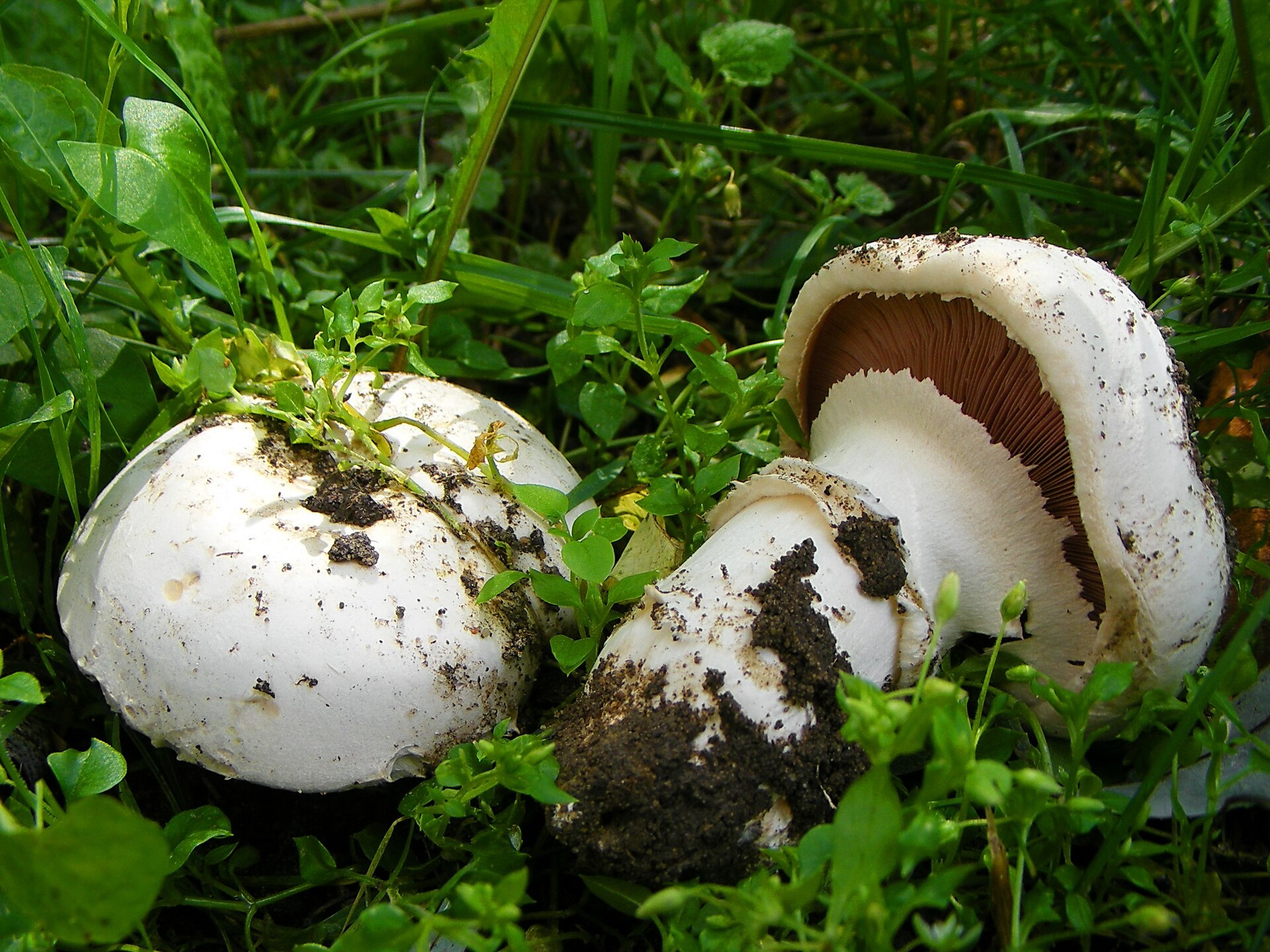
On some spring mornings in Ann Arbor, the strongest thing on the sidewalk isn’t concrete but a mushroom quietly jacking the pavement upward from below. Agaricus bitorquis, nicknamed the Pavement Mushroom or Banded Agaricus, is a thick, double‑ringed cousin of the common grocery‑store button mushroom. Evolved to push through hard-packed soil, it can fruit by pushing through asphalt, concrete, or paving. Because urban fruitbodies can accumulate heavy metals such as lead and nickel, expert foragers recommend treating pavement mushrooms from roadside or heavily trafficked areas as educational finds, not dinner.
Far from being a local oddity, this city‑adapted species shows up across temperate parts of the world, wherever humans have created dense, disturbed soils. It belongs to the same broader group as the multi‑billion‑dollar button/portobello mushroom, which dominates the global mushroom market. Researchers are testing Banded Agaricus in commercial grow‑houses alongside button mushrooms.
Analyses of wild Agaricus species, including Banded Agaricus, report 18 amino acids with all the essentials, plus fiber, potassium, and low fat comparable to cultivated button mushrooms. Like other Agaricus, they also contribute antioxidants and bioactive polysaccharides now being studied for general immune and metabolic support, though Banded Agaricus is less clinically famous than big medicinal names like chaga or oyster.
Cooking and compost
In the kitchen, well‑cleaned specimens from clean ground behave much like firm button mushrooms, standing up to sautés, roasts, and skewers, and making a surprisingly gourmet meal from what started in a sidewalk crack.
Beyond fresh cooking, their dense texture suits drying and powdering into seasoning blends or broth bases for people who deliberately cultivate them away from city traffic.
Home growers who enjoy a challenge can adapt Agaricus techniques like compost‑based substrates in trays, tubs, or small beds to raise Banded Agaricus in controlled indoor or shaded outdoor setups, using clean inputs instead of street soil. Ecologically, this mushroom helps break down buried roots and organic scraps in compacted ground, contributing to the slow recycling of nutrients much as mica caps do beneath urban trees. In research and pilot projects, Agaricus relatives also appear in discussions of mycoremediation and waste recycling, hinting that tough mushrooms like this could have future roles in cleaning or restructuring damaged soils.
More information
For local foragers, this species can appear from late spring through fall, sometimes earlier in mild years, but it bears repeating that this column is not an identification or medical guide.
The safest approach is to buy mushrooms from reputable growers, cook them thoroughly, and reserve any wild eating for specimens a qualified human expert has confirmed in person. If the Banded Mushroom has sparked your curiosity, then explore hundreds more gourmet, functional, and practical fungi, along with products and events, by joining the free newsletter at NourishCap.com.
About the Author: Benjamin Ashpole is a certified forager through the Hoosier Mushroom Society, a mushroom educator, and a media producer. Ben writes a widely syndicated column on North American gourmet and functional fungi to inspire mushroom curiosity. As founder of NourishCap.com, he creates educational videos at
youtube.com/@NourishCap that demystify everything from forest foraging and home cultivation to the science behind functional and medicinal species. Drawing on years of field experience and ongoing reporting about global fungal science, to support media production, Ben and his team maintain a marketplace of mushroom product vendors and service providers at NourishCap.com so that everyday people can safely benefit from the hidden fungal world around them.
Contact Benjamin if you’d like to know more about a specific mushroom, join a foray, request a presentation, or get help with identification at facebook.com/NourishCap. For identification help via Facebook: share pictures of the mushroom’s top, sides, bottom, and habitat along with the name of the closest city and state.


