
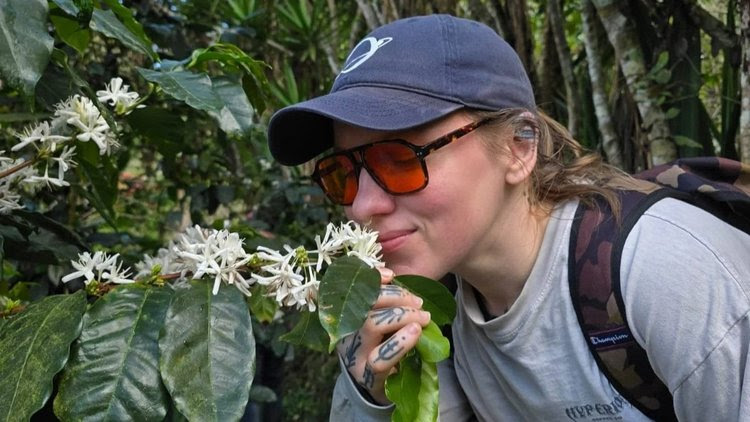
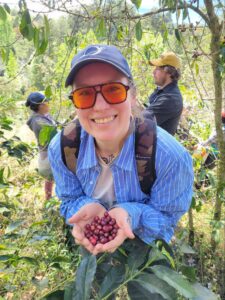
Hyperion Coffee Co., a local coffee roaster based out of Ypsilanti, is on a big mission. In March of this year, they sent a team on an origin trip to Marcala, Honduras, to connect with coffee producers there. Rachel Ewing, one of Hyperion’s two roasters, was sent on this trip to represent Hyperion.
Cupping
Ewing was in Honduras to connect with producers, learn about the means of production, and decide which lots of coffee to bring home. According to Ewing, the Hyperion customer base is often a fan of natural-processed coffees. These coffees tend to have fruity notes, like grape or raspberry–very acidic. Of course, she also wants to bring home a variety and showcase different farms and flavors. Ewing determines which coffees to bring back to Hyperion through a process called “cupping.”
Cupping is the process of experiencing coffee with intense focus. The taster smells and tastes the coffee to determine different characteristics. This includes flavors, aftertaste, body and mouthfeel.
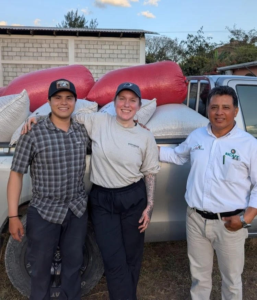
When cupping, Ewing evaluates the clarity in each cup, searching for defects. Defects sometimes show up in the tasting notes as “papery” or “cereal notes, like old crackers, hay, or alfalfa.” In each cupping session, there are multiple lots of coffee, but also multiple samples from each lot. This allows the taster to get a better picture of the lot as a whole.
While Ewing had been on one other origin trip with Hyperion to Guatemala, this was her first time in Honduras. She described the trip as “amazing,” saying that she was so excited to meet the farmers that are like “local celebrities” to the Hyperion team. Along with meeting these current partners, Ewing also got to bring new producers into the fold. One of these new partners is the Nolasco family, from whom Ewing bought half of a natural processed lot for Hyperion.
Spotlight: Hubert Nicolás
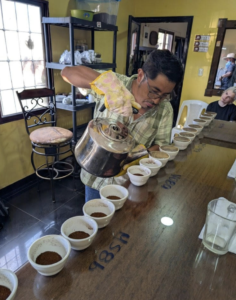
Hyperion has been buying coffee from Hubert Nicolás for a long time. While in Honudras, Ewing got to visit him in Marcala and taste his coffee. When Nicolás, a student of agricultural engineering, took over the family farm, he wanted to make changes. One of Nicolás’ goals is to make his farm sustainable. So far, he has implemented practices like interplanting, or intercropping. This involves growing other plants along with the coffee plants. The addition of other crops maintains ecologically beneficial balance in the farm.
Hyperion is very intentional about supporting this kind of eco-friendly farming, or regenerative agriculture. Not only does it benefit the environment by preserving natural biodiversity and soil health, it also improves the coffee.
The Coffee Coming Home
The Hyperion team chose fifteen samples to bring home and reserved five bags of a “honey processed Pacas lot” from Nicolás. Honey processed coffee is named for the fruit that is left on the bean as it dried, called mucilage. Leaving the mucilage on imparts a sweeter, typically more fruit-forward flavor, which Hyperion customers enjoy.
Spotlight: The Funez Family
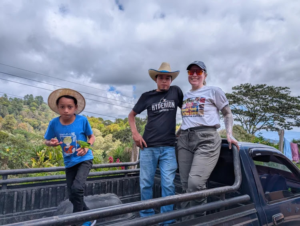
Hyperion also has a standing relationship with Ariel Funez and his siblings’ coffee farm, which began when Dan, Hyperion’s other roaster, visited Honduras about 6 years ago, and took a chance on the Funezes, exporting their coffee to the states–making them the first roasters in the US to bring their coffee here.
Breaking the Industry Standard
Hyperion’s relationship with Funez is representative of their business model and practices. According to Ewing, the way payment in the industry is set up means that companies in the US will reserve lots of coffee, but they are not paid for until the coffee lands in the US. The farmers go for months without receiving payment. This system makes it difficult for farmers to maintain their farms and pay their employees.
On this trip, when Funez communicated these difficulties to the Hyperion team, they renegotiated the agreement so that they were paying him more upfront, a rarity in the coffee industry.
Production Improvements
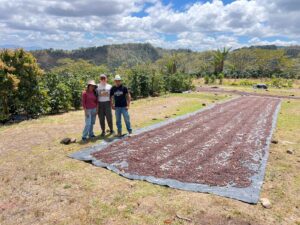
Ariel Funez keeps pushing his farm up the mountain into higher and higher elevations. His goal is to make work more accessible to the communities that live there and provide labor. In addition to growing his farm and improving labor conditions, Funez has made upgrades to the means of production. He invested in a gas engine and a moisture detector, which helps with the drying process. Previously, Funez would eat the raw coffee beans to test the moisture content. This is an amazing feat in itself, but the moisture detector is more consistent.
RELATED: Curious Coffee Brings Avant Garde Experimentation to Ann Arbor’s Cafe Scene
Because his farms grow in very high elevation, where it is far too steep for much other equipment to be of any use, each coffee bean is hand-picked. The workers then place the coffee into a sack around their waist and transport it off the mountain in a pick-up truck.
This kind of picking is far easier on the environment, as it preserves the surrounding vegetation. However, this is very strenuous work. Ewing, who toured the farm and tried picking and carrying the cherries, was actually told by Funez that he would not take her to certain parts of the farm, for fear it was too steep–and thus, dangerous. But, she clarified, that is only true for an outsider. When Ewing asked Funez if anyone was ever hurt or injured, he laughed and said they were used to it—no injuries ever occurred.


