
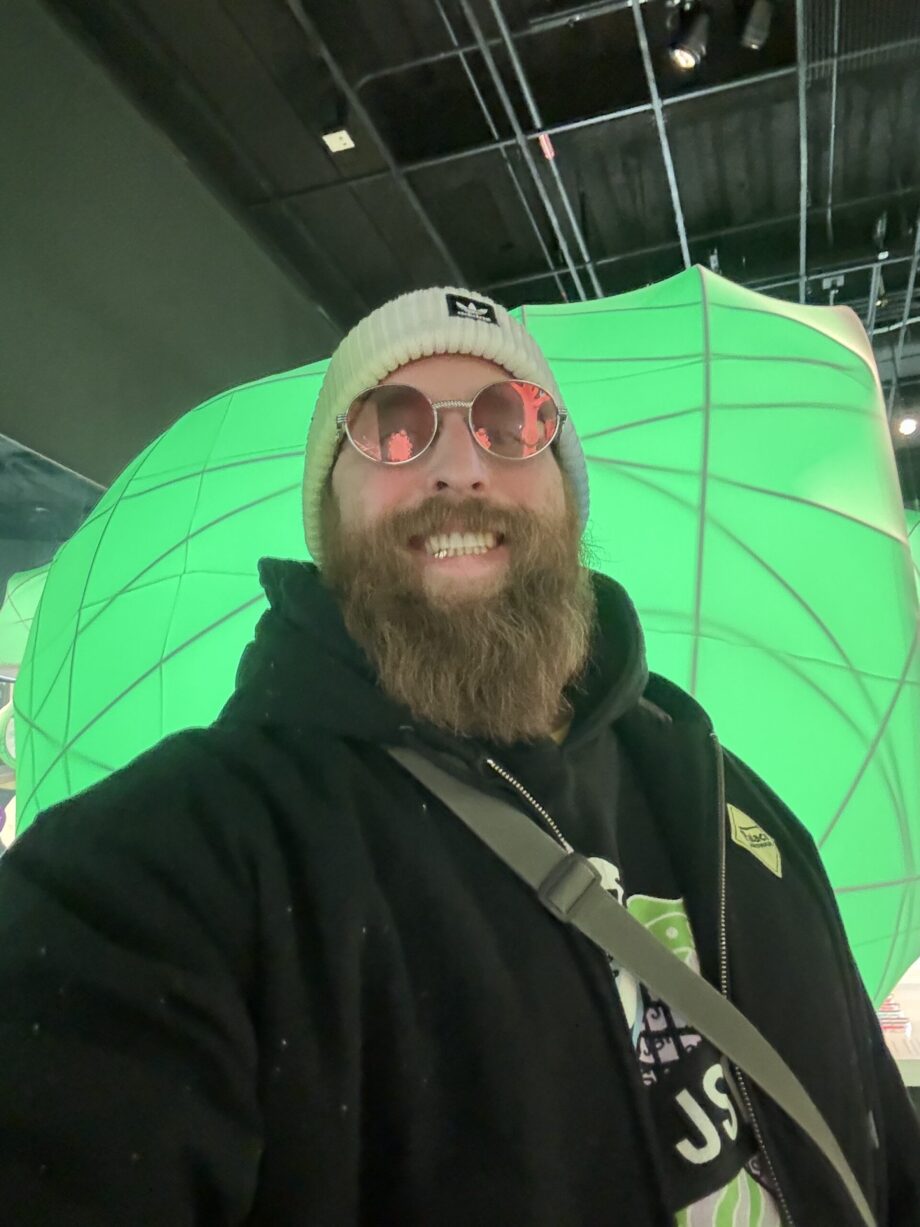
Nothing is going to stop Christopher Hack in his quest to create an ecosystem that ensures that contemporary fine art is accessible and affordable to the average person, and that the artists making that art can have a community that will allow them to make a living creating that art in Ann Arbor, instead of having to move to Chicago, Toronto, or New York. Not even cancer.
“The concept of Vacancy can be done anywhere and in any city. It’s just an open spot for artists to have a free marketplace,” Hack told Current. “I’d love to it somewhere else, it’s just that Ann Arbor is extremely expensive.”
Hack opened Vacancy at 221 North Main Street about a year ago to do two things. Firstly, he was tired of being frustrated by the situation he saw coming out of the STAMPS School – where extremely talented artists graduated year after year only to find the A2 market too small to make a living, and so they had to move to a big city. He didn’t begrudge anyone for doing that or have anything against larger cities, but wanted to create a space where young artists could stay in town if they wanted to and would be able to continue to make art authentic to them no matter how “weird” it was.
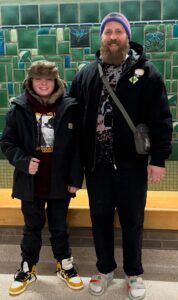
The second problem Vacancy was to solve is that a lot of niche artists need very specialized and expensive, equipment to keep working in their medium. Once graduated, they could easily find themselves in a situation where they have the skills, but not the equipment necessary to work in their medium. That is why the basement of Vacancy was filled with highly specialized equipment usually out of reach of the finances of most recent fine art school graduates, so they could keep working.
It was the first gallery that Sam Turner got into after graduating from STAMPS. He has gone on to do other work, including a mural at Uplift, Ann Arbor’s LGBT bar, however, he said Vacancy was special to him.
“It was pretty helpful because there were resources provided and it was a good way for me to showcase a lot of my stuff, and get a gage on what was working and what was not, allowed me to sell some stuff, pad up my CV, and meet people who would be interested in Ann Arbor artists, and help me get more into a community of people,” Turner said.
When asked about how useful it is to have an art gallery that is also a one stop shop for hard-to-afford equipment, Turner said it was “quite useful … because right out of college I didn’t fully understand the resources that were present to me. Because in high school education, when you have a given amount of tools at your disposal, and then you go to college immediately, and you have a whole sand box of everything that you could possibly think of, and when you’re suddenly out on your own, you just immediately loose access to everything that you’ve gotten so accustomed to. Having that again at Vacancy is something that [was] priceless, because you get to have that community of artists in the studio, who are working and interested in using all of these tools, as well as being able to take advantage of these wonderful things. It’s really a privilege.”
RELATED: Vacancy Gallery Helps Young Artists Kickstart Careers in Ann Arbor
But once Hack became ill, it was no longer possible to keep the gallery space open. The landlord decided to pull him from the space after it was closed for too long.
Eric Rudland, an employee for the company that owns the building Vacancy was in, confirmed that a lack of an ability to pay was what caused Vacancy to close. He declined to make any other formal statement, but added “We do have other properties that would be well-suited for an art gallery. 311 N Main, 507-511 Ashley are two that come to mind.”
They also have worked with CLUSTER, renting out that building just across Catherine Street to them. Rudland said they’d be opening to also working with other artists.
Turner would like to see something like Vacancy return. Though from his experience, the next Vacancy would need to have more advertisements, more open collaboration between artists, more opportunities to get STAMPS students in, and better foot traffic — as being at the back of the 223 North Main Street location, across the street from the Wayne County Building, made Vacancy very much on the outskirts of downtown Ann Arbor.
Hack is also very against the corporatization of art, as well as the increasing prices causing exclusivity and a homogeneity in the kind of art that still gets produced in A2, wanting Vacancy to be a bulwark for accessibility to purchase and make art. He essentially is a proponent of the Keep A2 Weird spirit.
“I feel like its not as weird anymore, from the way I talk to my co-workers who have stayed, watched Ann Arbor change, and talk about how things were like in college and events that they were apart of. It really feels like there’s been a shift in culture as those hippies age, and the city becomes more expensive, it self-selects for less punk, [and] hippie types. The vibe I got at the university was more conformists and interested in education, and a straight shot to an acceptable kind of art making. It also could have been because of Covid I didn’t have the opportunities to do the crazy kind of stuff that I hear my older co-workers talk about getting into when they were younger. Yes, it has gotten less weird and less avant garde of an art town,” Turner said.
When asked if Vacancy was a bulwark against that change, Turner said “I think so. Part of the reason I was so excited about Vacancy is it captured this idea about art school that I had when I was younger, where you meet a bunch of new, super interesting people that are interested in testing boundaries, and making whatever they want, and putting together shows just for the hell of it, and producing interesting things for the community around a given gallery just because you can and just because you want to. [Vacancy] was one of the first opportunities [where] I felt empowered to do something like that. That was the culture that Hack wanted to develop and produce with this gallery.”
Ann Arbor is one of the most livable and artistic cities in the country, but it is also among the more expensive. This was an issue even before the cost of living crisis that took off especially after Covid. As we have previously reported: 23.3% of Ann Arbor’s 123,851 individual people are impoverished, much higher than Michigan’s 13.5%. In fact, Ann Arbor’s per household income is actually $2,331 less than the national median, and its poverty rate is actually more than double the 11.1% nationwide average. Ann Arbor’s median gross housing rent is $1,652 per month, $551 more than Michigan’s $1,101 gross average.
Buying the median Ann Arbor home was a prospect worth just five grand short of half a million dollars as of last October, according to Redfin. It was less than $400,000 in 2020. The University of Michigan Board of Regents approved its $15.6 billion budget for the 2026 fiscal year on October 16. The Penny W. STAMPS School of Art and Design received a $400,000 cut in spending, from $21,000,000 to $20,600,000 for about 700 students. The Ross School of Business got $152.5 million for 4,433 students, the College of Engineering got $314.6 million for over 11,100 students, etc. Hack is of the opinion that if STAMPS got more money and resources, which could be poured into more postgraduate resources, more people would have the ability to remain in Ann Arbor.
“STAMPS is a small school, so our faculty and staff are often able to directly make local connections, introducing students to available opportunities. As a School, we’ve also made it a priority to partner with area galleries on exhibitions, events and programs, and support existing local art and design organizations that provide screening, exhibition and award opportunities for students and recent alumni to showcase their work. STAMPS-sponsored organizations include Independent Film Festival Ypsilanti (iFFY), the Ann Arbor Film Festival and the Ann Arbor Art Fair,” STAMPS Interim Director of Marketing and Communications Andre Grewe told Current.
He also pointed out that STAMPS does run several career programs including the career bootcamp, Immersion Excursions, the Portfolio Expo, the Jain Industry Partnerships Program, the Student Exhibition Committee, Mdesign and The Stampede. When asked to go into further depth about postgraduate support, Grewe said, “The STAMPS educational experience is uniquely interdisciplinary, providing flexibility and knowledge of many mediums that will help our students throughout their professional lives. During their studies, students are encouraged to seek professional opportunities abroad or around the country that can expand their experiences. Many students work with faculty on research endeavors and creative projects, and are mentored by some of the most renowned artists and designers in the country as a result.”
Grewe said on the point about equipment: “Students who attend the University of Michigan are fortunate to be able to take advantage of many resources that benefit their educational experience – everything from the kilns, looms, lithography presses and 3D Printers at STAMPS to the dorms, libraries, special collections, facilities, software, subscriptions, computer labs, recording studios and countless others across campus. It’s important to understand the opportunities that these resources afford, but also to recognize that they may not be accessible outside of college. This scenario is often discussed in classes, where students may learn different ways to navigate these issues. For example, faculty and staff may employ a more concept-based instruction, designed to be transferable across different kinds of equipment; share options for open-source or more affordable versions of resources like software; instruct on alternate methods or approaches that require less specialized or more affordable equipment; or identify unique maker spaces, groups, or collectives (such as Dzanc House or Maker Works) that provide shared access to studio spaces, resources, and equipment.
Other art efforts are of course going on across Ann Arbor. Across the street from the old gallery location, the CLUSTER Museum opened last year with a similar mission, but it is intended to support already established artists. Down Main Street, the CultureVerse gallery might be long gone, but its owner still occasionally opens the space for art projects lasting generally one month at a time.
“Do not be afraid to be different. I think that eclecticism and being a little bit different from what Ann Arbor is used to is very good,” Hack said on the efforts of others wanting to replicate Vacancy. “I know a huge, huge number of artists who would be very interested in continuing this venture of they could.”
Hack would like to open up another space, however, he is currently focusing on his health and working on getting ready to do art pop ups in and around Ann Arbor.
Skateboarding is going to pick up more as the snow starts to melt. Hack, an avid skateboarder, is hoping to start showing up with art at skate boarding events first.
In the meantime, one of the last things Hack told Current at the end of an interview conducted over the phone was: “I’m not sour.” Despite his setbacks and hardships, Hack says he still wants “to be in the game.”

Drew Saunders is a freelance business and environmental journalist who grew up just outside of Ann Arbor. He covers local business developments, embraces his foodie side with reviews restaurants, obsesses over Michigan's environmental state, loves movies, and feels spoiled by the music he gets to review for Ann Arbor!

