

I am slowly working on creating a lawn that’s easy to maintain, beautiful and attracts pollinators. My family is super into low-effort lawns that use less water, need less trimming, and are, overall, better for the environment. You can commit fully to one of these lawn alternatives, or choose a mix, like I am.
Ideally, you would till the grass, plant your new seeds, and water them for a few days straight to help them grow. I’m chronically ill and can’t do that for my entire lawn. Instead, I’m finding dead areas of grass and starting there. Right now, I’m mainly doing a mix of clover, creeping thyme, and wildflowers, but I’m really just doing a bit of research and adding what I like.
If you’re looking for some lawn alternatives, know that you can redo your entire lawn, or start on one dry patch and go from there.
Grass alternatives
If you want that lush grass look without all the work and water, there are many grass alternatives that are native to Michigan, making them easier to maintain. In Southeast Michigan, lawns that are recommended include Kentucky Bluegrass and Fine Fescue. These grasses tolerate the cold well, but still need a lot of maintenance.
Clover lawns
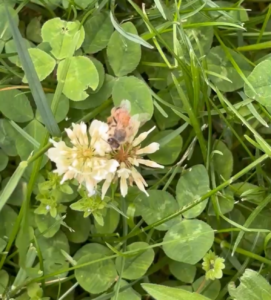
Clover Lawns are a great alternative to grass. Some preferred clovers are white clover, microclover, or red clover. Personally, I like to do a mix of microclover and grass so it blends seamlessly with my existing lawn, but red clover is the coolest by far.
Clovers are low maintenance, good for soil health, increase your pollinators, specifically bees, and are nontoxic to most animals, excluding farm animals.
RELATED: Ann Arborites Watch Solar Panel Installation
Moss lawn
I love a Moss Lawn. It’s magical and so easy to walk on, and it holds water nicely which keeps your plants taken care of. This works well if you have a shady or damp lawn, or area of your lawn. My goal is to add this to a shady path in my yard as opposed to an entire yard, mostly because my yard doesn’t have a lot of cover.
Moss lawns can’t be mowed as well, but don’t require a lot of maintenance. Instead of a mower, you’ll have to go through to collect debris. It can be a commitment, but it’s one that can be truly amazing if you lean into it.
Herb lawn
Herb Lawns are amazing. You can go right outside to grab herbs for food, they smell absolutely fabulous, and they look rad. You want to commit to perennial herbs so that they regrow each year and you’re not left with an empty lawn.
Some great starters are chamomile, lavender, sage, lemon balm and spearmint. You can choose one section to be your herb lawn, or lean in and plant them anywhere. Beware, though, that if you want it to stay in one section, some herbs can be invasive.
Wildflower lawn
Wildflowers attract tons of pollinators and are absolutely beautiful. They spread, bring beautiful friends to your lawn and are colorful and gorgeous. You can pick a few, or lean in and use a bunch of different kinds. If you’re a beginner, I’d start with blazing star, dutchman’s breeches, or geraniums, which are all native to Michigan.
Colorful lawn
Some beautiful, colorful flora that I think are magical are Creeping Thyme and Blue Star Creeper. They both are bright and beautiful and create a blanket. I’m using creeping thyme on pathways as a way to add color and variety, and hope to add Blue Star Creeper wherever it will take in my garden. Both are a mix of greenery and colorful blooms, so they blend nicely with a lawn that already exists.
Have fun creating a lawn that works for you, and look out for pollinators that are native to Michigan. You use less water, work less on your lawn, and give back to the environment. Wins all around.


