
Human trafficking is often imagined as a distant crime — something that happens elsewhere, to other people, in places far removed from daily life in a quaint college town. But trafficking exists everywhere, even in Ann Arbor.
Here and now
Advocates working with the Ann Arbor branch of the Michigan Anti-Trafficking Project (MAP) say that assumption allows trafficking to remain hidden, misunderstood and under-addressed—even in a community that prides itself on education, inclusion, support and progressive values.
Human trafficking is a form of slavery that involves the use of force, fraud and coercion, and can include manipulation, drugging or violence (and other methods) to compel people to provide labor and/or sex services. Trafficking is a criminal violation of human rights that affects millions globally, nationally—and in the Ann Arbor area.
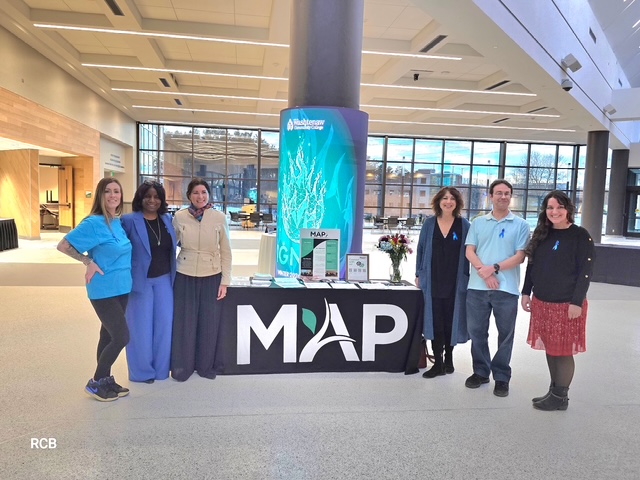
MAP is a statewide nonprofit organization made up of local community groups operating in cities across Michigan. Ann Arbor is one of those sites, run entirely by volunteers and focused on education, awareness and policy advocacy rather than direct service provision.
“MAP was started about 10 years ago,” said Peg Talburtt, one of the volunteer leaders of the Ann Arbor MAP. “The design is that there are different community groups across the state, and Ann Arbor is one of those community groups.”
Talburtt has been involved in the fight against human trafficking for 25 years, first in the Grand Rapids area and now in the Ann Arbor area.
She said that about 8 years ago, Michigan passed several significant trafficking laws, which then gave Michigan a B, up from an F, rating because of the laws that were passed.
“Nothing much has happened since then, and resources to support services for prevention were not included. In addition, no other bills were passed to increase penalties for buyers or sellers,” Talburtt said.
Awareness and the Data Gap
According to the National Human Trafficking Hotline, more than 11,000 trafficking situations were identified nationwide in a recent reporting year, involving over 8,000 individual victims. Michigan consistently ranks among the states with the highest number of reported trafficking cases, with hundreds of victims identified annually through hotline calls, law enforcement referrals and service providers.
Advocates stress that these figures represent only documented cases. Researchers widely agree that trafficking is significantly undercounted due to fear of retaliation, lack of self-identification, language barriers, immigration concerns and mistrust of institutions.
“What we do know is that there are cases (in the area),” Lori Lichtman, a local psychologist and MAP-A2 member, said. “We just don’t have the actual numbers.”
In Washtenaw County, trafficking has been identified through individual prosecutions, survivor lawsuits and referrals handled by regional service providers and legal clinics.
“We know that it’s happening,” Lichtman said.
RELATED: Recognize Warning Signs and Ways to Prevent Human Trafficking
A missing piece in Washtenaw County
Despite documented cases and known risk factors, Washtenaw County does not currently have a formal anti-trafficking commission or task force—a structure common in other Michigan counties like Oakland County. The Ann Arbor MAP branch believes that such a commission is important.
“We do not have a Washtenaw County anti-trafficking commission,” Talburtt said. “Most of the other large counties in Michigan have one.”
Across Michigan, county commissions serve as coordinating bodies that bring together law enforcement, prosecutors, healthcare providers, educators, housing advocates and survivor service organizations.
“You have law enforcement, direct services, faith-based, mental health, health,” Talburtt said. “All the players who can talk and think about this issue from a variety of perspectives.”
Advocates say the absence of such coordination can delay identification, fragment services, and limit access to funding streams that support survivor housing, counseling and legal aid.
Ending demand, centering survivors
MAP advocates support policy approaches that prioritize survivors and hold traffickers and buyers accountable.
“If we end the demand, we end trafficking,” Lichtman said. “If there’s nobody buying, there is not going to be any business.”
Research consistently shows that jurisdictions focusing on demand reduction, survivor services, and prevention education experience better long-term outcomes than those relying primarily on arrest-based approaches targeting exploited individuals.
During Human Trafficking Awareness Month, the Ann Arbor MAP branch continues to focus on education as prevention—helping residents recognize signs of exploitation and understand how trafficking intersects with housing instability, domestic violence, immigration status and poverty.
“If you look for it (trafficking), you’ll find it,” Talburtt said.
Advocates encourage community members to learn more and to contact the National Human Trafficking Hotline at 1-888-373-7888 if they suspect trafficking.
In a city known for civic engagement and social awareness, the Ann Arbor branch of the Michigan Anti-Trafficking Project continues to insist on a difficult truth: exploitation does not disappear because a community is educated, progressive or well-intentioned. It disappears only when people are willing to see it — and act.
For instance, press about the release of the Epstein files that connects sex trafficking to the powerful and wealthy in politics, finance, entertainment, academia and elsewhere has brought some national awareness. Some of this awareness has been educational, pointing to the need for more consequences for buyers and pimps and laws that support holding buyers and pimps accountable, such as the Survivor Model.
A local group within a statewide network
The Ann Arbor MAP branch functions as a community-based extension of the larger organization. While MAP has paid staff at the state level, local branches operate independently and rely on volunteers who organize events, respond to speaking requests and advocate for policy change.
“We’re doing this just as volunteers,” Talburtt said about her current role with the Ann Arbor MAP chapter.
That volunteer structure shapes both the scope and the limitations of the Ann Arbor branch’s work. With no dedicated funding stream, the group organizes strategically around education and advocacy—areas where informed citizens can have a measurable impact even without large-scale infrastructure.
Recently, the Ann Arbor group showed a screening of the film “The Right Track” at Washtenaw Community College, about Human Trafficking Survivor Voices supporting the Survivor Model as policy to combat human trafficking. The MAP Ann Arbor group brought to the event Tricia Grant from Maine, a Survivor Leader and advocate in the film that helped pass the Survivor Model in Maine.
According to MAP, current statistics about human trafficking are astounding:
- There are 28 million victims worldwide
- 81% of victims are trapped into forced labor
- 75% of victims of sex trafficking are women and girls
- Human trafficking is a $236 billion dollar industry
- Human trafficking is the third-largest criminal industry in the world
Roots in awareness and education
The origins of Ann Arbor’s anti-trafficking work predate MAP itself. Talburtt’s involvement began more than two decades ago, when she worked with a statewide organization focused on prevention and youth education.
“Nobody in Grand Rapids believed it was an issue,” she said. “But the girls thought it was an issue.”
At the time, around the early 2000s, trafficking was rarely discussed publicly in Michigan. Nationally, the U.S. Department of Justice had only recently begun treating human trafficking as a distinct criminal category, and most states lacked specialized laws, data systems, or coordinated response teams.
“And I said, ‘If you (girls) believe it, then let’s do it,’” Talburtt said.
That skepticism changed abruptly after a young woman from a Grand Rapids suburb was found dead along I-96.
“She’d grown up in Kentwood,” Tallburtt said. “That kind of launched it.”
Years later, Talburtt helped establish the Washtenaw Anti-Trafficking Alliance, a local coalition that brought together educators, healthcare workers, nonprofit leaders and government representatives.
“We operated for about three years just as a pure volunteer group,” she said. “We mostly were working on at that point, just education and awareness.”
When MAP expanded its statewide model, the Washtenaw group transitioned naturally into the Ann Arbor MAP branch.
Lori Lichtman, a local clinical psychologist in private practice, became involved in local anti-trafficking efforts after attending a conference in 2015.
“I was horrified,” she said. “I had no idea that this was going on in our state.”
Her experience mirrors a broader national pattern. According to federal estimates, human trafficking generates billions of dollars globally each year, making it one of the most profitable criminal enterprises worldwide. In the United States, trafficking affects adults and children across urban, suburban and rural communities, with cases documented in every state.
“What we do know is that there are cases (in Ann Arbor),” Lichtman said. “We just don’t have the actual numbers.”
Before the COVID-19 pandemic disrupted in-person programming, Lichtman and other MAP volunteers helped organize a range of educational events across Washtenaw County.
“We held a labor trafficking awareness event partnering with Ten Thousand Villages,” she said.
The group also focused on prevention education for youth and families.
“We went into Saline schools and did education in their health classes,” Lichtman said. “We also brought together the FBI, Human Trafficking Survivors and Washtenaw Area Council on Children to bring human trafficking awareness and cyber safety to parents and teens at Peace Neighborhood Center, WIHI and Saline High School.”
Power, poverty, and the illusion of choice
MAP advocates emphasize that trafficking rarely involves physical restraint. Instead, it relies on coercion, psychological manipulation and economic pressure. Traffickers target the vulnerable.
“Poverty is the pimp,” Talburtt said. “If it’s your choice to sell your body or put a roof over your head or food in your mouth, that’s not really much of a choice.”
There are also some in the Ann Arbor community who (falsely) argue that some trafficking is consensual; however, because there is an unequal power dynamic present, such as poverty, violence, fraud, coercion and grooming, then it is by nature not consensual.
According to Lichtman and MAP, Ann Arbor began educating the community about the Equality Model or Survivor Model after Prosecuting Attorney Eli Savit instituted a policy that he would not charge for commercial sex that is “consensual. “ Although MAP organized a meeting with numerous Human Trafficking Survivor Leaders from across the country to meet with Eli Savit about the dangers of his policy, especially with young people in a college town, he did not change his policy, according to MAP Ann Arbor members.
National studies show that poverty, housing instability, prior abuse, foster care involvement, and economic insecurity are among the strongest predictors of trafficking vulnerability. Labor trafficking often targets the most vulnerable: immigrants, young workers and people with limited access to legal protections.
Talburtt also described grooming as a calculated, long-term process. “Pimps are very patient,” she said. “They target people who are vulnerable. They take their time to build up the relationship.”
College towns like Ann Arbor, advocates say, present unique risk factors: transient populations, online recruitment, housing insecurity and young adults navigating independence for the first time.
Online predators, for instance, target young boys and girls, posing as their age group and then arrange meetings with them.
“These are the same situations that are occurring in Ann Arbor and Washtenaw County (as in the world),” Talburtt said.
You can help fight human trafficking. To volunteer or support the Ann Arbor chapter of the Michigan Anti-Trafficking Project and its future activities, please contact [email protected]

Donna Marie Iadipaolo is a writer, journalist, and State of Michigan certified teacher, since 1990. She has written for national publications like The Village Voice, Ear Magazine of New Music, Insurance & Technology, and TheStreet.
She is now writing locally for many publications, including Current Magazine, Ann Arbor Family, and the Ann Arbor Independent. Her undergraduate degree is from the University of Michigan, Ann Arbor, where she graduated with an honors bachelor’s degree and three teacher certificate majors: mathematics, social sciences, English. She also earned three graduate degrees in Master of Science, Master of Arts, and Education Specialist Degree.

