
When Frederik Meijer Gardens & Sculpture Park opened to the public in 1995, it realized a dream that had been years in the making. The idea originated in the early 1980s, when the West Michigan Horticultural Society began searching for a site to establish a botanical garden and conservatory. What they found was an unexpected ally: local philanthropists and retail pioneers Fred and Lena Meijer. The couple deeply believed in the power of beauty and nature to bring people together, and they donated both the land and seed funding to turn their vision into reality.
The art of a beginning
Art was central from the very beginning. Fred Meijer had begun collecting bronze sculptures by renowned Michigan artist Marshall Fredericks, whose work reflected themes of humanity, faith and joy. That collection—29 sculptures in total, including several large-scale figurative groupings—became the foundation of what would later grow into the Meijer Gardens’ permanent collection. Those early Fredericks bronzes still serve as a symbolic cornerstone, representing the Meijers’ belief that art and nature belong in conversation, not competition.
Where art and nature converse
From the start, Meijer Gardens offered more than manicured landscapes. It invited visitors into an ever-changing conversation between art and the natural world.
What began with a tropical conservatory and a handful of sculptures soon grew into an expansive campus that felt both cultivated and wild. Visitors could wander from vibrant floral displays to quiet woodland trails, discovering sculpture tucked between trees, near ponds and along winding paths.
Growing into a cultural landmark
Over the years, the gardens have continued to evolve—each new addition enriching its sense of place. The Lena Meijer Children’s Garden invites play and imagination, while the contemplative Richard & Helen DeVos Japanese Garden offers moments of reflection among waterfalls, pines, and stone.
Michigan’s Farm Garden honors the state’s agricultural heritage with heirloom vegetables, orchards, and a replica 1930s farmhouse. Together, these spaces embody the founders’ belief that creativity, learning, and nature flourish side by side.
RELATED: GIG Returns to Jackson: Celebrating the Visual Art of Michigan Music
Nick Cave
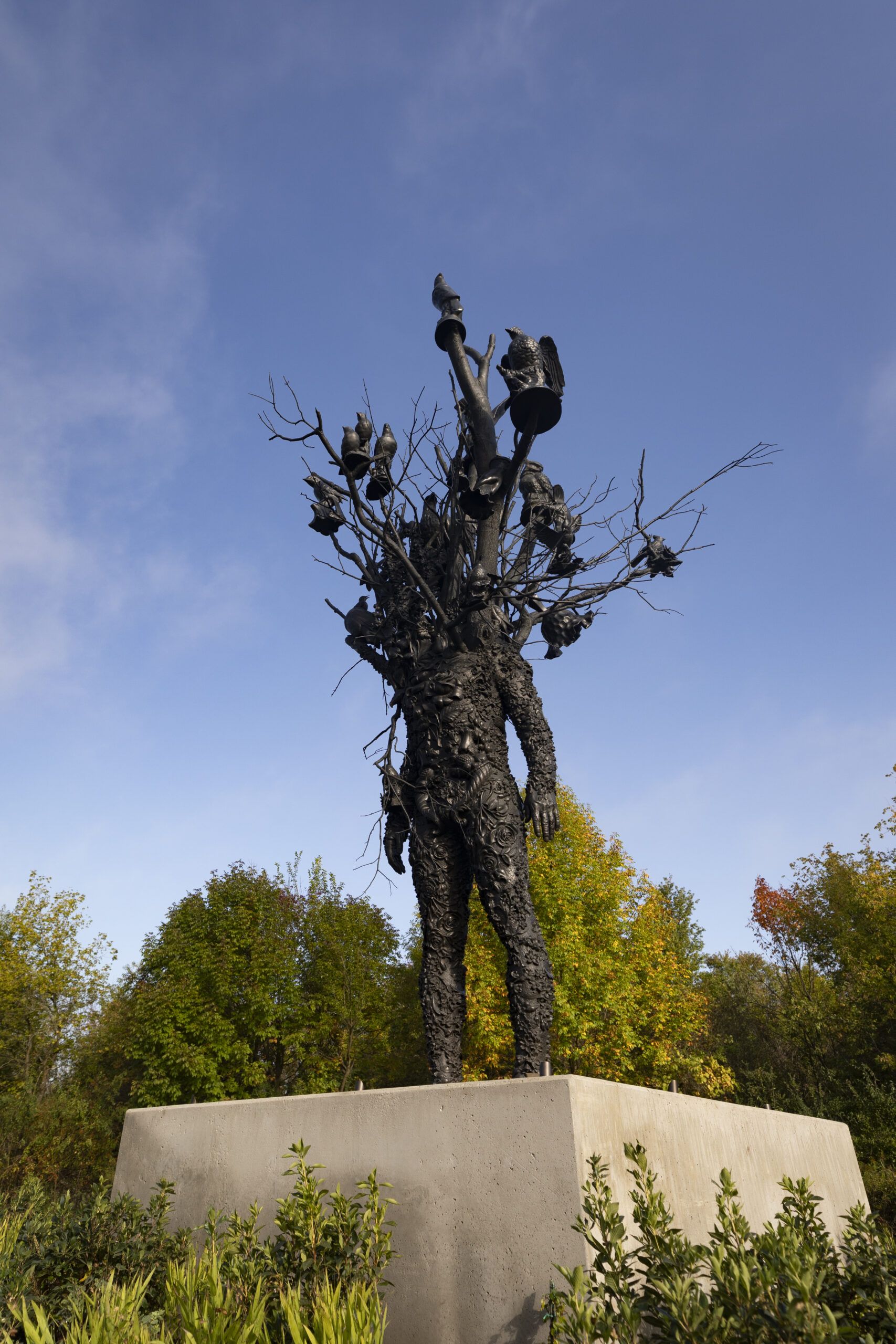
Today, Meijer Gardens is home to more than 300 sculptures by world-renowned artists, including Louise Bourgeois, Alexander Calder, Ai Weiwei and Yinka Shonibare. And this fall, it welcomes another milestone addition: Amalgam (Origin), a monumental 26-foot-tall bronze by internationally acclaimed artist Nick Cave. Installed near the Japanese Garden and Michigan’s Farm Garden, it marks Cave’s first public outdoor sculpture and a bold new highlight in the permanent collection.
Cave’s evolving vision
Cave, best known for his Soundsuits—vivid, wearable sculptures first created in response to the 1991 beating of Rodney King—has long explored themes of identity, protection, and renewal. Amalgam (Origin) continues that exploration on a monumental scale, transforming his intricate, collaged aesthetic into bronze. The piece seems to rise directly from the soil, a towering symbol of individuality, interconnectedness and hope.

“It’s a joy to see Amalgam (Origin) take up permanent residence at Frederik Meijer Gardens & Sculpture Park,” Cave said. “I made this piece for open air and changing light, and this landscape offers the kind of daily conversation with trees, weather, and people that brings it fully alive.”
A full-circle moment
As Meijer Gardens marks its 30th anniversary, Amalgam (Origin) feels like a full-circle moment—an echo of the Meijers’ original belief that art and nature belong side by side. What began as a gift of land and imagination has become one of the nation’s most beloved cultural destinations, where creativity doesn’t simply rest on the landscape—it grows from it.


