
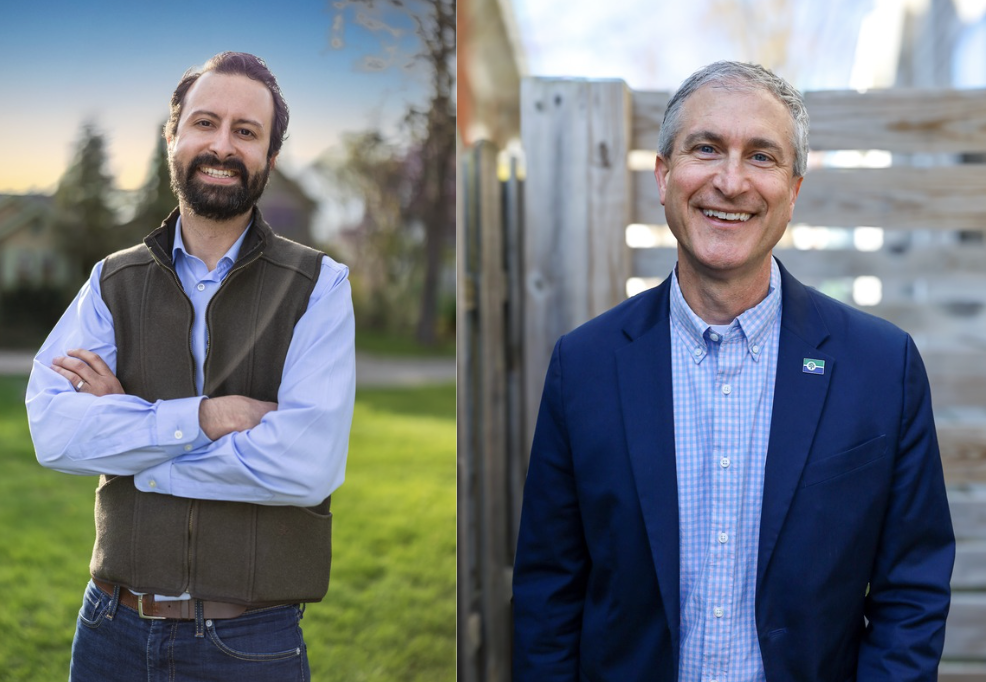
With less than two weeks remaining for Ann Arbor’s mayoral race, voters may be interested in learning more about the candidates before making their choice. The election on August 4 will determine the democratic nominee. This year, Washtenaw County Commissioner Yousef Rabhi will run against incumbent mayor Christopher Taylor.
Our team connected with Rabhi and Taylor to gain a deeper understanding of their backgrounds, perspectives, visions and concerns for the City of Ann Arbor. Interviews were conducted over email, separately.
Q & A:
How long have you lived in Ann Arbor?
Taylor: 35 years
Rabhi: I was born in Washtenaw County and was raised on the north side of Ann Arbor. I attended Ann Arbor Public Schools and the University of Michigan. I stayed in this community when I graduated. I have spent my entire professional life not just working to better Ann Arbor, but building genuine connections with constituents and community leaders. I have been shaped by my life in Ann Arbor, and am proud to now be raising my 8-month-old baby here.
What do you think makes Ann Arbor special?
Taylor: I love our community, our respect for difference, our optimism, our commitment to work together. I love our neighborhoods, the vibrant downtown, access to health care, jobs, and entertainment. I love that we are a community founded on learning and education. We are excited to do our part to improve, whether it’s to support community climate action or build affordable housing. We know the world is imperfect, but we are unbowed, excited to make our home a better place.
Rabhi: The people are what makes Ann Arbor special. The diversity of people, of ideas, of community, is Ann Arbor’s greatest strength. This is a city where a labor organizer, a university professor, a small business owner, and a graduate student can all call the same neighborhood home, creating a rare mix of backgrounds and perspectives that truly creates something special. The city’s local businesses, cultural institutions, and natural areas create a local atmosphere that is unique to Ann Arbor and what continues to draw people in. The independent shops, the music venues, the farmers market, the trails along the Huron River – these are what make people fall in love with this city and fight to stay here.
What do you think the city is doing well, and what should continue?
Taylor: Every day, City Hall works to improve basic services – drinking water, sanitary, storm water, police, fire, parks, roads, trash, recycling, composting, free and fair elections – these are our top priority and we continue to deliver.
Rabhi: Ann Arbor has incredible public lands and assets that should be protected from privatization. We have fantastic city staff that do the hard work of running the city every day that deserve our respect and fair pay. We have amazing parks and natural areas but they are facing serious funding gaps. The A2Zero climate framework has the right vision, but in order to achieve our goals we must invest in bold actions that will move us in the right direction. The Greenbelt is a genuine legacy worth protecting and renewing – we don’t need to choose between preservation and growth.
What experiences have best prepared you for this role?
Taylor: I have been best prepared for this role through my time as Ann Arbor Mayor, serving in the role itself and delivering real results for our residents.
Rabhi: I have spent 16 years in public service and am proud to be the only candidate in this race with experience in both state and local government. As a County Commissioner, I led the county’s first four-year balanced budget and secured its first ever AAA bond rating. I spearheaded the Washtenaw ID program, helped create the framework for the Regional Transit Authority, and secured tens of millions of dollars for non-motorized infrastructure. As a legislator in Lansing, I served as the Democratic Floor Leader, which taught me how to build coalitions and fight for what matters under pressure. I introduced bills to force polluters to pay to clean up their messes, hold DTE accountable, reform the criminal justice system, get money out of politics and create a state based single payer healthcare system. I was also proud to secure millions of dollars for affordable housing in our community.
What is your leadership style?
Taylor: We have two ears and one mouth for a reason. I listen to residents, staff, and colleagues before I speak, learning as much as I can before I develop policy. If we develop a policy that makes sense in theory, but doesn’t work in practice, then we change course. I’m not here to cast blame or criticize. Staff needs to know that they have the Mayor’s respect, that it’s OK to try new things, even if the result is uncertain.”
Rabhi: My leadership style could be described as collaborative and community-centered. I want to put our community at the center of the decision-making process. There will be no more performative public engagement where the outcome is pre-ordained.
I have shown up for the community at protests, picket lines, community meetings – not just around election time. I’m willing to take on powerful interests when necessary. Ann Arbor residents deserve transparency, a government that follows through on its commitments, and a mayor that will take up the banner for them.
What would be your top priorities if elected?
Taylor: My top priorities are to continue the work we have been doing on housing affordability, fixing our roads, and delivering exceptional city services to all residents. We have 1200+ units of new, permanent affordable housing built or in the pipeline, but we need more. We have invested 220M+ in our roads over the past four years, and the results are beginning to show – we’re going to continue working locally and with our partners at the state level to fix our roads. We have prioritized the delivery of core services, including first responders, trash & recycle pickup, and excellent parks, and will continue to do so.
Rabhi: My top priority is making Ann Arbor affordable again for working families, seniors, young people, and the workers who keep our city running. I will treat housing as essential public infrastructure and make historic investments in publicly owned, permanently affordable housing – expand the Housing Commission, create coops and community land trusts and pass the Tenant’s Bill of Rights. I will prioritize keeping jobs in Ann Arbor, bringing outsourced city services back in house. I will invest in city infrastructure that keeps our city running: repairing roads, bridges, sidewalks, water mains, sewer systems, and stormwater infrastructure. I will pass a real ICE-Free zone ordinance and defend our community from the Trump administration’s overreach. I will establish a Climate Emergency Task Force and conduct climate-focused reviews of all city budgets and major projects. I want to make Ann Arbor safe and affordable for everyone that lives there.
What is your vision for Ann Arbor over the next four years?
Taylor: My vision for Ann Arbor over the next four years is continuing the work we are doing to make our community more affordable – a wonderful place to live, work, go to school, raise a family, retire, and find a community.
Rabhi: My vision for Ann Arbor over the next four years is a city that works for everyone who lives here – not just those who can afford to stay. That means housing is treated as essential public infrastructure. It means working families, seniors, and young people can afford to build a life here. It means future growth that’s mixed-use and transit oriented, with duplexes, triplexes, and ADUs woven into our existing community fabric so growth comes from residents.
It means a city powered by clean, publicly owned energy that keeps rates low, achieves 100% renewable energy, and reinvests revenue back into the community instead of sending it off to corporate shareholders. It means safe streets for everyone, regardless of your transportation method, and faster and more reliable public transportation options. It means a city that is genuinely beautiful, with historic buildings preserved, green space expanded and vibrant businesses thriving in and near our residential neighborhoods.”
What do you believe is the city’s biggest challenge today?
Taylor: “Ann Arbor’s biggest challenge today is housing affordability. Ann Arbor housing prices are out of control. We don’t have enough homes for service workers, teachers, seniors who want to downsize, divorced couples who want to stay near the school, young people who want to move home. It’s not a conspiracy, and it’s not complicated. Ann Arbor is an awesome place where people want to live and we don’t have enough homes because we have prevented property owners from building more.
The solution is two pronged: Build more public housing. Allow more regular housing.
Thanks to the Affordable Housing Millage that I championed and drafted, and that my opponent did not endorse, we are making unprecedented investments in public housing. We have more than 1,200 units of new, permanent affordable housing in the pipeline, with more on the way. While this is transformational for those who qualify, this housing isn’t open to everyone. It’s only available for people who make under $58,000 or so a year.
People who make more than $58,000 a year need housing too. That’s why we are working to allow more housing at all income levels, including duplexes and triplexes. We have vibrant neighborhoods and we’re making certain that any new homes will fit into existing streetscapes. Finally, we have protected tenants from predatory landlords, doing away with rental junk fees, requiring fee transparency, and increasing annual rental unit inspections to more than 6,000 per year. More on the way.
Rabhi: The city’s biggest challenge is affordability. There’s a gap between Ann Arbor’s progressive politics and its lived reality for working people. A city cannot call itself progressive while the workers who keep it running are falling behind. Residents feel shut out of decisions that affect their lives – there should be no performative public engagement where the outcome is pre-ordained. There’s a gap between a promise to stand against aggressive federal overreach and actually doing so. This requires a mayor that is willing to stand firmly against the Trump administration both publicly and legally. There’s a gap between Ann Arbor and its surrounding communities; Ann Arbor has thought of itself as a silo for far too long. Regional cooperation with Ypsilanti, Washtenaw County and neighboring communities is essential and lacking. I want to deliver a truly regional approach to solving our problems.
What do you think residents are most concerned about right now?
Taylor: I think residents are most concerned about the cost of living. It’s why I have pledged to oppose any new city millage, and why I am working tirelessly to make housing more affordable and take the steps Ann Arbor can to lower the cost of living for our residents.
Rabhi: Ann Arbor’s residents pay a lot in property taxes and a lot in rent but we are not getting the services we are paying for to make our lives cheaper and easier. This is happening because the city is more interested in selling off public lands, giving massive tax breaks to well connected developers and privatizing services, rather than actually making investments to help the community succeed. Ann Arbor is currently pricing out longtime residents and local businesses. These losses are felt deeply – and our local government is not listening. Residents are concerned about safety, from the immigrant community members living in fear of federal agents to dangerous streets that fail to protect pedestrians, drivers, and cyclists. They are concerned about utility rates and energy reliability.
As a new dad, I’m concerned about the future of Ann Arbor for my son. I grew up here, and I want his future in Ann Arbor to be safe and affordable. I don’t want to see him – or any community members – priced out of their home and pushed aside. Ann Arbor residents have a right to be concerned about these issues.”
How do you stay connected to the people you serve?
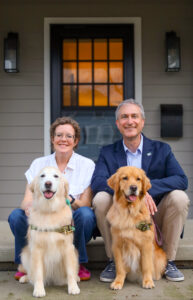
Taylor: I stay connected by being present in the community. Whether that’s showing up to local events, meeting residents at the Farmers Market or Art Fair, or serving in my role as your Mayor, I work to always be accountable and accessible to our residents.”
Rabhi: During my time as a state representative, and now as a county commissioner, I have held monthly coffee hours open to the public to hear concerns and feedback from the community. Sometimes, one person shows up, other times 70+ people attend. I plan to continue this as Mayor of Ann Arbor.
Over the last several months, I have traveled around this community holding meet and greets, knocking doors and meeting with community members. Public engagement is not just about listening to residents, but incorporating the feedback that you hear into the decisions that you make. I am proud of my track record as an elected official that has focused my whole career on bringing the people’s voices to the decisionmaking table.
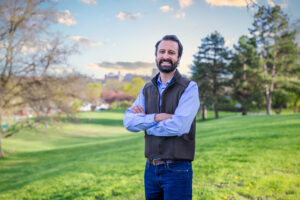
I also believe that part of connecting with the people you serve is showing up. I am there for the community at protests, at community events, and at marches. I’ve been there in the freezing cold snow and a hot muggy summer day, in the mud, sleet and rain. I’ve been there for interfaith vigils following ICE violence and gotten my hands dirty with the Buhr Park Children’s Wet Meadow project. I’ve grown relationships with the people of Ann Arbor, the people I call my friends and neighbors. I am of this community and I look forward to serving you in this new role.
For more information on the election, including polling places, ballot proposals and voter registration, click here.

Occupational Therapist and Blogger
www.supriyatheexplorista.com

