
Renee Good was a busy 37 year old American mom when she woke up in her Twin Cities home on the morning of January 7 2026. She was no longer a busy American mom by that afternoon, when the SUV she was driving hit a utility pole at high speed after several shots fired by a masked Immigration Customs Enforcement official crushed into her through her windshield and the side window.
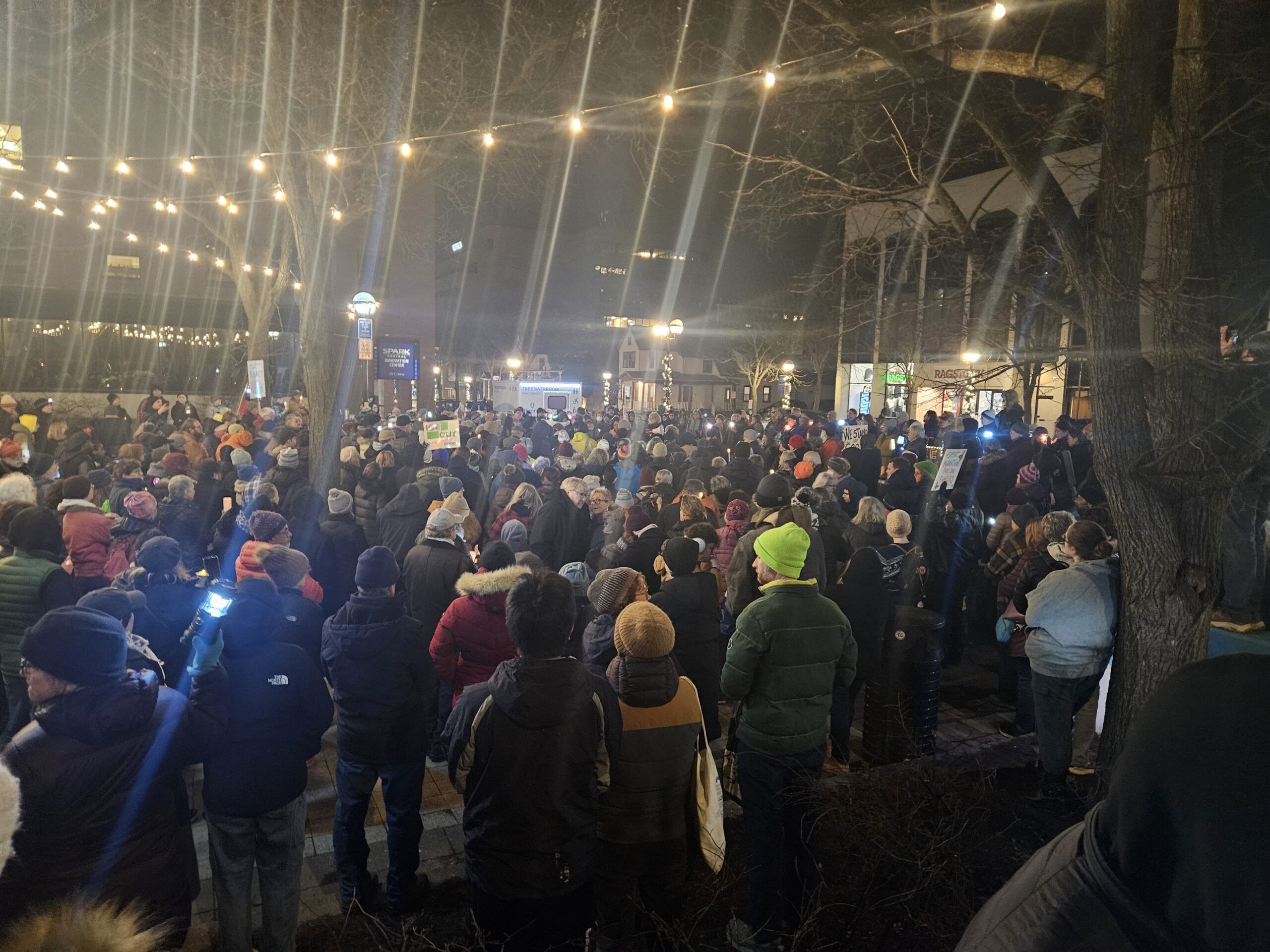
She was dead. Two days later, Ann Arbor Indivisible held a protest vigil that filled Liberty Plaza.
“Horror,” is what went through Jason Ouyang’s head when he found out what happened to Good. “That is something that should never happened on United States soil.”
Ouyang and Barb Wetula started organizing. They said they were surprised at how quickly their activism got off of the ground. Ouyang remembers people constantly messaging A2 Indivisible while they were organizing on a chat, asking how and when they could make something happen.
They were ready by Friday night, as large amps were plugged into a blowhorn for poets to speak—sometimes shout—poems into. Several people invited by Ann Arbor Indivisible read poetry. Signs poked up above the heads of the crowds.
The Trump Administration has surged ICE and National Guard troops to what are stereotypically considered blue cities for months now, often over the objections of local and state elected officials, including in Minneapolis. Minnesota Public Radio confirmed the authenticity of camera phone footage of the ICE officer firing the shots. Cellphone footage from the officer who fired the shots—whose name is allegedly Jonathan Ross, a ten year veteran—has also been released.
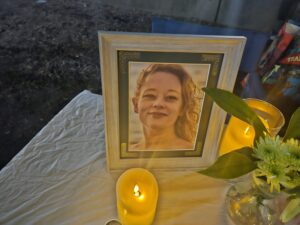
Video cameras who documented what happened recorded Good’s final wards, which were to Ross: “I’m not mad at you.”
The administration has claimed that Good was attempting to harm the masked ICE official who shot her, but the footage shows her attempting to drive away. At least one shot went through Good’s passenger side window, rather than the windshield, which the first round went through.
For context, the tail end of the first Trump Administration was rocked by racial justice protests in the wake of the murder of George Floyd by a police officer. Good died within a mile of where Floyd did six years ago.
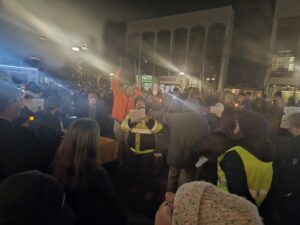
“I read about it in the news, and then I obviously saw the video, and I heard that she was a poet. I looked up her poetry, the big one that won the prize—the first line about the rocking chair, wanting to take back a rocking chair,” Jeff Kass, one of the poets, said when the vigil ended. “And I was like, well, a rocking chair is a symbol of relaxation, freedom, safety, kicking back at the end of the day and feeling safe. And she obviously didn’t get the chance to do that in the long day of her life, or just in that particular day, so I wanted to write something about that.”
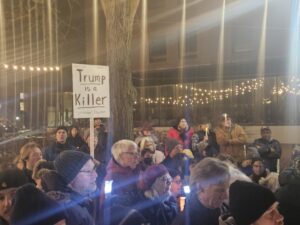
Organizers of the January 9 vigil said they were hoping for 50 or 100 people to show up. The crowd that actually did show up on that windy, pitch-black winter evening, was somewhere more like 500. One of the attendees gave her name as Fiona Retmond, said she was living in Washington DC in 2018, during President Donald Trump’s first administration and attended a lot of protests there too.
“It’s sadly extremely similar in that things have only gotten worse, even though there was plenty of outrage then. I remember I was part of a march for Families Belong Together, and it seems like things have only gotten worse since then, which sucks,” Retmond said. When asked if she thought that protests like these are having a meaningful impact, Retmond said, “I mean… you want to say yes because that is the right and civic answer…. I can at very least say that before a friend of mine said that this was happening I was feeling very down, by myself in my apartment. Then I came here, and at very least, individually or collectively, you could feel a sense of solidarity, which is at least more fueling, so you don’t just fall into despair.”
RELATED: No Kings Protests Swell Across Washtenaw County on October 18
“This is an era where everyone’s soul is being put to the test—and what you will stand for, what you will not stand for, is clearly exposed,” Ouyang added. “Whether this counts as a turning points in the public is not something I am terribly concerned about because the question I am concerned about is that in this moment, if I had to look at what I did one year from now, five years from now, ten years from now, can I face myself in that mirror? I suspect many Americans will be saying the same things to themselves every day, every night that this administration has gone on, and it will go on in the future, every day they’re here.”
Ann Arbor Indivisible had created a list of people who have died in ICE custody during the current administration. AAI members took turns reading them one by one into the megaphone. In unison, the attendees repeated their names out loud. There was a moment of silence before people dispersed.
“It feels pretty docile,” Josh McCurdy said as people were leaving. “I just came because I haven’t been able to focus at work for two or three days since it happened. I think the mood is candle light vigil, not arrest-the-murderer. Doesn’t mean my mood.” When asked what he wanted to see happen next, McCurdy said “Someone was murdered in the streets. The murderer should be arrested… We know who he is… It’s as simple as that. Anyone else would be arrested…”
But the protests are not done yet. AAI also organized a protest march, to start the next day at the corner of North University and State Street.
“Things are changing,” Wetula said when asked about the efficacy of protest in 2025, in 2026. “Jimmy Kimmel was thrown off the air, we got him back on the air… I do think that a lot more people are feeling the impact of some of these decisions. And that’s all of us, not just liberal people. It’s our neighbors who never assumed that these things could happen in this country; they’re starting to wonder. I think it’s spreading. The elections? That’s a whole another conversation. Lots of people think its turning. I’m a little more cautious, because the guy got elected again, and here we sit.”

Drew Saunders is a freelance business and environmental journalist who grew up just outside of Ann Arbor. He covers local business developments, embraces his foodie side with reviews restaurants, obsesses over Michigan's environmental state, loves movies, and feels spoiled by the music he gets to review for Ann Arbor!

