
Now over 200 years old, Ann Arbor has many stories to tell—enough to satisfy any history buff. From pioneering farms to grand university halls, its past lingers in the buildings, landscapes, and traditions still visible today. Exploring these sites offers a chance to step into different eras and see how each chapter shaped the city we know now.
A Brief History of Ann Arbor
- 1824 – Ann Arbor is founded by John Allen and Elisha Rumsey, who name it after their wives (both named Ann) and the oak groves (“arbors”) that shaded the settlement.
- 1837 – The University of Michigan relocates from Detroit to Ann Arbor, cementing the city’s role as an educational and cultural hub.
- Mid-1800s – The arrival of the Michigan Central Railroad spurs population growth, industry, and commerce, connecting Ann Arbor to the wider Midwest.
- Late 1800s – German immigrants shape the city’s neighborhoods, churches, and breweries, leaving a cultural legacy still visible today.
- Early 1900s – Ann Arbor grows into a center for medical and scientific research, while civic pride sparks the construction of iconic landmarks.
- 1960s–70s – The city becomes a hub of activism, from civil rights and anti-war protests to the student movements that reshaped campus and community life.
- Today – Ann Arbor balances preservation and progress, with historic homes, cemeteries, and farms coexisting alongside world-class research labs, arts venues, and a thriving downtown.
Self-guided driving tour
Whether you visit all ten historic sites or just a few, you’ll get a feel for Ann Arbor’s layered story. The route forms a clean loop: beginning in the north with the Palmer House and Bentley Library, weaving through central campus and downtown, swinging south to Cobblestone Farm, then east to Parker Mill, and finishing at Staebler Farm before returning toward the city. Each stop offers a glimpse into a different chapter of Ann Arbor’s past — perfect for history buffs ready to explore.
RELATED: New LGBTQ+ Historical Marker Honors Ann Arbor Civil Rights Activists
Palmer House (1950)
One of only a few Frank Lloyd Wright homes in Michigan, the Palmer House reflects his Usonian design with triangular geometry and harmony with the landscape. Privately owned, it can be admired from the street and is occasionally open for tours.
227 Orchard Hills Dr, Ann Arbor
Bentley Historical Library (1935)
This archive holds Michigan’s collective memory, from Civil War letters to auto industry records and university archives. It’s a vital research center open to historians and the public alike.
1150 Beal Ave, Ann Arbor
Forest Hill Cemetery (1857)
Designed in the picturesque “rural cemetery” style, Forest Hill is the resting place of U-M presidents, governors and city founders. Its winding paths make it a peaceful historic walk.
415 Observatory St, Ann Arbor
Michigan Theater (1928)
This ornate movie palace nearly faced demolition in the 1970s before residents rallied to save it. Today it hosts indie films, concerts, and community events under its original plasterwork and glowing marquee.
603 E Liberty St, Ann Arbor
Kempf House Museum (1853)
This Greek Revival home showcases 19th-century domestic life, including the Kempf family’s historic pump organ. Experience a small but rich glimpse into Ann Arbor before the Civil War.
312 S Division St, Ann Arbor
Museum on Main Street (1850s)
This restored Italianate home hosts rotating exhibits on Washtenaw County’s people and industries. Both the museum and the building itself preserve local heritage.
500 N Main St, Ann Arbor
University of Michigan Law Quad (1930s)
Built in Collegiate Gothic style, the Law Quad evokes Oxford and Cambridge with its spires, stone archways, and grand Law Library. It remains one of Ann Arbor’s most iconic and photographed spots.
625 S State St, Ann Arbor
Cobblestone Farm (1844)
A rare cobblestone farmhouse anchors this living history site, complete with barns and pioneer-era furnishings. Today it serves both as museum and community gathering place.
2781 Packard Rd, Ann Arbor
Parker Mill County Park (1873)
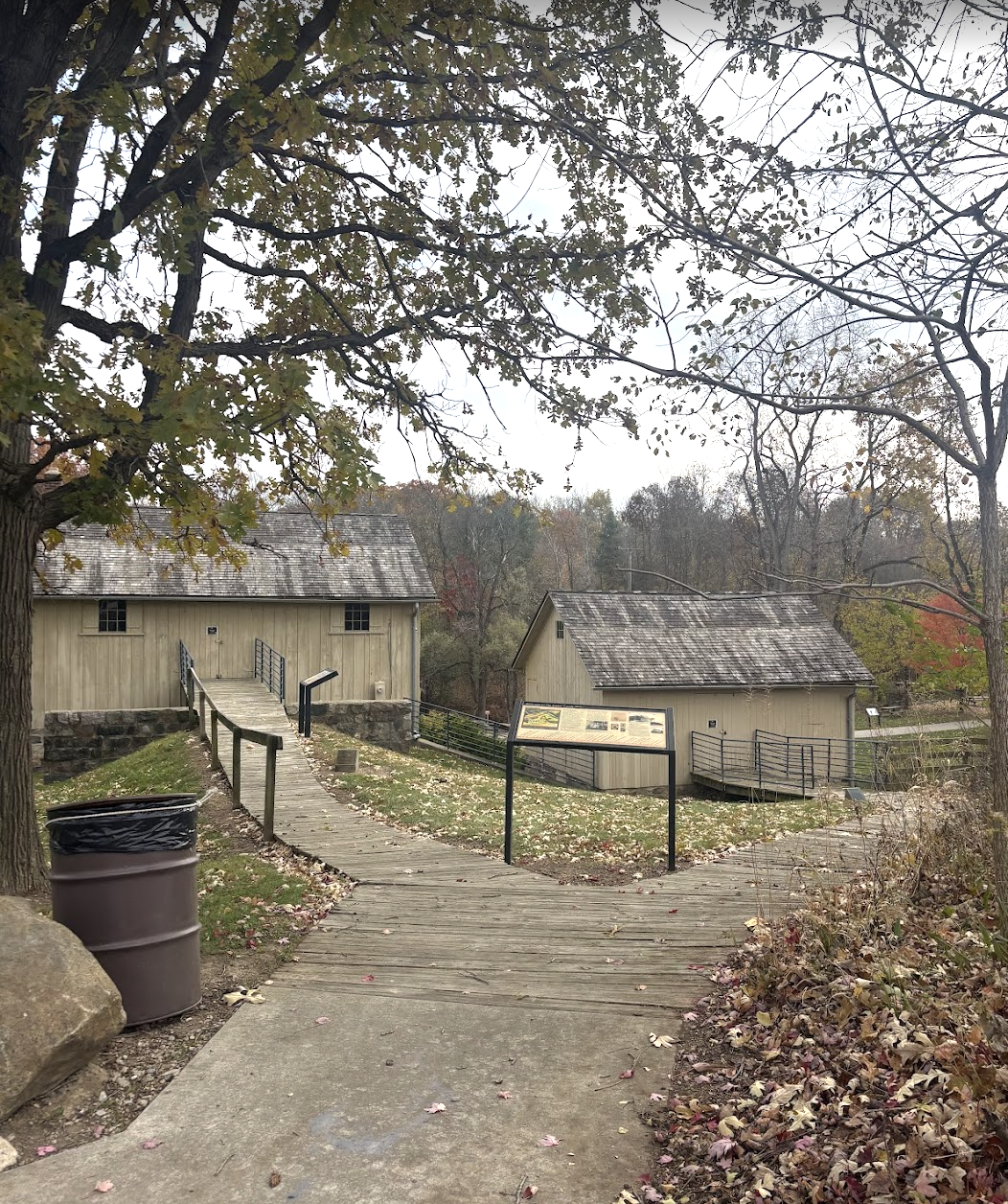
The Parker family’s grist and cider mills still stand with original equipment intact. Visitors can step inside 19th-century milling life, then walk trails along Fleming Creek and the Huron River.
4650 Geddes Rd, Ann Arbor
Staebler Farm County Park (19th century)
Once a family farm, this 98-acre park preserves historic barns alongside trails and educational programs. It blends agriculture, history and nature in one living landscape.
7734 Plymouth Rd, Ann Arbor
More ways to discover history
Once you’ve completed this tour, there are plenty of other ways to keep exploring Ann Arbor’s history. Here are some other options.
- Ann Arbor’s SmartTours — A set of self-guided, phone-based tours covering 15 themed walks throughout the city. You can access narratives, photos, and background on 177 historic sites.
- Zany History: A Downtown Ann Arbor Tour — A 60-minute walking experience focusing on quirky stories and hidden histories around downtown.
- Highlights Tour — This is a car or bike-friendly tour that lets you visit key landmarks across the city; you can pick and choose which stops to include.
- AACHM Historical Tours — The African American Cultural & Historical Museum offers tours focused on Black history in the area, including an Underground Railroad bus tour.
- Washtenaw County Heritage / Story Maps — The county has developed “story map” tours (using GIS, Vamonde, Google Maps) on themes like Historic Barns, Greek Revival architecture, German heritage, and more.


