
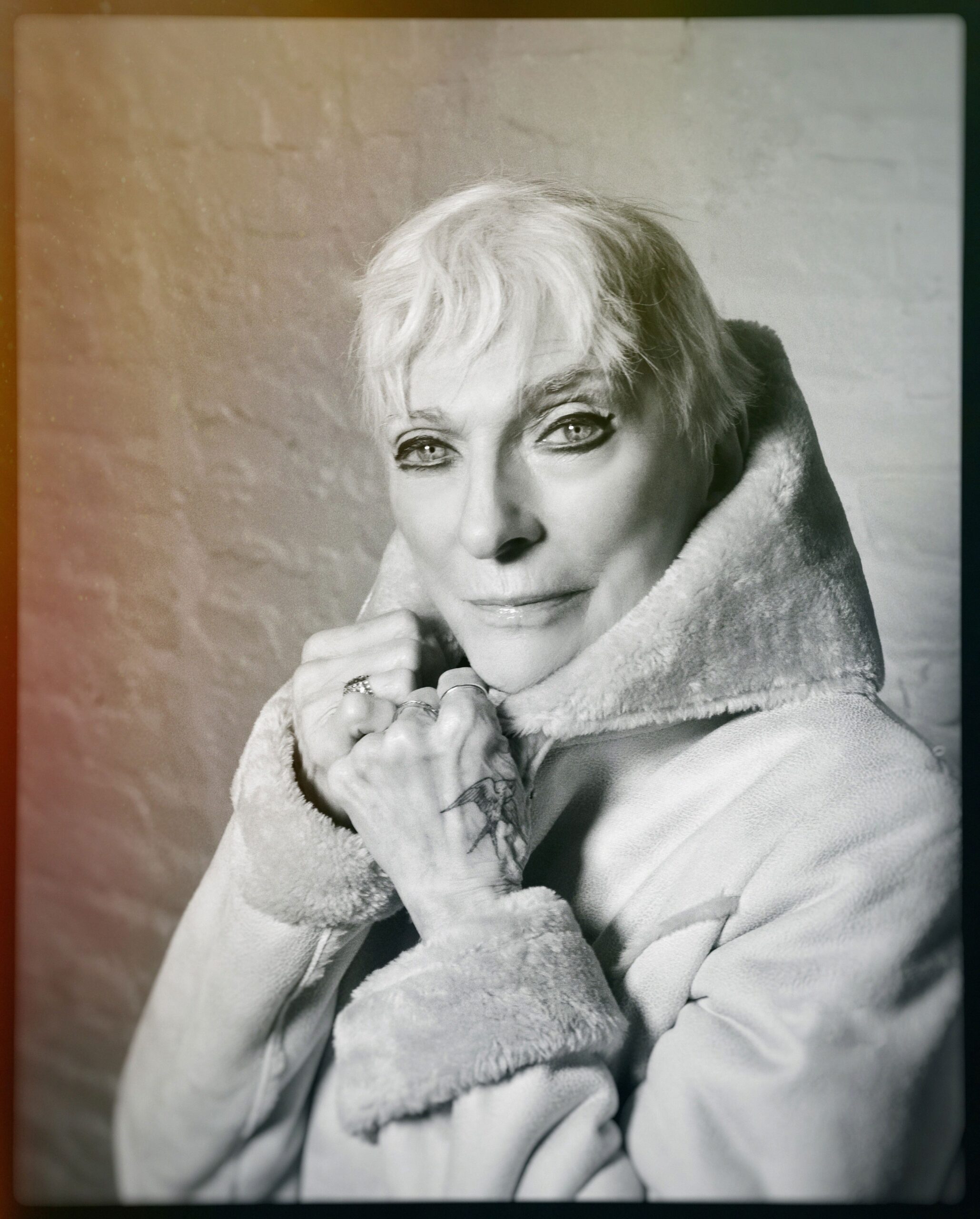
Folk legend Judy Collins has spent more than six decades shaping the landscape of American music, and she will soon bring that legacy to Ann Arbor with an upcoming performance at The Ark on March 6 at 8 p.m. Known for her soothing voice, emotionally rich interpretations and intimate concert style, Collins continues to connect with audiences through a blend of music, storytelling and reflection that has defined her career since the 1960s folk revival.
Collins’ musical foundation was laid early. Raised in a family deeply rooted in performance, she credits her father’s influence as a cornerstone of her stage presence and artistic development.
“Well, I was, of course, I was raised in a family where my father was a great performer and radio personality and played the piano and sang songs from the Great American Songbook,” Collins said. “And, you know, 30 years he was doing that, and so I learned a lot from him. He did very much what I do. He told jokes, he engaged people in poetry. He got his audience enlisted in being part of his radio show, and I think I learned that from him.”
Charles Thomas Collins was Judy Collins’ father. He was a radio host, pianist and singer who performed songs from the Great American Songbook and was well known for his musical broadcasts.
That early exposure helped Collins eventually develop the warm, conversational concert style audiences have come to expect. Although she initially focused solely on singing, she says her approach evolved over time.
“It took me a long time, because at first, I was sort of locked in silence behind the microphone, singing my songs, but then eventually it came to me that I had to engage. My husband, in fact, told me. He said, ‘You have to start talking and moving instead of standing there like a brick.’,” Collins said. “And that’s what happened. You know, it evolved over the years, and it’s very much, I think, today, when I’m working, I think I give people something that is really necessary right now, it’s just focus and silence and time to meditate.”
Championing songwriters like Joni Mitchell and Leonard Cohen
Collins’ career is also marked by her role in introducing audiences to groundbreaking songwriters such as Joni Mitchell and Leonard Cohen. Her instinct for powerful songwriting often comes down to emotional resonance rather than strategic planning.
RELATED: JD’s Stage Bistro: Updates on Jeff Daniels’ New Venue
“Well, I fell in love with the songs, you know?” Collins said. “I mean, the singers were, apparently, the gifted people in the world, and the songs were appealing to me. So I would hear a song, and I would think, ‘Oh, my God, I have to sing it.’ And then I would jump into it, you know. It was falling in love, and that’s really what I would have to call it, because there’s no other word for it.”
She recollected when Joni Mitchell sang “Both Sides Now” to her.
“It’s just because they reach my core, and when that happens, I have to sing the song,” Collins said. “And that was what happened when I heard Joni Mitchell on the phone at three in the morning, when Al Cooper found her party and heard her sing and decided to call me and put her on the phone, and she sang me ‘both sides now’ at three in the morning. So, you know, I make a quick decision. I don’t alter my decision about a song. I either love it or not.”
The enduring power of songs like “Both Sides Now” and “Send in the Clowns”
Among her most beloved performances is her recording of “Both Sides, Now,” which helped introduce Mitchell’s songwriting to a global audience. Another signature piece, “Send in the Clowns,” remains a highlight of her live shows for many.
Collins notes that while her relationship with these songs has matured over time, their emotional core remains constant.
“Well, I love singing them. I mean, they’ve changed in the sense that they’re being sung some now, instead of four or five years ago—or, in my case, 50 years ago. Now we’re getting on,” Collins said. “We’re getting on a whole bunch of time between the time I’ve learned that. I feel I learned ‘Both Sides Now’ in 1967 and it’s now 19—what—20-something or other. So, you know, I’ve had a lot of time with these songs, but they never, in a way, they never change, because they’re the songs that one is singing.”
Personal experience and spiritual wellness sustain a long career
Beyond her musical achievements, Collins has openly discussed how personal experiences shape her artistry and her connection with audiences.
“It’s a deep connection, because everything that you’ve learned, and everything that you do is part of what you offer to a song,” Collins said. “So you are the result of your life experience. And whatever you have, whatever you’re going through, will contribute to the way you sing it or feel it and that’s just what life does, it gives you the opportunity to present in your art what you’ve been through in your life and share it with other people.”
Maintaining a demanding performance schedule well into her 80s requires dedication both physically and spiritually. Collins credits a combination of wellness practices and meaningful relationships for sustaining her stamina.
“I do all kinds of things, prayer and meditation, exercise, eating right, hanging out with the best kind of friends,” Collins said.
Audiences attending Collins’ performance at The Ark can expect an evening that blends musical mastery with storytelling and reflection, hallmarks of a performer whose career has continually evolved while remaining grounded in authenticity. As Collins prepares to step onto the Ann Arbor stage, her concert promises not only a journey through some of folk music’s most enduring songs but also an opportunity for listeners to experience the personal connection and thoughtful presence that have defined her remarkable career.
Donna Marie Iadipaolo is a writer, journalist, and State of Michigan certified teacher, since 1990. She has written for national publications like The Village Voice, Ear Magazine of New Music, Insurance & Technology, and TheStreet.
She is now writing locally for many publications, including Current Magazine, Ann Arbor Family, and the Ann Arbor Independent. Her undergraduate degree is from the University of Michigan, Ann Arbor, where she graduated with an honors bachelor’s degree and three teacher certificate majors: mathematics, social sciences, English. She also earned three graduate degrees in Master of Science, Master of Arts, and Education Specialist Degree.

